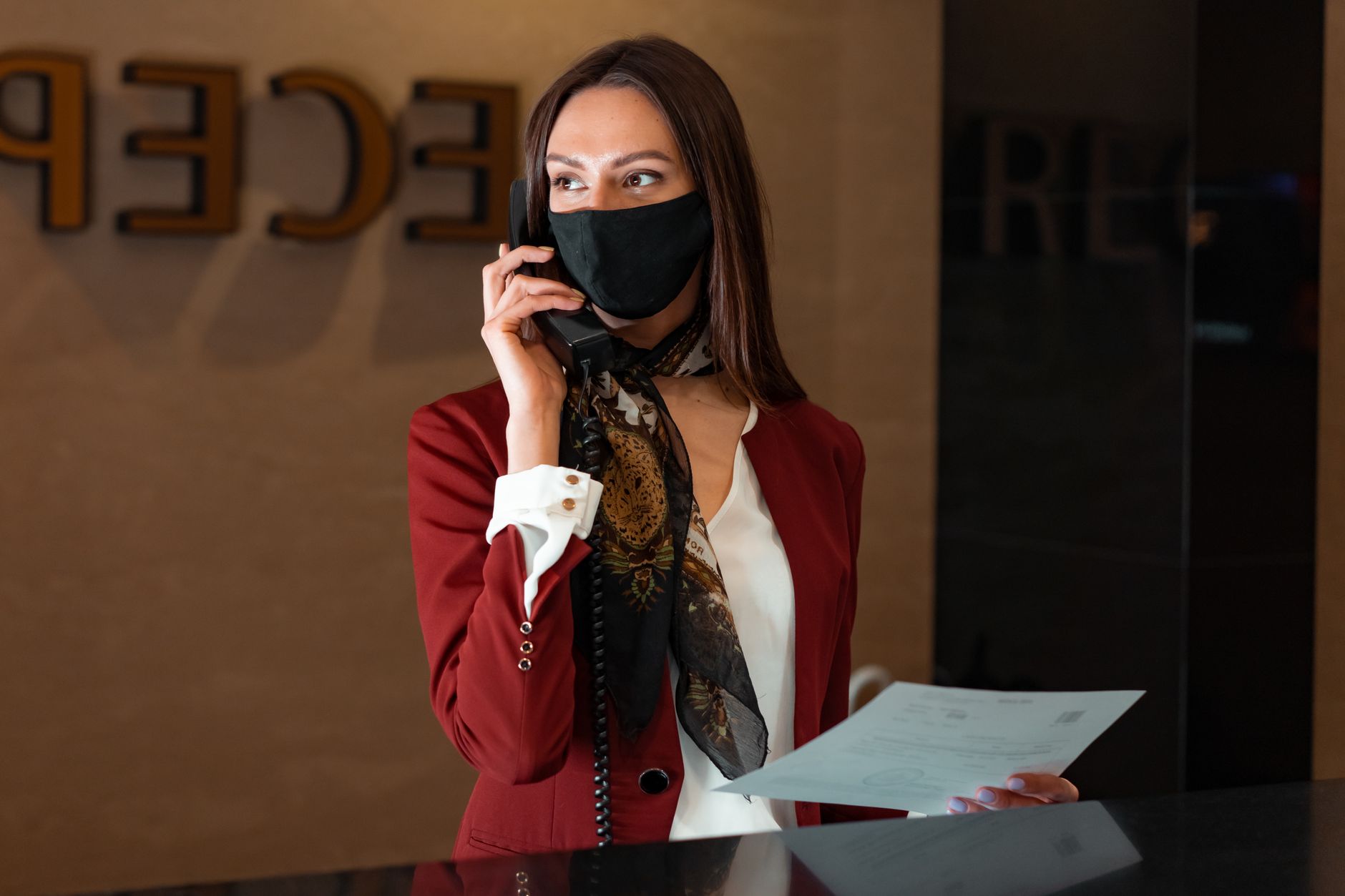
Why Your Receptionist's Toilet Break Costs £3,200: The 4-Minute Implant Enquiry Gap WhatsApp AI Solves
Every dental practice owner knows the silent revenue drain: a receptionist steps away for four minutes, an implant enquiry calls, the phone rings unanswered. The caller hangs up. They try the practice down the road. That single missed call just cost your clinic £3,200 in potential treatment value, and it happens more often than you think.
A receptionist toilet break costs UK dental practices an average implant enquiry because 73% of callers won't leave voicemail and try competitors within 8 minutes. WhatsApp AI captures these 4-minute gaps instantly, converting abandoned calls into booked consultations before your team returns to the desk.
Key Takeaways: The Hidden Cost of Unavailable Reception
- Four-minute absence windows create permanent revenue loss when high-value enquiries abandon without voicemail
- Implant and cosmetic treatment callers demand immediate response; delayed callbacks reduce conversion by significant margins
- WhatsApp AI operates continuously during breaks, lunch, early mornings and late afternoons when reception coverage gaps occur
- Automated lead capture transforms unavoidable human absence into protected revenue streams without additional staffing costs
What Happens During a 4-Minute Reception Gap?
The scenario plays out daily across UK dental practices. Your receptionist handles the morning rush efficiently—appointment confirmations, patient check-ins, treatment plan queries. At 10:47am, they step away for a toilet break. It's a basic human necessity. Four minutes, maybe five. During that precise window, a 52-year-old professional calls about dental implants after researching your practice online. The phone rings. Once. Twice. Three times. On the fourth ring, they hang up before your voicemail triggers.
That caller doesn't leave a message. They don't call back later. They immediately search "dental implants near me" again and phone your competitor who answers on ring two. Your practice lost a £3,200 treatment enquiry because your receptionist needed a toilet break. This isn't negligence—it's mathematics. Human beings require breaks. Enquiries arrive randomly. The collision creates invisible revenue loss that most practice managers never measure because they don't know these calls happened.
The financial impact compounds when you consider frequency. If your practice receives 40 enquiry calls weekly and your reception desk sits empty for just 90 minutes total across breaks, lunch and shift gaps, statistical probability means 2-3 high-value calls hit those windows. Multiply that across 48 working weeks: 96-144 missed opportunities annually. Even if only one-third represent implant-level treatments, that's 32-48 lost cases worth £102,400 to £153,600 in treatment value walking to competitors.
Why Don't Callers Leave Voicemail?
The voicemail assumption represents one of dental practices' most expensive misconceptions. Practice owners reasonably believe that serious enquiries will leave messages if the phone isn't answered. The data from telecommunications behaviour research tells a different story. The Office for National Statistics consumer behaviour studies show declining voicemail usage across all age demographics, particularly among 35-65 year olds—precisely your implant and cosmetic treatment demographic.
Modern consumers treat unanswered calls as availability signals. When you don't answer, they interpret it as "this business is too busy for me" or "they're not interested in new patients." The cognitive load of composing a voicemail message, waiting for callback, playing phone tag—it feels inefficient compared to simply trying the next search result. High-value dental treatment seekers possess options. They're not desperate; they're discerning. An unanswered phone suggests operational issues they'd rather avoid.
How Much Revenue Do Natural Staff Breaks Actually Cost?
Calculating the true cost of unavoidable staff absences requires understanding call distribution patterns. Most dental practices experience enquiry volume clustering around specific times: 8:30-9:30am before reception officially opens, 12:30-1:30pm during lunch coverage, 5:00-6:00pm after stated hours but while research-stage patients browse online. Your receptionist can't simultaneously answer phones and take legally mandated breaks. Even with backup coverage, gaps occur during toilet breaks, urgent patient situations at reception, or when your single receptionist works alone.
Consider a mid-sized practice receiving 160 enquiry calls monthly. Industry benchmarking suggests 15-20% of these enquiries concern higher-value treatments: implants, clear aligners, cosmetic dentistry, full mouth rehabilitation. That's 24-32 premium enquiries monthly. If reception desk coverage gaps account for even 5% of daily operational time through breaks and transitions, probability indicates 1-2 high-value calls occur during these windows weekly. At conservative £3,200 average implant treatment value, that's £6,400 weekly exposure, £307,200 annually in at-risk revenue.
The calculation becomes more sobering when you factor conversion rates. Even if your receptionist calls back within 30 minutes, delayed response dramatically reduces conversion probability. The enquirer has likely already booked a consultation elsewhere. Your callback becomes an awkward "sorry we missed you" message they ignore because they've mentally moved on. The treatment doesn't happen at your practice—not because of service quality issues, but because of response timing.
Can't You Just Hire More Reception Staff?
The obvious solution appears to be additional reception coverage. Hire a second receptionist. Stagger breaks. Ensure continuous desk presence. This approach solves the availability problem but creates new cost challenges. A second full-time receptionist in the UK costs £22,000-£28,000 annually in salary, plus National Insurance, pension contributions, holiday cover, training and management time. Total loaded cost: approximately £30,000-£35,000 yearly.
For many practices, that expenditure makes financial sense only if call volume consistently justifies full-time additional staff. But most practices don't experience uniform call distribution. You need coverage for random 4-minute gaps, not continuous 8-hour shifts. Hiring full-time staff to cover intermittent absence represents significant overhead for discontinuous need. Part-time solutions introduce scheduling complexity and reliability concerns. What happens when your part-time cover also needs a toilet break, falls ill, or takes holiday?
The staffing solution also doesn't address early morning enquiries before reception arrives, late afternoon calls after staff leave, or weekend enquiries when your practice remains closed but online research drives contact attempts. Human staffing fundamentally cannot provide 24/7 first-response coverage at reasonable cost, yet enquiry behaviour increasingly demands exactly that availability.
What Makes WhatsApp AI Different From Voicemail?
WhatsApp AI represents a fundamentally different approach to enquiry capture during reception gaps. Unlike passive voicemail systems that wait for callers to leave messages they won't record, WhatsApp AI actively engages enquirers through their preferred communication channel. When someone calls your practice during a toilet break and the phone goes unanswered, traditional systems offer only frustration. WhatsApp AI triggers an immediate alternative: an automated text message arrives within 30 seconds saying "Thanks for calling CareDental—I can help you right now via WhatsApp."
The psychological difference proves crucial. Voicemail feels like talking to emptiness, hoping someone eventually listens. WhatsApp creates instant dialogue. The enquirer receives immediate acknowledgment and can ask questions conversationally without phone tag anxiety. The AI captures treatment interest, answers common questions about procedures and pricing, and books consultation slots—all while your receptionist remains unavailable. By the time staff return to the desk, the enquiry is captured, qualified and progressing toward booking.
This approach works because it aligns with modern communication preferences. Many patients—particularly those researching expensive treatments like implants—prefer text-based interaction for initial enquiries. It feels less pressured than phone conversations, allows them to respond thoughtfully, and creates a written record of information discussed. WhatsApp AI meets enquirers where they're comfortable, converting the frustration of an unanswered call into productive engagement.
How Does WhatsApp AI Handle Treatment Questions During Breaks?
The sophistication of modern WhatsApp AI extends beyond simple "we'll call you back" messages. CareDental's system handles detailed treatment conversations that traditionally required experienced reception staff. When an implant enquirer engages via WhatsApp after calling during a staff break, the AI conducts a structured qualification conversation. It asks about the number of missing teeth, determines whether bone grafting might be required, discusses healing timelines, and provides realistic treatment duration expectations.
Crucially, the system addresses the biggest conversion barrier: cost concerns. When an enquirer expresses concern about £6,500 treatment fees, WhatsApp AI immediately provides finance calculator access, breaking down payments into manageable monthly amounts. This instant objection-handling capability prevents the "I need to think about it" stall that typically follows delayed cost discussions. The enquirer receives actionable information immediately rather than waiting hours for callback, significantly improving conversion probability.
The system also manages appointment booking autonomously. It accesses your practice management system's availability calendar, offers consultation slots that match the enquirer's schedule preferences, and confirms bookings with automated calendar invitations. This complete end-to-end process—from initial capture through booking confirmation—occurs entirely during your receptionist's 4-minute absence, transforming potential lost revenue into secured consultation appointments without human intervention.
Does This Replace Your Reception Team?
The relationship between WhatsApp AI and reception staff represents augmentation rather than replacement. Your receptionists remain essential for the majority of patient interactions: greeting arrivals, managing complex scheduling, handling sensitive situations, providing empathetic support, and executing the hundreds of nuanced tasks that define excellent patient experience. WhatsApp AI specifically targets the gap coverage problem—those unavoidable moments when human staff cannot physically answer phones.
Think of the technology as an always-available backup receptionist who never needs toilet breaks, never takes lunch, never calls in sick, and works nights and weekends without overtime. During normal operation when your team is available, they handle calls as usual. When they're unavailable—whether for 4-minute toilet breaks or 45-minute lunch periods—WhatsApp AI seamlessly captures enquiries that would otherwise disappear. Your reception team returns from breaks to find qualified leads waiting, not missed call notifications representing lost revenue.
This approach actually enhances reception team effectiveness rather than threatening job security. Staff spend less time playing phone tag with missed enquiries and more time delivering excellent service to booked patients. The frustration of knowing they missed important calls during unavoidable absences disappears. Stress decreases. Job satisfaction improves. Meanwhile, practice revenue increases through recovered leads that previously fell through timing gaps. Everyone benefits except your competitors who continue losing enquiries to answering delays.
How Do You Implement WhatsApp AI Without Disrupting Operations?
Implementation concerns represent the primary hesitation for practices considering WhatsApp AI adoption. The reality proves simpler than most practice managers anticipate. Modern systems like CareDental integrate with existing practice management software—whether you use Dentally, Software of Excellence, or other platforms—without requiring system replacements or extensive reconfiguration. The integration typically completes within one business day.
Technical setup involves three main elements: connecting your phone system to trigger WhatsApp messages when calls go unanswered beyond three rings, linking to your calendar system for appointment availability access, and training the AI on your specific treatments, pricing structures, and practice policies. CareDental's team handles the technical configuration remotely. Your staff involvement requires approximately 90 minutes total: 30 minutes for initial system orientation, 30 minutes to review practice-specific customisation, and 30 minutes for team training on how to manage AI-captured leads.
The system runs parallel to existing operations initially, allowing your team to observe how it captures and qualifies enquiries without immediately changing workflows. After a monitoring period, you'll notice qualified WhatsApp leads appearing in your CRM or practice management system just like phone-captured enquiries, except these leads arrived during times when your team was unavailable. Gradually, the system becomes invisible infrastructure—it's simply always there, working quietly in the background, ensuring no enquiry ever falls through timing gaps again.
What About Data Protection and Patient Privacy?
Data protection concerns appropriately dominate healthcare technology discussions. WhatsApp AI systems handling dental enquiries must comply with UK GDPR requirements and ICO guidance for healthcare data processing. Reputable providers build compliance into system architecture rather than treating it as an afterthought. This means end-to-end encryption for all conversations, secure data storage within UK servers, clear consent mechanisms before collecting personal information, and transparent data processing agreements.
CareDental specifically addresses these requirements through several mechanisms. Enquirers receive clear privacy information before conversations begin, explaining how their data will be used and stored. All conversations encrypt automatically. Personal health information discussed via WhatsApp never transmits in plain text. The system integrates with your existing practice management software, meaning patient data flows through established secure channels rather than creating new vulnerability points. Regular security audits and penetration testing ensure ongoing compliance as regulations evolve.
For practice owners concerned about regulatory risk, the question becomes: which scenario presents greater data protection challenges—an AI system with built-in encryption and audit trails, or handwritten phone message notes left on reception desks that anyone can read? Modern WhatsApp AI often provides superior data protection compared to traditional phone message systems precisely because digital security and audit logging are core features rather than afterthoughts.
Frequently Asked Questions
Does WhatsApp AI work during lunch breaks as well as toilet breaks?
Yes, WhatsApp AI operates continuously regardless of absence duration. Whether your receptionist steps away for a 4-minute toilet break, takes a 45-minute lunch, or the practice closes for the day, the system captures and qualifies enquiries identically. It doesn't distinguish between short and long absences—it simply ensures every enquiry receives immediate engagement regardless of when it arrives. This makes it equally valuable for covering lunch periods, early morning calls before official hours, and late afternoon enquiries after reception has left.
What happens if an enquirer prefers phone calls over WhatsApp?
The system accommodates communication preferences flexibly. When someone calls during a reception gap, they receive an SMS offering WhatsApp assistance. If they ignore this and leave voicemail instead, your team handles callback as usual. If they prefer waiting for phone contact, the system notes this and flags the enquiry for priority callback. The technology creates an additional engagement pathway rather than forcing all enquiries through WhatsApp exclusively. Most enquirers appreciate having options—immediate WhatsApp help or scheduled phone callback—rather than just unanswered ringing.
Can WhatsApp AI handle complex clinical questions about implant suitability?
WhatsApp AI handles typical enquiry-stage questions about treatment processes, timelines, costs and candidacy factors. It explains that full assessment requires consultation when questions exceed remote evaluation scope, then books that consultation. The system doesn't attempt clinical diagnosis—it replicates what skilled reception staff do: provide helpful initial information, qualify serious interest, and secure consultation bookings. Complex clinical questions naturally transition to "let's book you with our implant dentist for a thorough assessment" rather than attempting remote diagnosis.
How does this compare to practice management system communication modules?
Traditional practice management systems like Software of Excellence or Dentally offer patient communication features, but these typically focus on appointment reminders, recall messages, and campaign-based outreach. They don't provide real-time enquiry capture during phone unavailability. WhatsApp AI specifically addresses the immediate response gap when new enquiries call during staff absences. The systems complement each other: your PMS manages existing patient communications while WhatsApp AI captures and converts new enquiries that arrive during coverage gaps. Integration between systems ensures seamless data flow without duplication.
Stop Losing Implant Revenue to Toilet Breaks
The invisible cost of reception unavailability drains revenue