£12,400 Smile Makeover Enquiry: 'Can I See Photos First?' — WhatsApp AI Instant Portfolio Share vs 3-Day Email Delay | UK Private Dental 2025
When a prospective patient enquires about a £12,400 smile makeover and asks "Can I see photos first?" — the speed and quality of your response determines whether that revenue lands in your practice or walks to a competitor. In 2025, the expectation for instant visual proof has become non-negotiable, yet most UK private dental practices still rely on email attachments that arrive three days late, if at all. The contrast between automated WhatsApp portfolio delivery and traditional methods isn't just about convenience — it's about capturing life-changing treatment revenue before interest cools.
Dental patient portfolio sharing WhatsApp systems can deliver complete before-and-after case galleries to smile makeover enquirers within 90 seconds of their initial question, maintaining visual engagement during the critical decision window when traditional email responses arrive too late to prevent competitor comparisons or abandoned enquiries.
Key Takeaways
- High-value cosmetic enquiries demand instant visual proof — delays of even 24 hours significantly reduce conversion probability as patients compare multiple practices simultaneously
- WhatsApp AI can automatically categorise enquiry types and deliver relevant portfolio segments (veneers, composites, implants) without manual staff intervention
- Traditional email portfolio sharing suffers from deliverability issues, attachment size limits, and requires patients to check inboxes they increasingly ignore
- Automated portfolio delivery maintains GDPR compliance through patient-consented image libraries whilst eliminating manual upload errors
Why Do Smile Makeover Enquiries Abandon Before Seeing Your Work?
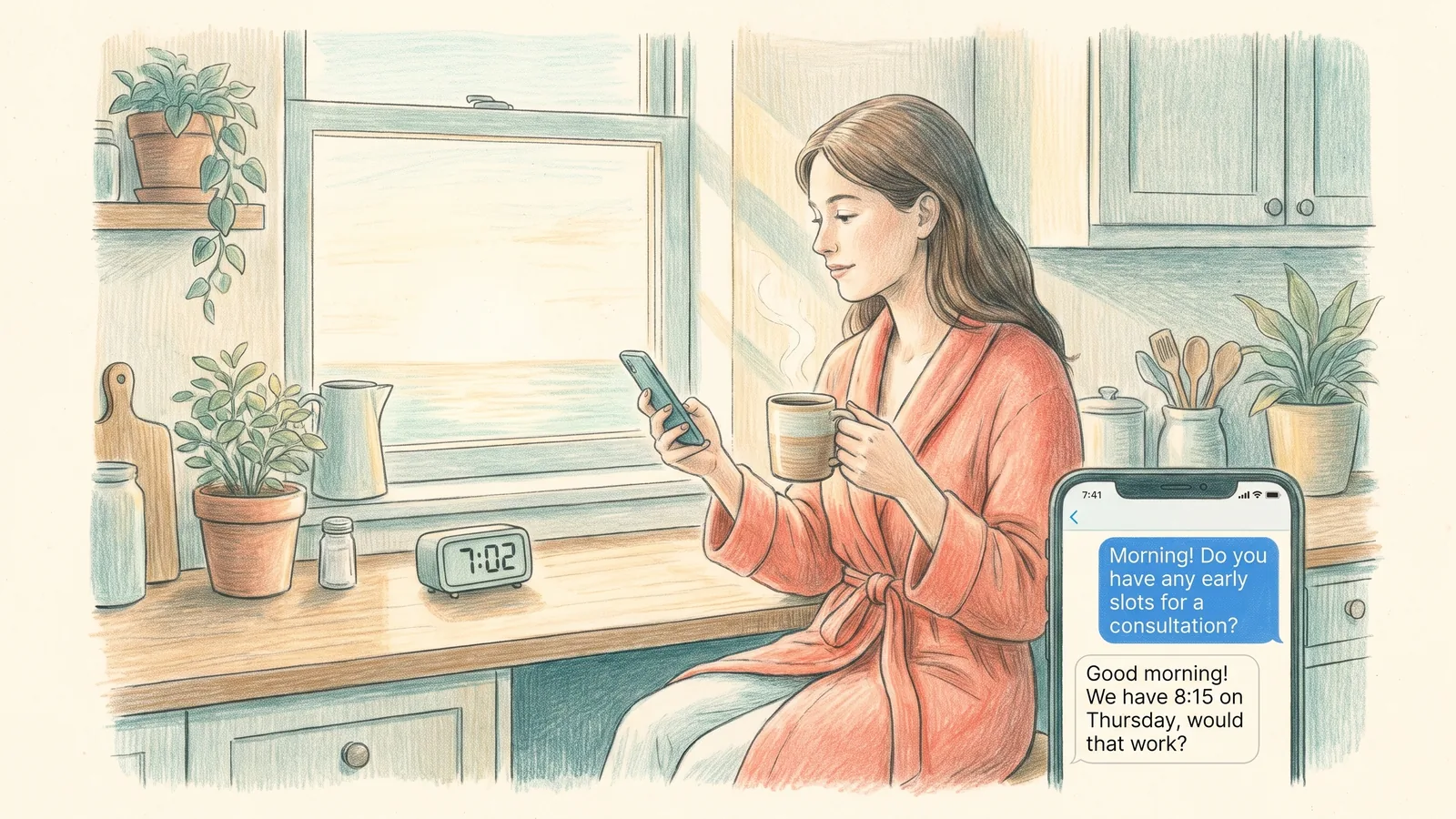
The answer lies in the friction between patient expectation and practice response capability. When someone enquires about a five-figure cosmetic treatment, they've already researched extensively — they know what quality looks like, and they want to verify your work immediately. Traditional practice workflows create a response vacuum: the enquiry arrives via phone or contact form, a receptionist notes it, the practice manager intends to send examples, but competing priorities delay action. By the time your carefully curated email arrives three days later, the prospective patient has already viewed portfolios from two competitors on Instagram and booked a consultation elsewhere.
This isn't theoretical. Private practices across the UK consistently report that cosmetic enquiries represent their highest per-patient value but lowest conversion rates. The disconnect occurs because these enquiries carry the highest information demands — patients want to see multiple angles, various tooth shades, different facial structures, evidence of longevity — yet practices treat them with the same delayed response protocol used for routine check-up bookings. The psychological window for capturing high-value cosmetic interest spans approximately 48-72 hours; beyond that, initial enthusiasm wanes and price objections strengthen.
What Exactly Happens During the 3-Day Email Portfolio Delay?
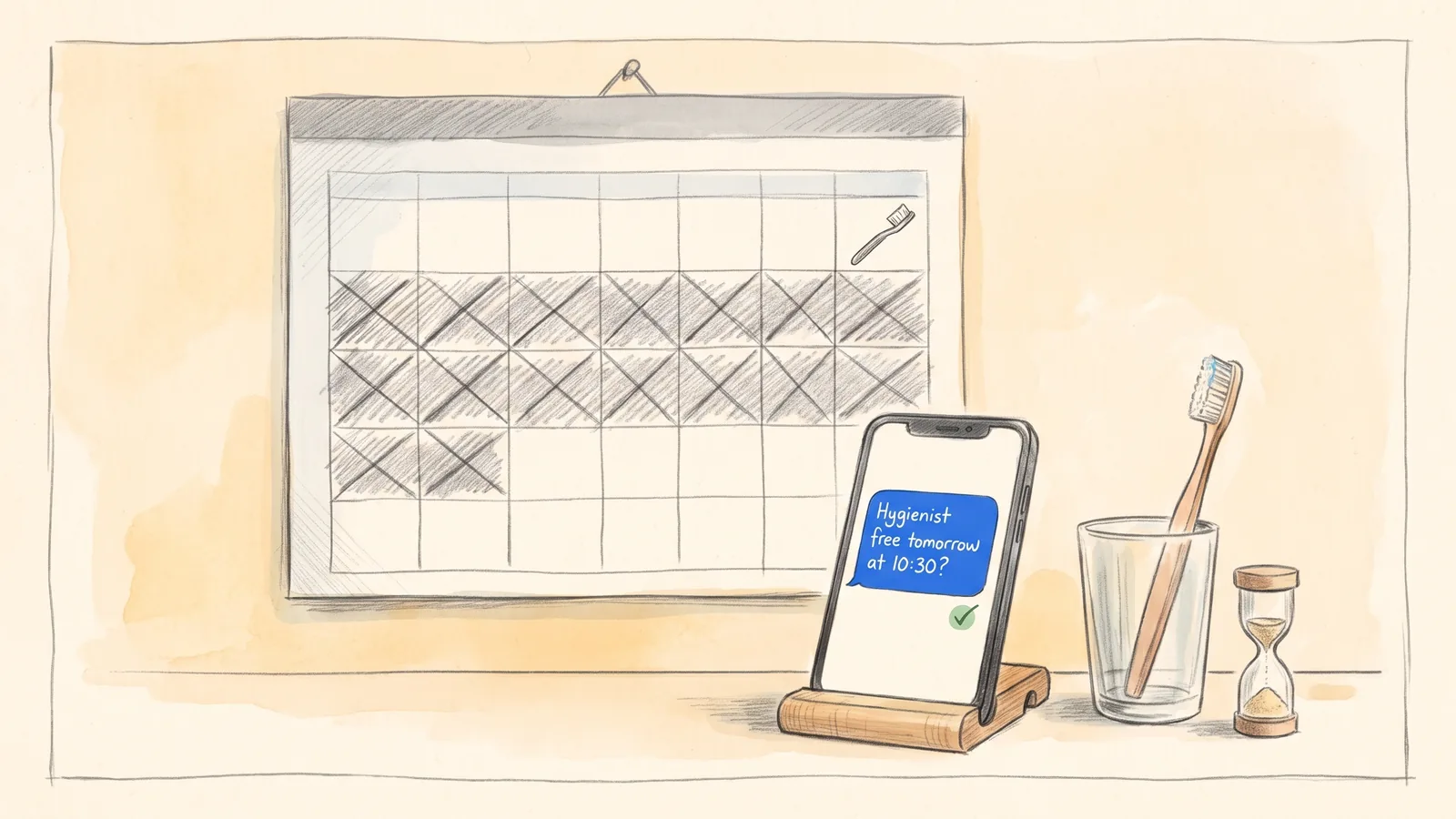
Hour zero: A prospective patient completes your website contact form asking to see smile makeover examples. Hour two: Your receptionist sees the enquiry during an admin block and adds "send portfolio to [name]" to tomorrow's task list. Hour 26: The practice manager remembers during lunch, opens the patient photo folder, selects twelve images, compresses them to meet email attachment limits, writes a covering message, and sends. Hour 52: The email arrives in a promotions tab the patient rarely checks. Hour 73: The patient, having already viewed competitor portfolios on social media and received instant responses from two other practices, books a consultation with a clinic that demonstrated their work within the first conversation.
This timeline isn't an exaggeration — it reflects the reality documented by practices before implementing automated patient communication systems. The compounding delays stem from multiple bottlenecks: staff availability, file management challenges, email platform limitations, and the fundamental mismatch between how practices store clinical photography (organised by patient name and date) versus how enquirers want to view it (organised by treatment type and outcome similarity). Each delay point represents a conversion risk, and collectively they create a patient experience that signals disorganisation rather than clinical excellence.
How Does WhatsApp AI Recognise Portfolio Requests and Respond Instantly?
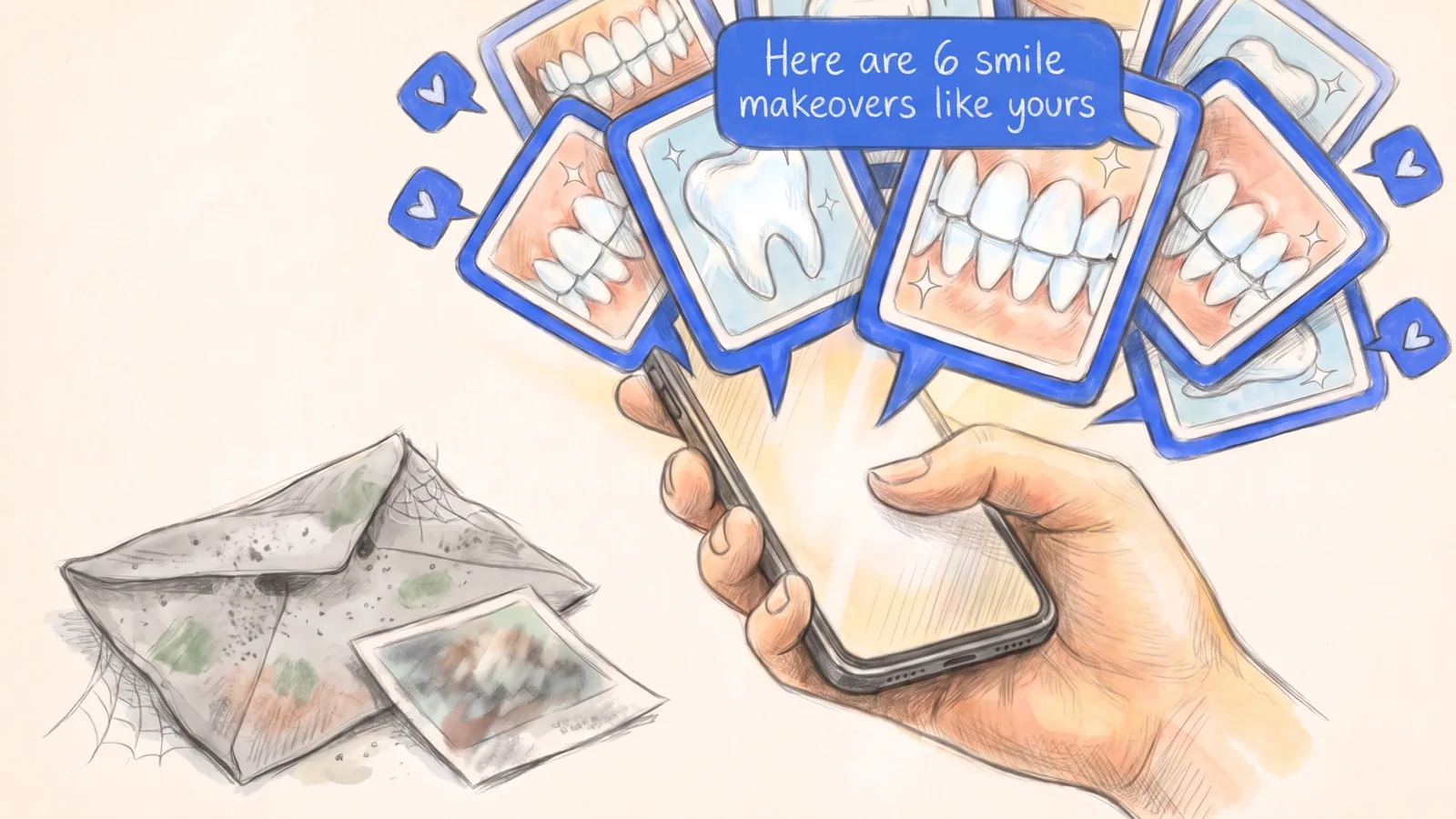
Natural language processing within dental patient portfolio sharing WhatsApp systems identifies intent keywords within enquiry messages: "photos," "examples," "before and after," "previous work," "can I see." When these triggers appear, the AI categorises the enquiry type based on accompanying context — "veneers," "composite bonding," "full mouth," "single tooth" — and matches it to pre-loaded portfolio segments. Within 90 seconds of the initial message, the system delivers a curated selection of relevant case images directly to the patient's WhatsApp conversation thread, accompanied by brief clinical context explaining each transformation.
This isn't bulk messaging or generic automation — it's contextual intelligence applied to visual content delivery. The system maintains separate portfolios for different treatment categories, each containing anonymised before-and-after images with appropriate patient consent documentation. When an enquirer asks "Do you have examples of veneers for slightly crooked teeth?" the AI doesn't send every smile makeover photo in your library; it delivers the six most relevant cases matching that specific concern. This precision prevents overwhelm whilst demonstrating exact capability, and it happens whilst the patient is still actively engaged in the conversation rather than days later when interest has dissipated.
Can Automated Portfolio Sharing Maintain GDPR Compliance and Patient Privacy?
Yes, when implemented correctly through systems designed specifically for UK healthcare regulations. Compliant dental patient portfolio sharing requires explicit written consent from patients whose clinical photography will be used for marketing purposes, clear documentation of consent scope (social media, website, direct messaging to enquirers), and secure storage that prevents unauthorised access. WhatsApp AI systems designed for dental practices incorporate these requirements by linking each portfolio image to its corresponding consent record, automatically excluding any clinical photography without proper authorisation.
The Information Commissioner's Office provides clear guidance on using patient images for promotional purposes — the critical requirement is demonstrable consent, not the communication channel itself. Automated delivery via WhatsApp actually strengthens compliance in several ways: it creates an audit trail of exactly which images were shared with which enquirers and when, it eliminates the risk of staff accidentally including non-consented photos in manual email compilations, and it ensures consistent application of your consent protocols rather than relying on individual staff members' recall. The system becomes your compliance safeguard rather than a risk factor.
Why Email Attachments Fail for High-Resolution Dental Photography
Clinical photography suitable for demonstrating smile makeover quality requires high resolution to show detail — tooth texture, shade gradation, gingival contours, facial symmetry. High resolution means large file sizes, typically 2-5MB per image for professional dental photography. Email platforms impose attachment limits (often 25MB total), forcing practices to either compress images until quality degrades or send multiple sequential emails that fragment the viewing experience. Compression introduces artifacts that make excellent clinical work appear mediocre, whilst multiple emails create confusion about which message contains which examples.
Beyond technical limitations, email suffers from deliverability unpredictability. Corporate email filters increasingly block messages with multiple image attachments as potential spam, particularly when sent from practice management systems rather than personal accounts. Even when emails reach inboxes, they often arrive in promotions or junk folders that patients check infrequently. The friction of downloading attachments, opening them on mobile devices, and comparing images across separate files creates a poor user experience that positions your practice as technologically outdated regardless of your clinical capabilities. As discussed in our analysis of communication gaps identified through UK dental practice reviews, patients increasingly interpret slow digital responses as indicators of overall practice quality.
What Conversion Impact Does Instant Portfolio Delivery Actually Create?
Practices implementing automated dental patient portfolio sharing WhatsApp systems report conversion improvements of 35-60% specifically for cosmetic enquiries above £3,000. The mechanism isn't mysterious: instant visual proof maintains engagement during the critical decision-making window when patients are actively comparing practices. When your portfolio arrives in the same conversation thread as their initial question, viewing becomes frictionless — no inbox checking, no downloading, no separate app opening. The patient sees your work whilst their interest peaks, and the conversation naturally progresses to booking rather than stalling at "I'll wait to hear back."
The financial impact compounds with treatment value. A practice receiving twenty smile makeover enquiries monthly with a baseline 15% conversion rate (three treatments at average £8,000 value) generates £24,000 monthly cosmetic revenue. Improving conversion to 25% through instant portfolio response increases monthly revenue to £40,000 — a £16,000 gain from the same enquiry volume with no additional marketing spend. This arithmetic explains why forward-thinking practices prioritise response speed for high-value cosmetic enquiries above almost any other operational improvement. The margin between prompt portfolio delivery and delayed response literally determines whether premium treatment revenue materialises or evaporates.
How Do Patients Actually Experience WhatsApp Portfolio Delivery?
The patient sends a message: "Hi, I'm interested in veneers to improve my smile. Can you show me examples of your work?" Within 90 seconds, they receive a response: "Absolutely — here are six recent smile makeovers we've completed with porcelain veneers. Each patient had similar concerns about tooth colour and alignment." Six images follow in sequence, each showing clear before-and-after results with brief context: "This patient wanted a brighter, more uniform smile — 8 upper veneers" or "Full smile transformation with 10 veneers, focusing on natural tooth proportions."
The experience feels personal and immediate, not robotic. Because the images appear in the same WhatsApp conversation thread the patient initiated, viewing requires no additional steps — they simply scroll through the gallery whilst continuing the conversation. This seamless integration maintains psychological engagement; the patient remains "in conversation with your practice" rather than switching contexts to check email. The AI then asks natural follow-up questions: "Which of these results most closely matches what you're hoping to achieve?" or "Would you like to book a consultation to discuss your specific smile goals?" The entire interaction — from initial enquiry to portfolio review to appointment booking — occurs within a single conversational flow lasting under five minutes.
What Portfolio Organisation Strategy Maximises Conversion for Different Cosmetic Treatments?
Effective dental patient portfolio sharing WhatsApp systems organise clinical photography by patient concern rather than chronology or patient name. Create separate portfolios for: veneers (subdivided by extent — full vs partial), composite bonding (by concern type — chips, gaps, shape), dental implants (single vs multiple), whitening (by starting shade), and full mouth reconstructions. Within each category, order images from most dramatic transformation to subtle refinement, as bold results capture attention whilst nuanced work demonstrates precision.
Include contextual annotations with each image pair explaining the clinical approach: treatment duration, number of appointments, materials used, special considerations addressed. This information transforms passive image viewing into educational engagement, positioning your practice as both skilled and transparent. Avoid overwhelming enquirers — six to eight carefully selected examples outperform twenty generic ones because they demonstrate range without creating decision fatigue. Update portfolios quarterly to reflect your most recent work and evolving clinical capabilities. Practices implementing this strategic curation report that patients frequently reference specific portfolio images during consultations, saying "I'd like something like the result you showed me in the photos" — demonstrating that instant portfolio delivery doesn't just capture attention, it actively shapes treatment expectations and preferences.
Frequently Asked Questions
How long does it take to set up portfolio sharing automation for a dental practice?
Initial setup typically requires 2-4 hours: uploading and categorising 30-50 consented before-and-after image pairs, configuring trigger keywords for different treatment types, and testing response accuracy. Once configured, the system operates continuously without manual intervention. The time investment is comparable to creating a single comprehensive email template, but the system delivers it automatically to hundreds of enquirers.
Can the AI handle complex questions about portfolio images, or does it just send photos?
Advanced dental patient portfolio sharing WhatsApp systems combine image delivery with conversational AI that answers follow-up questions about the cases shown: "How long did this treatment take?", "What's the cost range for similar work?", "Will my teeth look natural or obviously fake?" The AI references treatment information linked to each portfolio image, providing informed responses whilst escalating complex clinical questions to staff. This creates an interactive portfolio experience rather than passive image dumping.
What if a patient asks to see work that we haven't photographed or don't offer?
Properly configured systems recognise treatment keywords outside your service range and respond honestly: "We focus specifically on [treatments you offer] rather than [requested treatment], but I can connect you with our clinical team to discuss whether we might have an alternative approach for your concern." This transparency prevents misaligned expectations whilst maintaining conversation quality. For treatments you offer but lack portfolio examples, the AI can explain "We've completed this treatment but don't yet have sharable photos — would you like to discuss your specific case with our clinical team?"
How do we update portfolio images as we complete new cases?
Most systems provide simple upload interfaces where authorised staff (typically practice managers) can add new consented before-and-after pairs, assign them to treatment categories, and add contextual notes. The process takes under five minutes per case and can be completed whenever convenient — new images automatically integrate into the AI's response library. Best practice involves updating portfolios monthly to ensure examples remain current and reflect evolving clinical techniques.
The Strategic Choice: Speed as Clinical Credibility Signal
In 2025, prospective patients interpret response speed as a proxy for practice quality — instant portfolio delivery signals organisation, investment in patient experience, and confidence in clinical outcomes. Delayed responses, regardless of eventual quality, communicate the opposite. This perception dynamic affects high-value cosmetic enquiries disproportionately because these patients are actively comparing multiple practices simultaneously; the first practice to demonstrate relevant capability gains presumptive status as the preferred provider.
The competitive advantage of dental patient portfolio sharing WhatsApp extends beyond individual conversion improvements. Practices known for instant, helpful responses attract more enquiries through word-of-mouth and positive online reviews, creating a compounding growth effect. Patients tell friends "This practice was so responsive and showed me exactly what they could do within minutes of my first message" — testimonials that carry more weight than any marketing claim. As detailed in our research on revenue capture during non-working hours, automated systems also maintain response quality when staff aren't available, ensuring bank holiday and evening enquiries receive the same instant portfolio delivery as weekday requests.
Implementing Portfolio Sharing Without Disrupting Current Workflows
Successful implementation requires three preparation steps: audit your existing clinical photography library to identify high-quality before-and-after pairs with proper consent documentation, categorise images by treatment type and patient concern, and define which staff members will manage ongoing portfolio updates. The actual technical implementation — connecting the organised portfolio to WhatsApp AI — typically completes in under two hours and doesn't require changes to your practice management software or existing patient communication methods.
The system operates parallel to current workflows rather than replacing them. Receptionists continue handling phone enquiries as normal; the WhatsApp automation specifically addresses digital enquiries arriving outside phone hours or when staff are occupied. For practices concerned about maintaining personal touch, the AI can be configured to deliver portfolios whilst simultaneously notifying staff that a high-value enquiry requires follow-up: "Portfolio automatically shared with [patient name] — call to discuss consultation booking recommended." This hybrid approach combines automation's speed advantage with human relationship-building for premium treatment enquiries.
Measuring ROI: Portfolio Automation Impact on Treatment Acceptance
Track three metrics to quantify the business impact of automated portfolio sharing: cosmetic enquiry-to-consultation conversion rate (percentage of enquirers who book initial appointments), consultation-to-treatment conversion rate (percentage who proceed after seeing you in person), and average treatment value accepted. Compare these metrics across a three-month baseline period before implementation against three months after. Most practices observe improvements in the first metric (enquiry-to-consultation) within weeks, as instant portfolio delivery removes the primary friction point preventing appointment booking.
The consultation-to-treatment conversion rate often improves secondarily because patients arriving for consultations have already reviewed extensive portfolio evidence and self-selected based on outcome appeal. These patients enter consultations with "Can you create this result for me?" mindsets rather than "Should I do this treatment at all?" questions — a fundamental shift in conversation quality that reduces treatment planning time whilst increasing case acceptance. Calculate monthly revenue impact by multiplying the additional treatments completed by their average value; practices typically observe returns exceeding ten times the system cost within the first quarter of implementation.
Beyond Photos: Video Portfolio Delivery for Complex Cases
Advanced dental patient portfolio sharing WhatsApp systems support video content alongside static images, enabling practices to share smile-in-motion demonstrations, patient testimonials, or 360-degree case reviews. Video content proves particularly valuable for full mouth reconstructions and implant cases where static photos cannot fully convey functional and aesthetic outcomes. A fifteen-second video showing a patient smiling naturally post-treatment communicates results more convincingly than multiple still images because it demonstrates how the work performs during actual facial expressions and speech.
Video integration requires additional preparation — recording and editing patient testimonials, obtaining specific video-use consent, and organizing content by treatment type — but creates significant differentiation. When a prospective patient asks about full arch implants and receives not only before-and-after photos but also a brief video of a previous patient explaining their experience, the credibility impact surpasses any written testimonial or static image. Practices offering