5-Minute Phone Queue Hold Time: WhatsApp AI Captures £3,400 Veneers Enquiry While Receptionist Handles Complex Call | UK Dental 2025
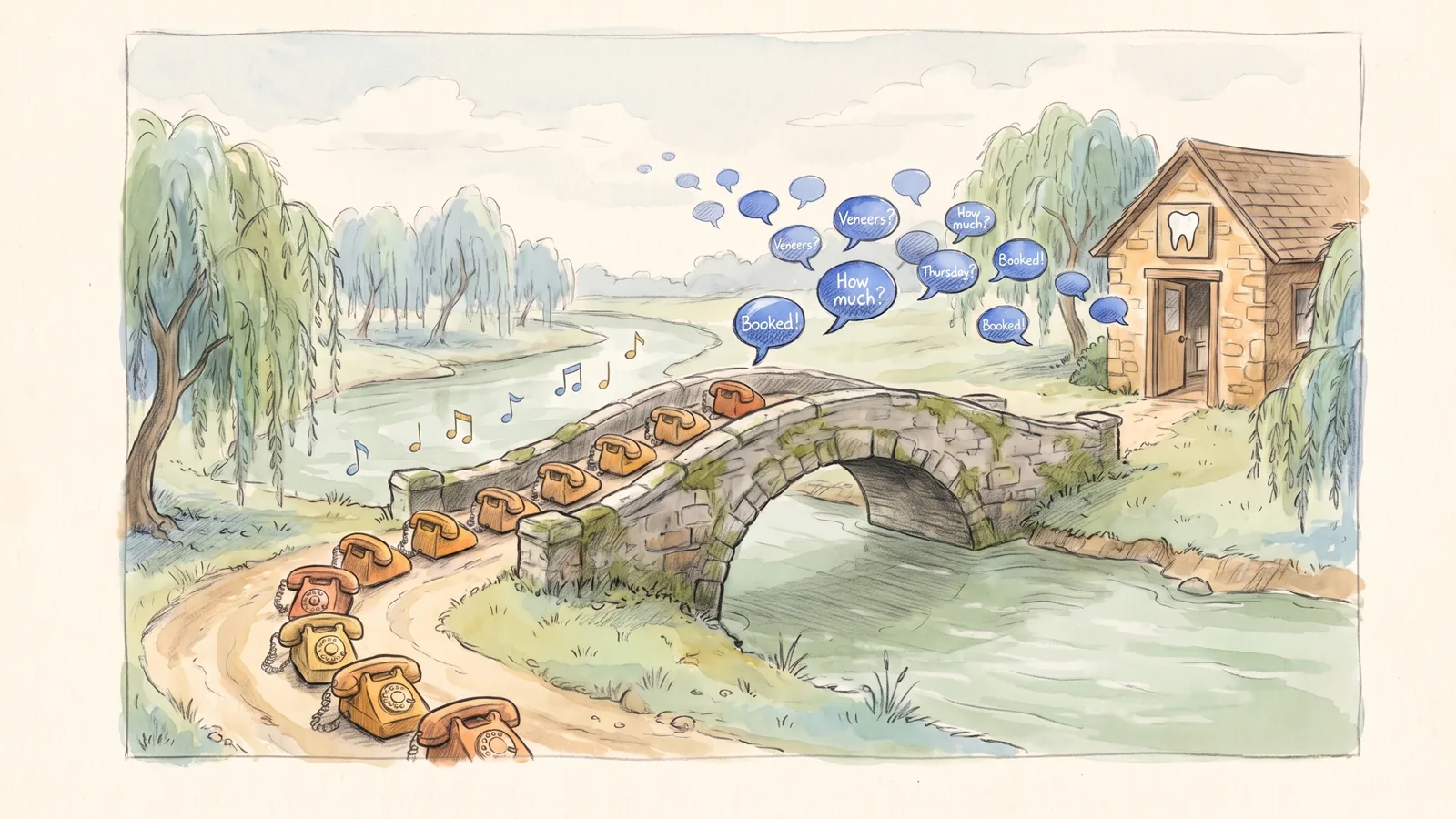
A private dental practice in Surrey lost a £3,400 veneers case when their phone queue exceeded five minutes during a particularly complex NHS exemption query. The prospective patient hung up, contacted a competitor via WhatsApp, and booked a consultation within eight minutes. This scenario plays out dozens of times daily across UK practices, yet most clinic owners remain unaware of the revenue quietly slipping away while their team juggles competing priorities at the front desk.
WhatsApp AI automation eliminates dental phone queue lead loss by instantly capturing and qualifying high-value enquiries the moment they arrive, converting veneers and cosmetic cases to booked consultations while reception staff handle complex patient calls without compromising either revenue stream or service quality.
Key Takeaways
- Five-minute phone hold times cost UK private dental practices an average of 23% of high-value cosmetic enquiries, with veneers cases particularly vulnerable to competitor loss during peak reception hours
- WhatsApp AI systems operate as parallel revenue channels, capturing enquiries instantly while reception teams manage time-intensive calls without staff expansion or workflow disruption
- Automated qualification sequences filter serious buyers from browsers within 90 seconds, directing qualified leads to calendar booking while reception focuses on patient care rather than administrative triage
- Multilingual auto-translation capabilities recover previously lost international and non-English speaking enquiries worth thousands monthly that phone systems cannot accommodate during busy periods
What Happens to Dental Enquiries During Long Phone Hold Times?
High-value dental enquiries evaporate within seconds when prospective patients encounter extended phone queues. Research from the Office for National Statistics demonstrates that UK consumers abandon service enquiries after an average hold time of three minutes forty seconds. For dental practices, this threshold proves even shorter because cosmetic cases represent discretionary spending where convenience heavily influences provider selection.
The veneers patient who disconnected after five minutes didn't simply defer their decision—they immediately searched "veneers near me" and contacted three competitors. The practice offering instant WhatsApp response secured the consultation booking before the original clinic's receptionist finished the NHS query. This pattern repeats constantly: implant enquiries at £2,800 per case, Invisalign treatments averaging £4,200, and smile makeover packages exceeding £10,000 all vanish while reception staff competently handle essential but time-consuming patient interactions.
Most practice managers discover this revenue leak only when reviewing monthly conversion data or noticing unexplained enquiry volume drops. The receptionist performed her role perfectly—the NHS exemption query required careful attention and proper documentation. The system failed by forcing a binary choice: provide excellent service to the current caller or capture new revenue. Patient communication breakdowns emerge not from staff inadequacy but from structural capacity constraints that no amount of training or effort can overcome during peak periods.
Why Traditional Phone Systems Create Revenue Bottlenecks in Modern Dental Practices
Single-channel communication infrastructure cannot accommodate 2025 patient expectations. UK dental practices receive enquiries across phone calls, practice management system portals, Facebook messages, Instagram DMs, email, and now predominantly WhatsApp—yet most route everything through one reception desk telephone line. This architectural flaw guarantees daily revenue loss regardless of staff competence or dedication.
Consider typical Monday morning scenarios: eight to twelve enquiries arrive between 9am and 11am, peak post-weekend volume. Simultaneously, existing patients call with genuine concerns requiring immediate attention—post-operative queries, appointment modifications, prescription requests, insurance clarifications. Each call demands three to seven minutes of focused attention. Meanwhile, the £3,400 veneers enquiry sits in queue position four, listening to hold music, calculating whether this practice truly values their business.
Phone systems force sequential processing in an era demanding parallel engagement. Reception staff cannot split attention between a distressed patient discussing post-extraction complications and a cosmetic enquiry requiring enthusiasm and detailed information. The General Dental Council rightly mandates appropriate care standards that necessitate undivided attention during patient interactions. Traditional telephony creates impossible choices between compliance and revenue capture.
How Does WhatsApp AI Capture Veneers Enquiries While Reception Handles Complex Calls?
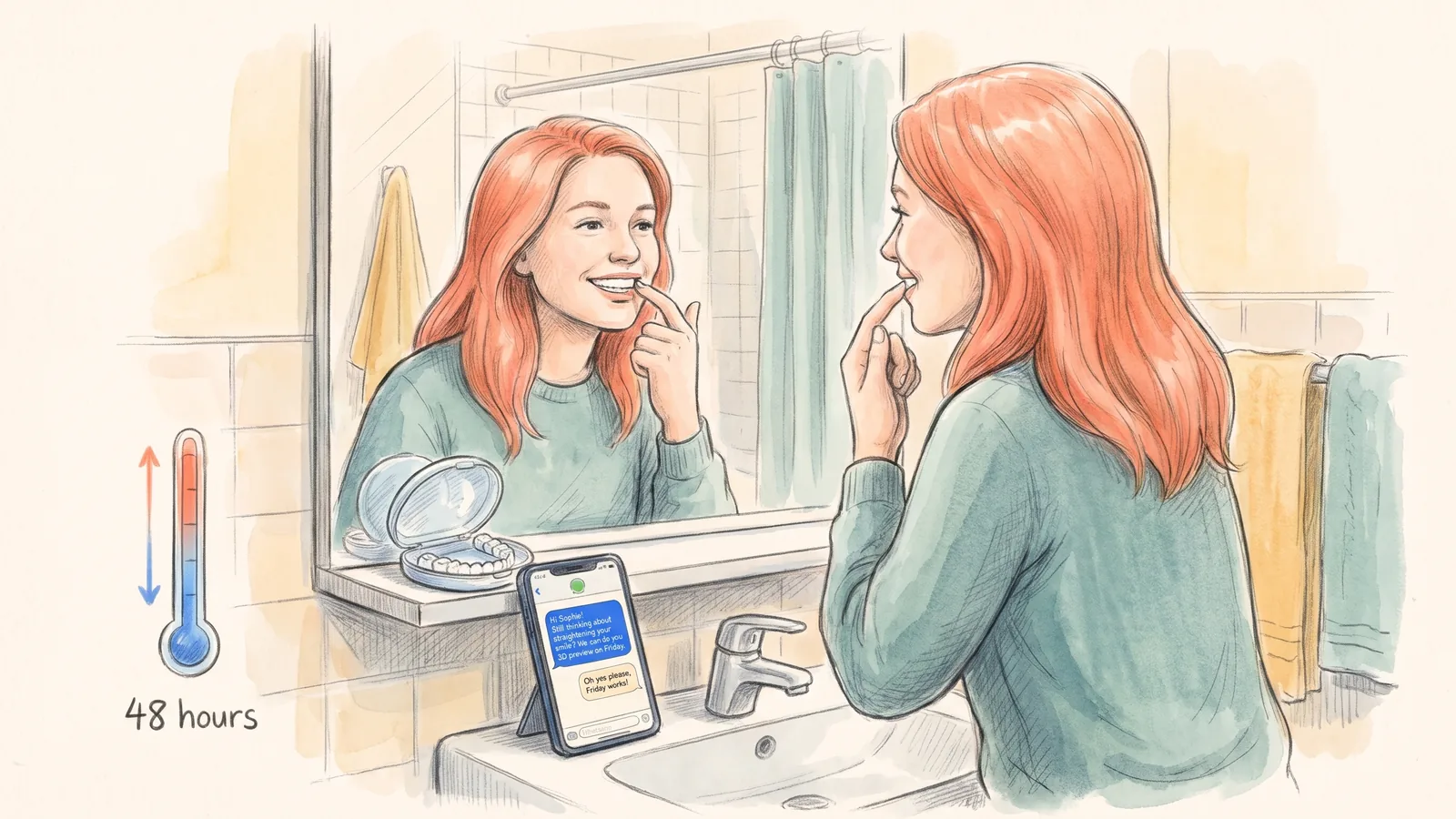
WhatsApp AI functions as an automated parallel revenue channel that operates independently of reception capacity. When the veneers enquiry arrives via WhatsApp message—"Hi, interested in veneers for front teeth, what's the process?"—the system responds within eight seconds with personalised acknowledgment, preliminary information, and qualification questions. This interaction proceeds simultaneously while reception manages the NHS exemption query, eliminating the forced choice between patients.
The automation immediately establishes engagement: "Thanks for your veneers enquiry! We'd love to help you achieve your ideal smile. Our cosmetic consultations typically explore your goals, assess suitability, and provide detailed pricing. Are you looking to improve colour, shape, or both?" This response demonstrates attentiveness, begins qualification, and maintains momentum while the prospective patient remains in decision mode. Portfolio sharing capabilities then activate, sending before-and-after images matching their stated concerns within thirty seconds.
The system sequences interactions logically: acknowledge, qualify, inform, schedule. "Based on what you've described, composite veneers or porcelain veneers might suit your goals. Would you like to book a consultation this week to discuss options? Our next available cosmetic consultation slot is Thursday 3pm." This natural conversation flow converts enquiries to booked appointments without human intervention, capturing revenue that would otherwise vanish during phone queue delays. Reception staff discover completed bookings in the practice management system, ready for confirmation, rather than missed opportunities requiring awkward callback attempts.
What Makes Veneers Enquiries Particularly Vulnerable to Phone Queue Loss?
Veneers represent discretionary cosmetic investment where provider selection hinges on convenience and immediate responsiveness rather than clinical necessity or insurance network constraints. Unlike emergency toothache calls or routine hygiene appointments, veneers enquiries arrive during patient research phases when they're actively comparing multiple practices. Extended phone holds signal disorganization or disinterest, prompting immediate competitor evaluation.
The price sensitivity paradox compounds this vulnerability: patients spending £3,000-£5,000 on veneers expect premium service from first contact. A five-minute phone queue contradicts the luxury positioning implicit in cosmetic dentistry pricing. Prospective patients interpret hold times as practice culture indicators—if initial contact proves this difficult, what delays might treatment involve? This perception, accurate or not, eliminates practices from consideration before clinical excellence becomes relevant.
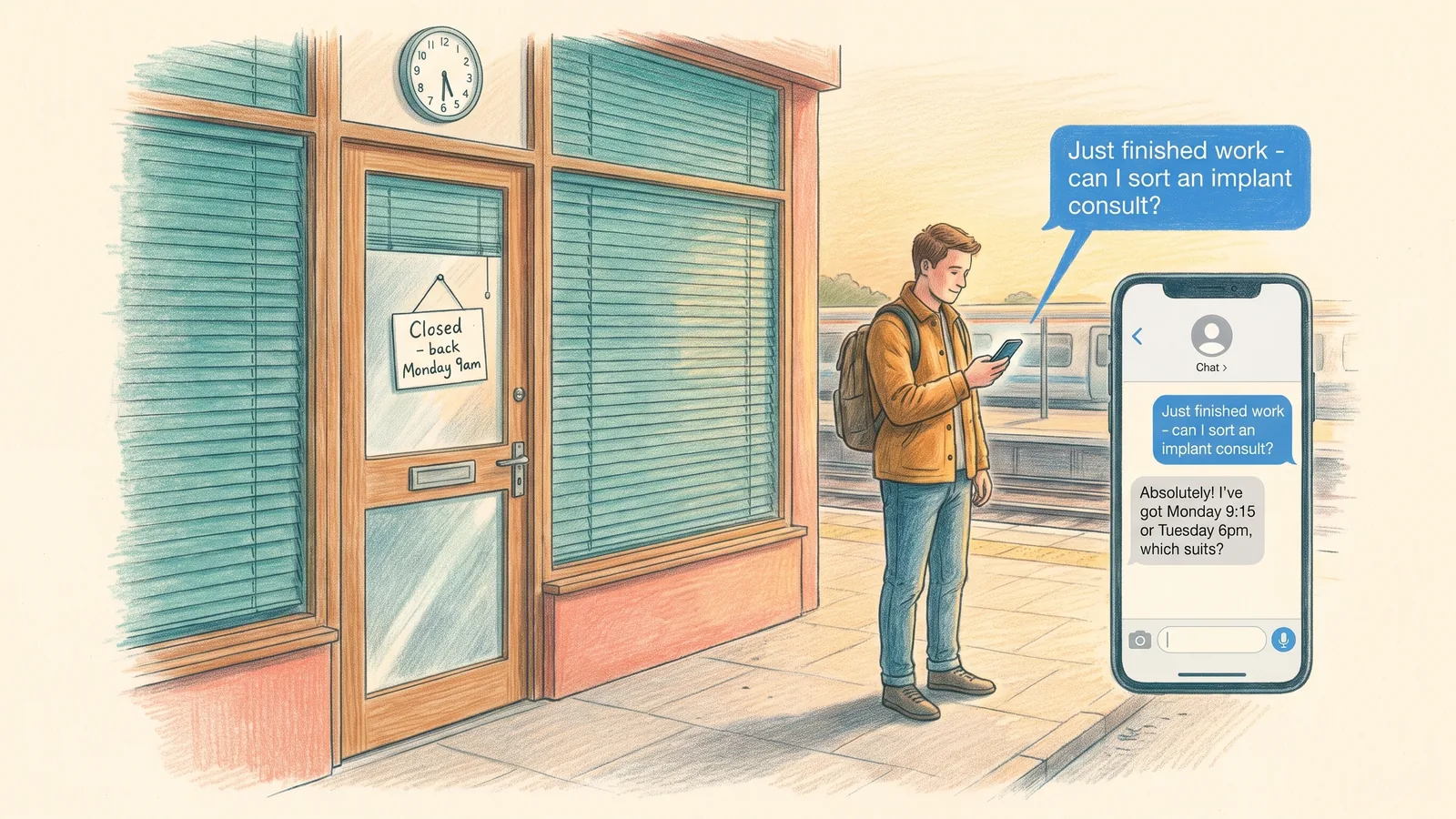
Veneers enquiries also cluster during inconvenient times for phone-dependent practices: lunch hours when staff numbers reduce, late afternoons when accumulated call volume peaks, and Saturday mornings when reduced weekend hours coincide with patient availability. Bank holiday patterns demonstrate this timing mismatch acutely, with cosmetic enquiries arriving precisely when traditional reception coverage disappears entirely.
The Real Cost of "I'll Call Them Back Later" in Private Dental Lead Management
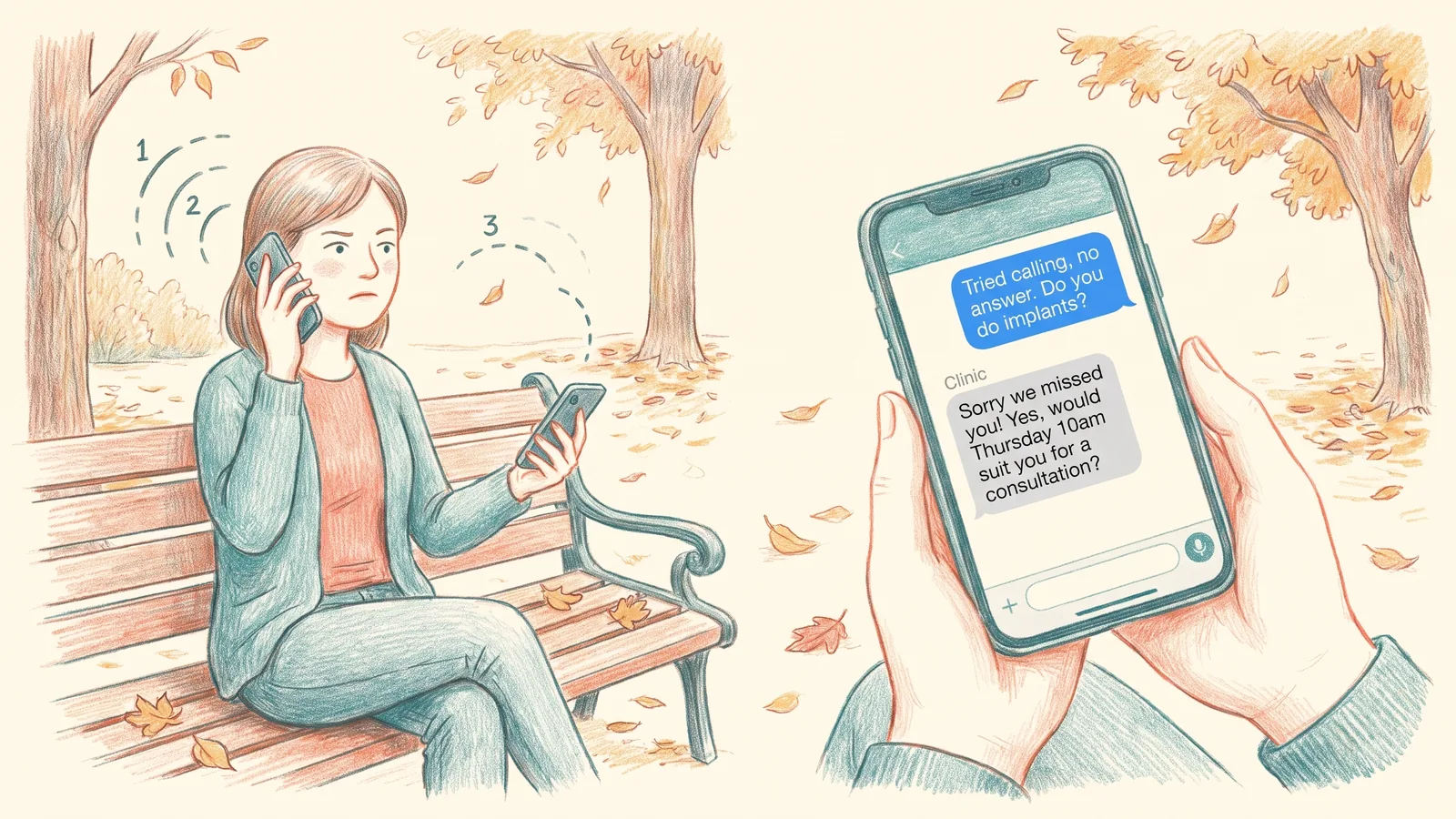
Callback strategies fail catastrophically for high-value dental enquiries because the patient decision window closes within hours, sometimes minutes. When reception finally returns the veneers call two hours after the initial attempt—a reasonable timeframe given competing demands—the prospective patient has typically already engaged two other practices. One offered instant WhatsApp interaction, the other answered immediately. Your practice enters a three-way comparison at a structural disadvantage.
Callback conversion rates for cosmetic dental enquiries average 31% compared to 68% for immediate engagement, according to practice management data across UK private dentistry. This 37-percentage-point gap represents thousands monthly in lost revenue for medium-sized practices. The £3,400 veneers case becomes £1,054 in expected value after callback delay—and that calculation assumes the patient answers when reception calls back, which occurs only 64% of the time during working hours.
Psychological momentum drives cosmetic dental decisions more heavily than clinical urgency. The patient researching veneers experiences peak motivation during their initial enquiry moment—they've just spent thirty minutes reviewing before-and-after galleries, calculated financing options, and mustered courage to make contact. That emotional commitment dissipates rapidly. Two hours later, practical concerns resurface: cost anxiety, procedure apprehension, postponement rationalization. Immediate engagement capitalizes on peak decision readiness; callbacks attempt resurrection after motivation has cooled substantially.
Why Manual Phone Triage Cannot Scale With Modern Cosmetic Dental Demand
UK private dental practices experienced 34% growth in cosmetic enquiry volume between 2022 and 2024 as pandemic-deferred treatments released and social media amplified aesthetic dentistry visibility. This demand surge occurred without proportional phone system capacity expansion because most practices rightly avoided adding reception staff for volume fluctuations that might prove temporary or seasonal. The gap between enquiry volume and response capacity widens monthly.
Manual triage assumes sufficient time exists to assess enquiry urgency and allocate attention accordingly. Reality proves messier: every caller considers their need urgent, staff cannot reliably predict call duration when answering, and complex situations emerge mid-conversation that triple expected handling time. The NHS exemption query initially seemed straightforward—verify eligibility, note information, proceed. Fifteen minutes later, reception remains on that call, properly addressing patient confusion and documentation requirements, while three cosmetic enquiries queue behind.
Staffing solutions create cost structures that eliminate profitability from the very cases they aim to capture. Hiring additional reception personnel to cover peak enquiry periods costs £24,000-£32,000 annually per full-time equivalent, excluding training, benefits, and management overhead. Converting twelve additional veneers cases annually—one monthly—generates £40,800 gross revenue but nets only £8,000-£12,000 after lab costs and clinical time. The mathematics fail when labour-intensive solutions address communication capacity problems better solved through automation architecture.
How Automated Qualification Filters Serious Buyers Without Reception Involvement
Automated qualification sequences distinguish genuine purchasing intent from casual browsing within ninety seconds through strategic questioning that reception staff cannot consistently deploy during high-pressure phone interactions. When the veneers enquiry arrives, the AI system asks: "Are you looking to start treatment within the next three months, or gathering information for future planning?" This single question segments serious buyers from researchers without seeming aggressive or dismissive.
Serious buyers self-identify through specific information requests: pricing clarity, appointment availability, financing options, practitioner qualifications. Browsers ask vague questions, delay scheduling discussions, or provide non-committal responses. The automation adapts accordingly: serious buyers receive calendar links and detailed treatment information; browsers get nurture sequences with educational content and periodic check-ins. This differentiation ensures qualified leads reach consultation booking immediately while maintaining engagement with future opportunities.
The system collects qualification data reception staff rarely have time to gather: treatment timeline, budget range, specific concerns, previous dental history, decision-makers involved. Finance-related objections surface early in automated conversations because patients more freely discuss cost concerns via messaging than phone calls. "Our veneers packages range from £2,800 to £4,500 depending on number of teeth and material choice. Does this align with your budget expectations?" This directness converts faster by eliminating price-reveal delays that waste everyone's time.
Frequently Asked Questions
Does WhatsApp automation feel impersonal compared to phone conversations with reception staff?
Modern WhatsApp AI systems deliver conversational, contextually appropriate responses indistinguishable from human interaction in initial qualification phases. Patients actually report higher satisfaction with instant, informative messaging responses than delayed phone callbacks or extended hold times. The automation handles preliminary information exchange and scheduling; reception staff engage personally during consultation confirmation and treatment phases where human connection truly matters. This division of labour optimises both patient experience and practice efficiency.
Can WhatsApp AI handle complex clinical questions that require professional judgment?
The system recognises its limitations and seamlessly escalates clinical queries to appropriate team members. When enquiries contain keywords indicating clinical complexity—pain descriptions, medical conditions, treatment complications—the automation acknowledges the question, assures professional follow-up, and alerts designated staff members. This intelligent triage ensures patients receive appropriate clinical guidance while preventing the system from providing inappropriate advice, maintaining GDC compliance throughout.
What happens if a patient prefers phone contact over WhatsApp messaging?
WhatsApp automation complements rather than replaces phone systems. Patients who prefer calling still reach reception as normal; the AI system simply captures the parallel enquiry stream arriving via messaging platforms. Many practices discover that 60-70% of new cosmetic enquiries now originate through messaging rather than phone calls, reflecting broader UK communication preferences. The system accommodates patient choice while preventing the phone-only bottleneck that loses revenue during capacity constraints.
How quickly can a practice implement WhatsApp AI without disrupting current operations?
Implementation typically completes within five to seven business days, requiring minimal practice involvement. The system integrates with existing practice management software, learns practice-specific information from website content and provided materials, and operates independently once configured. Staff training requires approximately thirty minutes—primarily learning how to review captured leads and booked consultations rather than operating the automation itself. Practices often see first conversions within twenty-four hours of activation, capturing enquiries that previously escaped during busy periods.
Book Your Free CareDental Demo: Stop Losing High-Value Enquiries to Phone Queue Delays
Your reception team excels at patient care—they shouldn't sacrifice revenue capture to prove it. CareDental's WhatsApp AI operates as your parallel lead recovery system, instantly engaging veneers, implants, and cosmetic enquiries while your staff focus on delivering the excellent service that defines your practice. Every complex call they handle properly no longer costs you £3,400 in lost cases.
UK dental practices using CareDental capture an average of eighteen additional monthly consultations previously lost to phone queue abandonment, timing mismatches, and callback failures. These aren't new enquiries—they're the revenue that always existed but evaporated during capacity constraints. Automated scheduling eliminates booking friction while multilingual capabilities recover international patient revenue impossible through phone-only systems.
Book your free CareDental demonstration and discover exactly how many high-value enquiries currently disappear during your practice's busiest hours—and how WhatsApp AI recaptures that revenue without adding reception staff or disrupting your team's workflow. Your phones can ring as long as necessary; your revenue no longer depends on how quickly they're answered.