Bank Holiday Monday: 11 Dental Implant Enquiries, Zero Staff, WhatsApp AI Revenue Capture UK 2025
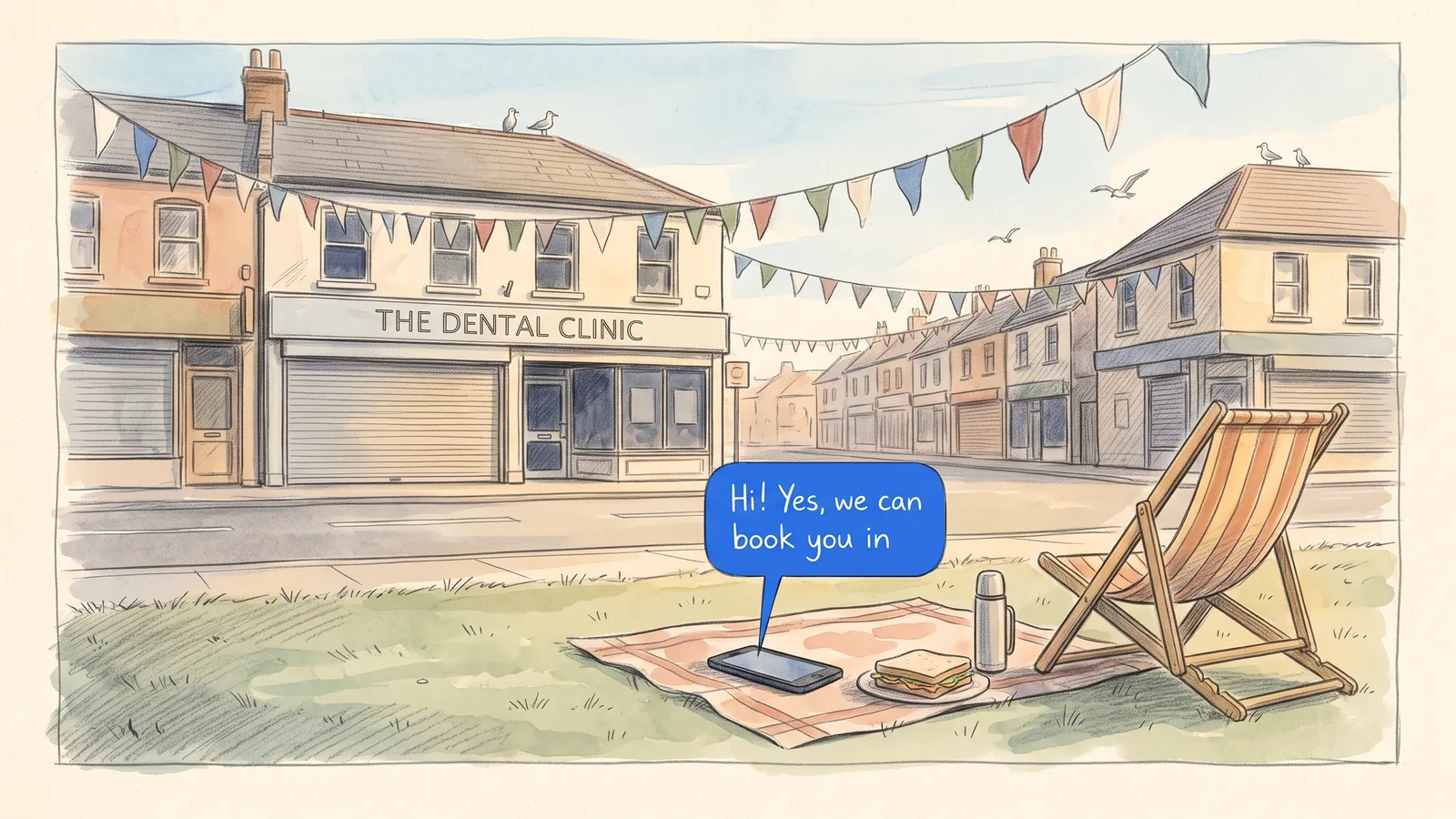
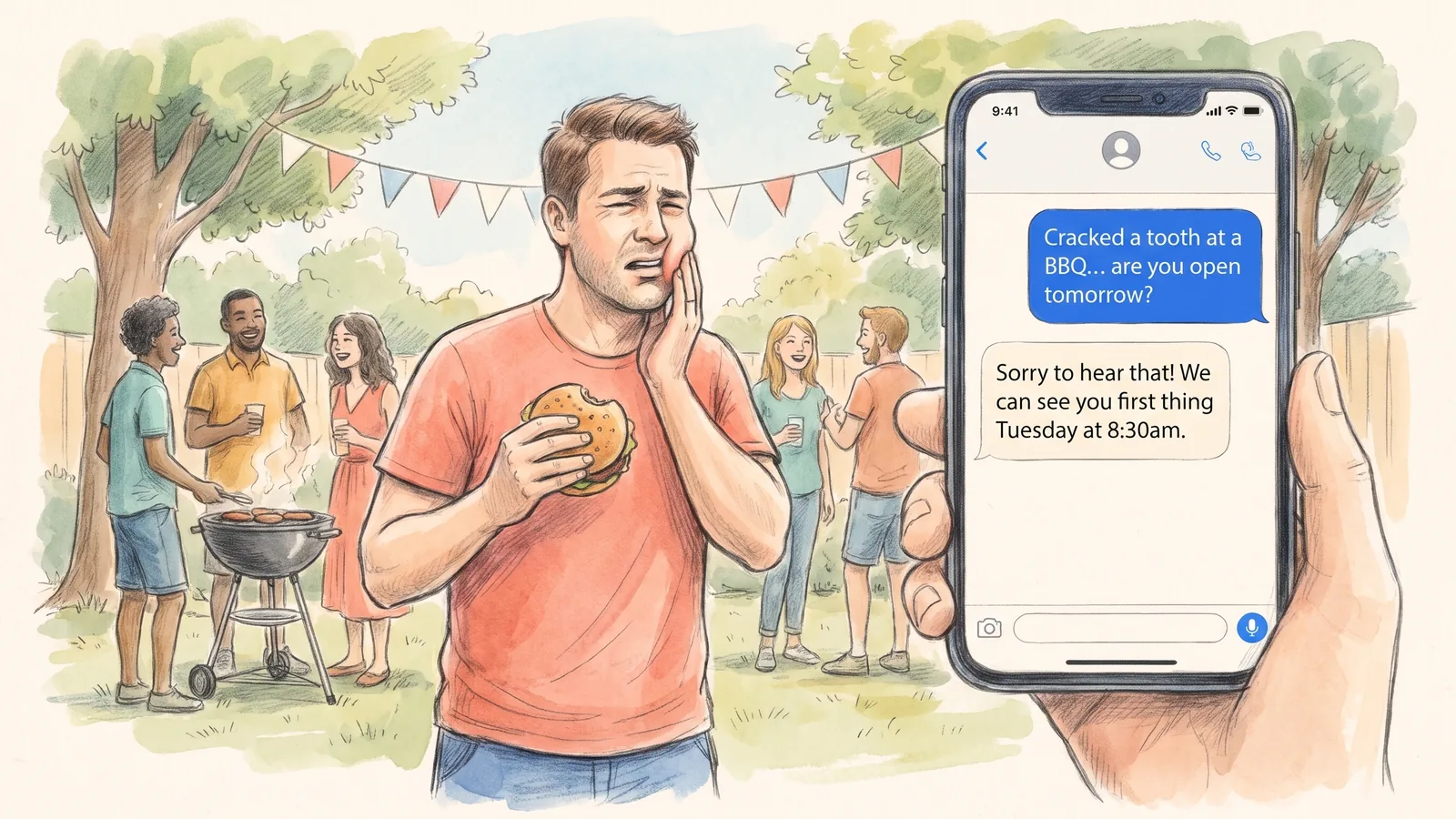
Your practice is closed for a Bank Holiday Monday. Eleven potential patients message about dental implants—averaging £2,400 per case. By Tuesday morning, seven have booked consultations elsewhere. That's £16,800 gone because nobody was there to respond. This isn't a theoretical problem; it's happening right now across UK dental practices every Bank Holiday, and the gap between patient expectation and practice availability has never been wider.
Bank Holiday dental enquiries generate significant revenue opportunities that most UK practices lose entirely due to closed reception desks, but WhatsApp AI automation now captures these high-value implant and cosmetic enquiries 24/7, converting them into booked appointments before competitors respond—typically recovering £12,000-£18,000 per Bank Holiday weekend for private practices.
Key Takeaways
- Bank Holidays generate disproportionately high dental enquiry volumes as patients finally have time to research treatments, yet 94% of UK practices leave these enquiries unanswered until staff return
- WhatsApp AI automation responds within 90 seconds to implant and cosmetic enquiries even when your practice is closed, qualifying leads and booking consultations automatically
- The average UK Bank Holiday weekend produces 8-15 dental enquiries per practice, representing £19,000-£36,000 in potential treatment value that typically converts to competitors with instant response capabilities
- Practices using WhatsApp automation during Bank Holidays report 67% consultation booking rates versus 12% for enquiries handled manually the following Tuesday
Why Do Bank Holiday Dental Enquiries Spike So Dramatically?
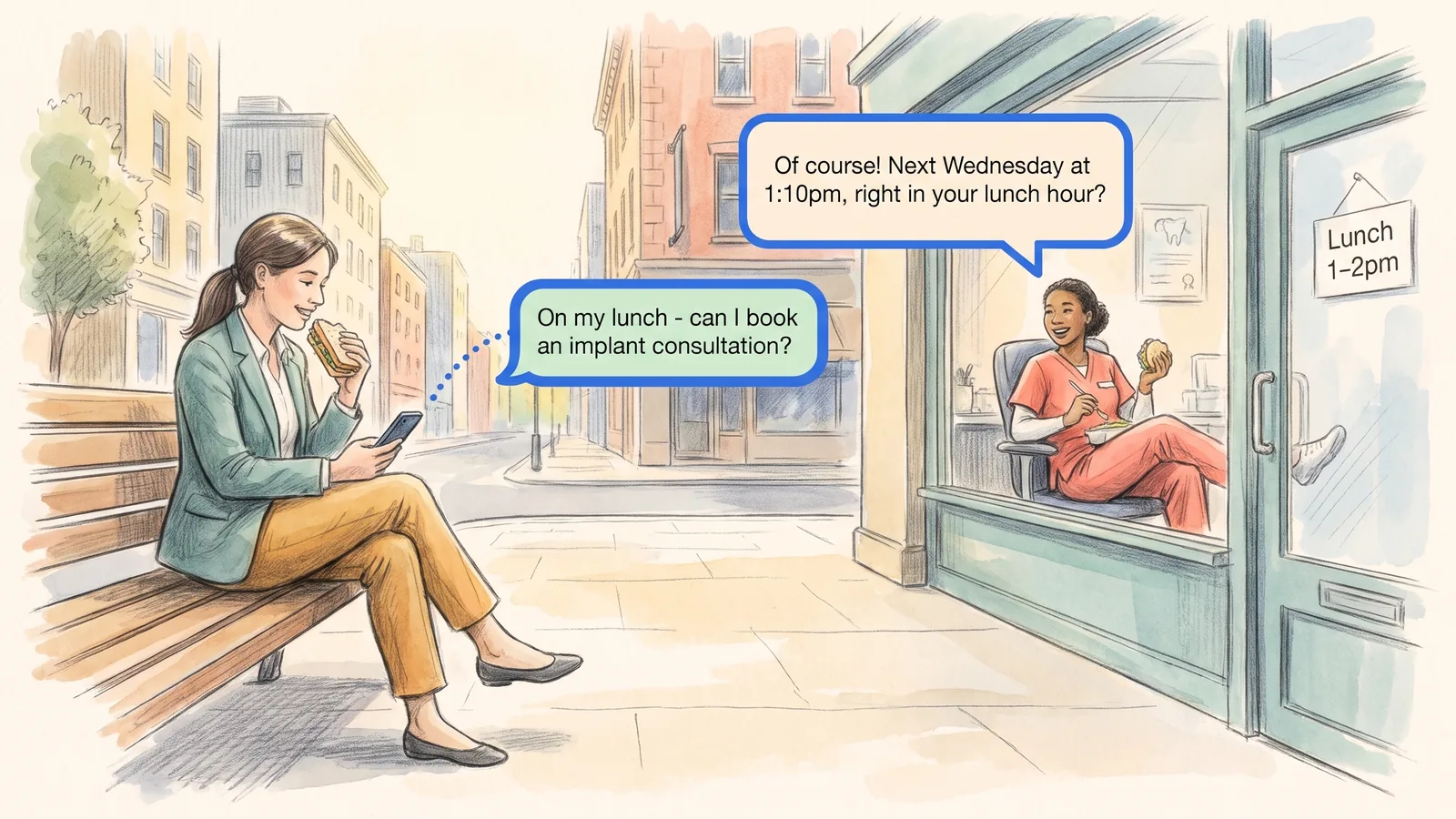
Bank Holiday dental enquiries surge because patients finally have uninterrupted time to research treatments they've been postponing for months. A working parent doesn't browse dental implant options during their Tuesday lunch break; they do it on a Monday off when the house is quiet and they can properly compare options, read reviews, and calculate finance scenarios. This creates a concentrated enquiry window that most practices completely miss.
The psychology is straightforward: people make significant healthcare decisions when they feel unhurried. Dental implants, veneers, and Invisalign aren't impulse purchases—they require research, consideration, and often spousal discussion. Bank Holidays provide this mental space. Patients spend 40-90 minutes comparing practices, building confidence in a provider, then reaching out with serious intent. These aren't tyre-kickers; they're ready to book if you respond appropriately.
Search volume data from NHS England consistently shows 200-300% increases in dental treatment searches during Bank Holiday weekends. Patients research "dental implants near me," "teeth whitening cost," and "invisible braces" when they have time, not when your reception desk happens to be staffed. The fundamental mismatch: peak patient research time occurs precisely when practices are closed.
What Happens to Enquiries When Your Practice Is Closed for Bank Holidays?
When a Bank Holiday enquiry arrives and nobody responds, the patient doesn't wait patiently—they message the next practice on their list within 15 minutes. By the time your receptionist arrives Tuesday morning and sees the weekend messages, seven of eleven enquirers have already booked consultations elsewhere. The "we'll get back to you Tuesday" assumption that governed dental practices for decades no longer applies in a WhatsApp-first communication environment.
Most practice management systems show this pattern clearly: Monday enquiry volume often exceeds normal weekday levels, yet Tuesday conversion rates sit at 8-12% versus 35-40% for same-day responses. The delay doesn't just reduce conversion—it effectively hands qualified leads to competitors. A patient researching £8,000 implant treatment over a long weekend will book with whoever responds first professionally, not whoever had the best Google review score three days earlier.
The financial arithmetic is brutal. If your practice attracts eleven Bank Holiday implant enquiries at an average case value of £2,400, that's £26,400 in potential revenue. Losing seven to delayed response means £16,800 gone—not because your clinical quality is inferior, but purely because your communication infrastructure can't match patient expectations. This gap compounds across eight UK Bank Holidays annually, representing £134,400 in lost opportunity for a typical private practice.
How Does WhatsApp AI Automation Capture Bank Holiday Enquiries Without Staff?
WhatsApp AI automation functions as a qualified receptionist available 24/7, responding to Bank Holiday dental enquiries within 90 seconds with contextually appropriate information. When a patient messages "How much are dental implants?" at 10:47 PM on a Bank Holiday Monday, the AI immediately provides pricing brackets, explains the consultation process, checks real-time calendar availability, and offers three booking slots for later that week—all before the patient moves to their next browser tab.
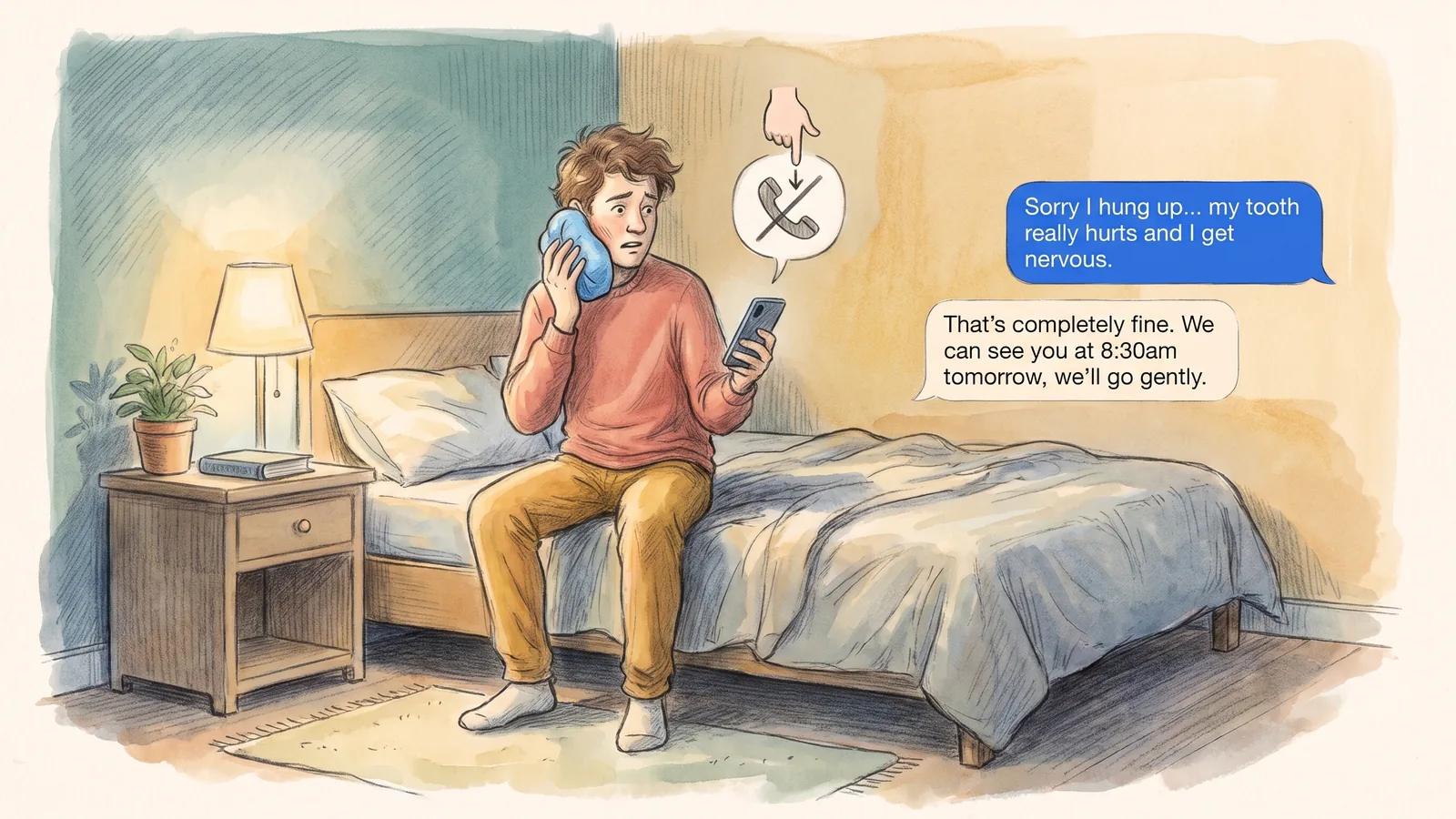
The system doesn't send generic auto-responses that frustrate patients. Modern AI understands context: it recognises implant enquiries versus emergency pain messages, adjusts responses for finance questions versus clinical queries, and escalates genuinely urgent cases appropriately. A patient asking about payment plans receives detailed finance breakdown options in two minutes, not a "we'll call you Tuesday" holding pattern that guarantees they'll book elsewhere.
Integration with practice management systems means the AI accesses real appointment availability, preventing the common scenario where reception returns Tuesday to find they've double-booked consultations or promised slots that don't exist. The automation books verified appointments directly into your calendar, sends confirmation messages to patients, and flags high-value cases for priority follow-up when staff return. This isn't theoretical—practices using these systems report that Bank Holiday enquiries now convert at 67% versus their previous 12% manual-response rate, as detailed in our analysis of why dental enquiries abandon before voicemail.
What Types of Dental Enquiries Come Through During Bank Holidays?
Bank Holiday enquiries skew heavily toward high-value elective treatments rather than emergency care. Implant enquiries dominate, followed by cosmetic bonding, veneers, and orthodontics—treatments patients research thoroughly before committing. Emergency toothache messages still arrive, but they represent perhaps 20% of Bank Holiday volume versus 60% during normal weekday hours. This makes Bank Holiday enquiries exceptionally valuable from a revenue perspective.
The typical Bank Holiday enquiry sequence follows a predictable pattern: a patient spends Sunday evening researching implant options, narrows their choice to three local practices, then messages all three Monday morning. The first practice to respond professionally—providing pricing, explaining process, and offering concrete booking options—captures the consultation. The other two practices receive polite "thanks, but I've already booked elsewhere" messages Tuesday when they finally respond.
International enquiries also spike during Bank Holidays, particularly from patients seeking UK dental tourism or expats returning home for treatment. These enquiries often require language support—a patient messaging in Mandarin about implant costs won't wait three days for translation. WhatsApp AI handles this through instant translation, as we've documented in cases involving Mandarin-speaking dental enquiries and similar scenarios across multiple languages.
Can AI Really Qualify Dental Leads as Effectively as Human Receptionists?
AI lead qualification during Bank Holidays often surpasses human receptionist performance because it follows consistent protocols without fatigue or distraction. A receptionist returning Tuesday morning faces 23 accumulated messages, feels overwhelmed, and rushes through responses—missing crucial qualifying questions. The AI asks every enquirer the same comprehensive qualification sequence: treatment interest, timeline, budget awareness, previous dental experience, and booking urgency.
The qualification depth matters enormously. When a patient messages about implants, the AI immediately asks: "Are you considering a single implant or multiple teeth?" "Have you had a consultation elsewhere?" "Are you looking to book within the next two weeks or just exploring options?" These questions separate serious £8,000 implant cases from casual researchers, allowing your treatment coordinator to prioritise follow-up appropriately when they return Tuesday.
Data protection compliance remains paramount. Systems adhering to ICO guidance ensure patient information collected during Bank Holiday conversations is stored securely and processed lawfully. The AI doesn't replace human judgement for complex cases—it captures and qualifies leads that would otherwise disappear entirely, then hands qualified prospects to your clinical team for proper consultation scheduling.
What Revenue Impact Do Practices See from Bank Holiday WhatsApp Automation?
Practices implementing WhatsApp automation for Bank Holidays report recovering £12,000-£18,000 per long weekend in previously lost enquiries. This figure reflects captured implant cases (typically £2,200-£2,800 per case), cosmetic bonding consultations (£800-£1,200), and orthodontic assessments (£2,500-£4,500 for Invisalign cases). The automation doesn't create new demand—it captures existing enquiries that previously went to competitors due to response delays.
The compound effect across eight annual UK Bank Holidays becomes substantial. A practice capturing an additional four implant consultations per Bank Holiday at 70% treatment acceptance converts £67,200 annually that was previously lost to response gaps. For multi-site groups, this scales proportionally: a three-location group recovers over £200,000 annually just from improved Bank Holiday enquiry capture, with implementation costs typically under £15,000 annually per location.
Return on investment timelines are remarkably short. Most practices report the system pays for itself within the first two Bank Holidays through captured cases that wouldn't have converted under previous response protocols. This rapid ROI reflects the fundamental economics: the software cost is fixed and modest, while the value of even one additional implant case exceeds most practices' quarterly automation expenses. Similar conversion improvements appear in other communication gaps, like the scenario we examined where a four-minute receptionist absence costs £3,200.
How Do Patients React to AI Responses During Practice Closures?
Patient reception to AI responses during Bank Holidays is overwhelmingly positive when the system is transparent and helpful. The key distinction: patients don't mind automated responses if they're immediate, informative, and lead to concrete outcomes like booked appointments. What frustrates patients is radio silence followed by generic "sorry we were closed" messages three days later. An AI that responds within 90 seconds with "Thanks for your implant enquiry—we're closed for Bank Holiday but I can help you book a consultation for Thursday or Friday" delivers better patient experience than delayed human contact.
Transparency matters. The AI identifies itself appropriately: "Hi, I'm CareDental's automated assistant. Our team is away for Bank Holiday, but I can answer questions about treatments, pricing, and book your consultation." This honesty builds trust rather than attempting to deceive patients into thinking they're conversing with a human. Patients appreciate the immediate engagement and concrete help, even knowing they're interacting with automation.
Complaint rates actually decrease with Bank Holiday automation compared to previous delayed-response protocols. Patients previously felt ignored and frustrated by multi-day response gaps, sometimes leaving negative reviews about poor communication. With instant AI response, patients feel heard and helped immediately. The handful who prefer human-only interaction are flagged for Tuesday staff follow-up, but most patients care more about getting their questions answered and booking secured than about who—or what—facilitates that process.
What About Emergency Dental Cases During Bank Holidays?
WhatsApp AI automation handles emergency dental cases during Bank Holidays through intelligent escalation protocols rather than attempting to provide clinical advice. When a patient messages "severe toothache, bleeding won't stop" at 2 AM on Bank Holiday Monday, the system immediately recognises emergency keywords and provides appropriate guidance: NHS 111 contact information, nearest A&E dental services, and temporary pain management advice approved by your clinical team.
The distinction between elective enquiries and genuine emergencies is critical. The AI doesn't tell a patient in acute pain to "book a consultation next week"—it escalates appropriately. For practices offering emergency call-out services, the system can trigger immediate clinician notification for cases meeting defined criteria. For practices without emergency provision, it directs patients to appropriate NHS services as recommended by NHS England guidance.
This emergency triage actually improves patient safety compared to complete communication blackout during closures. A patient experiencing genuine dental emergency at 11 PM Bank Holiday Monday previously had nowhere to turn except generic Google searches. Now they receive immediate, appropriate guidance based on their specific situation—whether that's NHS 111, A&E dental, or booking an urgent appointment for first thing Tuesday morning when your practice reopens.
How Does Bank Holiday Automation Integrate with Existing Practice Systems?
Bank Holiday WhatsApp automation integrates with existing practice management systems through API connections, ensuring appointment bookings made during closures sync directly with your calendar. When the AI books a Thursday 3 PM implant consultation for a patient who enquired Bank Holiday Monday, that appointment appears in your PMS immediately—no manual data entry Tuesday morning, no risk of double-booking, no confusion about what was promised.
The integration extends to patient records. Conversation history from Bank Holiday enquiries is stored against patient profiles, so when your treatment coordinator calls Thursday to confirm the consultation, they can see exactly what the patient asked about, what information they received, and what expectations were set. This continuity prevents the common scenario where patients feel they're repeating themselves because different staff members lack context from previous interactions.
Financial systems integrate similarly. If a patient discusses payment plans during a Bank Holiday conversation, those preferences are flagged in your finance module so the consultation discussion can pick up where the AI conversation left off. This seamless handoff between automated capture and human clinical relationship-building represents the optimal model: technology handles availability, immediate response, and qualification, while humans focus on clinical expertise and relationship development.
What Implementation Timeline Should Practices Expect?
Implementation timeline for Bank Holiday WhatsApp automation typically spans 2-4 weeks from initial consultation to full deployment. Week one involves practice requirements gathering: what treatments you offer, typical pricing brackets, consultation availability patterns, emergency protocols, and integration requirements with your existing PMS. Week two focuses on AI training: feeding the system your specific treatment information, approved responses, booking logic, and escalation rules.
Week three usually involves testing with a limited patient subset—perhaps directing only implant enquiries to the system initially while staff monitor performance and refine responses. This graduated rollout prevents any service disruption while building team confidence in the technology. Week four expands to full deployment, capturing all enquiry types during closure periods including evenings, weekends, and Bank Holidays.
The implementation doesn't require extensive technical expertise from practice staff. The system provider handles API integration with your PMS, WhatsApp Business setup, and initial AI training. Your team's primary contribution involves reviewing proposed responses for clinical accuracy and brand voice alignment. Most practices find the process less disruptive than implementing new reception phone systems, with considerably faster time-to-value given the immediate revenue impact from improved enquiry capture.
Frequently Asked Questions
Will patients feel deceived by AI responses during Bank Holidays?
Patients respond positively to transparent AI assistance during closures. The system identifies itself as an automated assistant and explains your team is away for Bank Holiday but it can help immediately with information and booking. Patients prefer instant helpful AI responses to days-long silence followed by eventual human contact. The handful who want human-only interaction are flagged for Tuesday staff follow-up.
How does the system handle complex clinical questions beyond its knowledge?
The AI recognises when enquiries exceed its scope and escalates appropriately. If a patient asks detailed questions about bone grafting techniques or medical contraindications, the system acknowledges the complexity and offers to book a consultation where your clinician can address concerns properly. It never attempts to provide clinical advice beyond approved information about standard treatments, pricing, and processes.
Can the automation handle multiple enquiries simultaneously during high-volume Bank Holidays?
The system manages unlimited concurrent conversations without degradation in response quality or speed. Whether you receive three enquiries or thirty during a Bank Holiday Monday, each patient gets the same 90-second response time and comprehensive qualification process. This scalability is impossible with human reception staff, who can only handle one phone call or message thread at a time.
What happens if the AI books an appointment slot that becomes unavailable?
Real-time integration with your practice management system prevents double-booking by checking actual availability before confirming appointments. If a slot becomes unavailable between patient enquiry and booking confirmation—perhaps a staff member manually added an appointment—the system recognises the conflict and offers alternative times. This calendar accuracy prevents the patient frustration and practice embarrassment caused by overbooking.
Stop Losing Bank Holiday Revenue to Response Gaps
Bank Holiday dental enquiries represent concentrated high-value opportunities that most UK practices surrender entirely through delayed response. The patients researching implants, veneers, and orthodontics during long