I need to check my diary: booking the consultation now
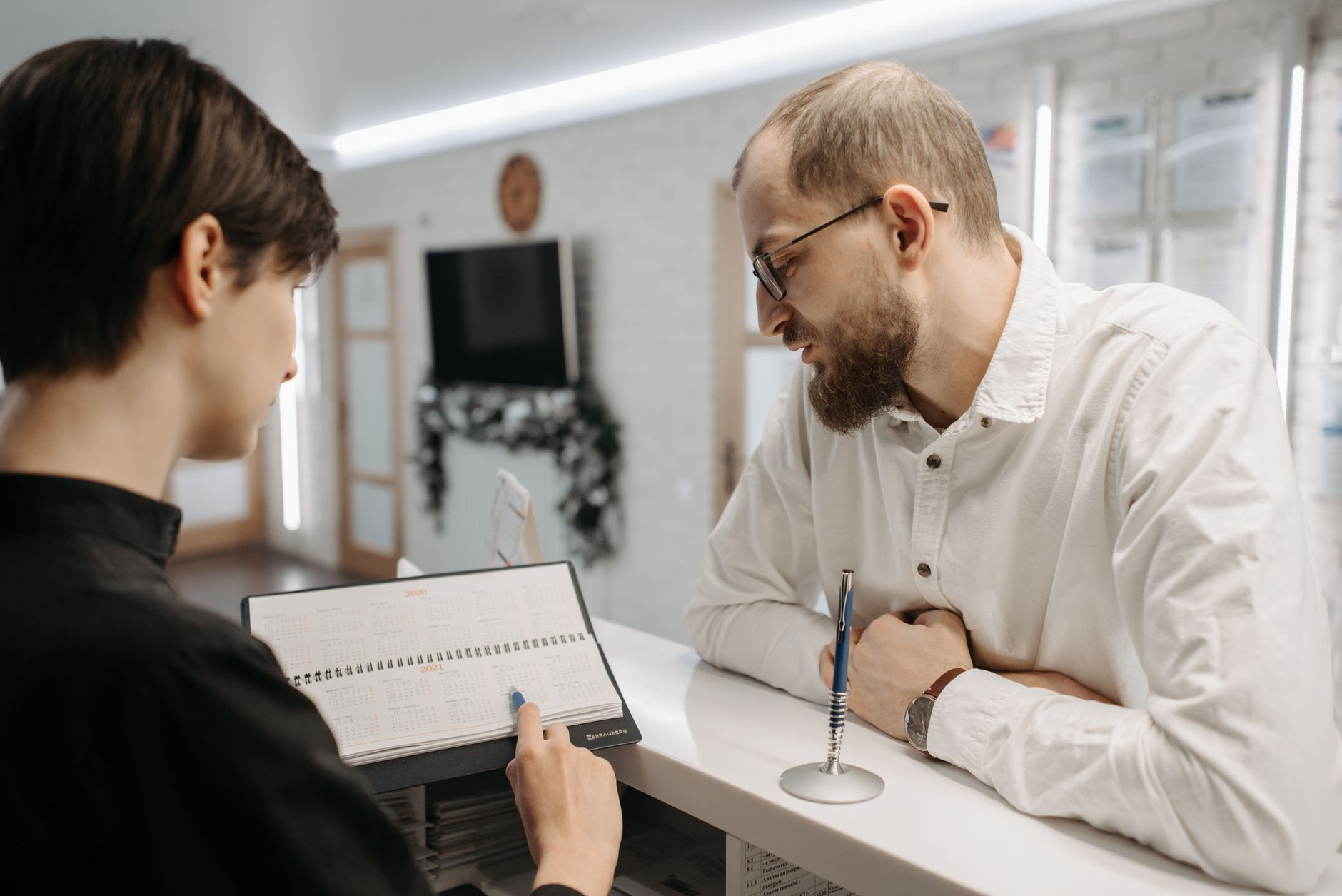
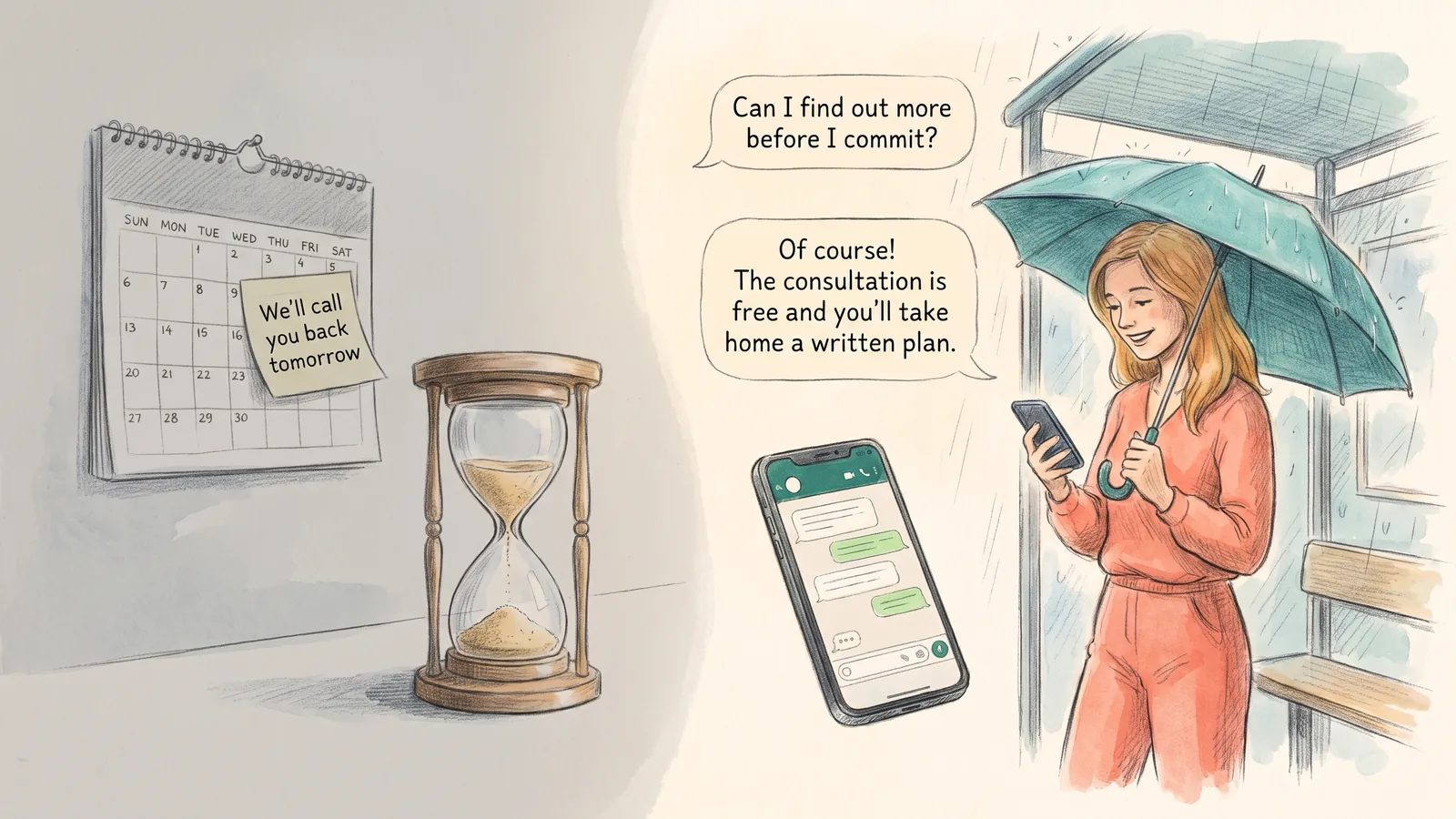
A potential patient messages at 7pm asking about teeth whitening. Your receptionist replies the next morning: "I need to check my diary and get back to you." By then, the enquirer has already booked elsewhere. This phrase—common, polite, understandable—costs UK dental clinics thousands of pounds in lost consultations every month, because hesitation is the moment a lead walks away.
Booking a dental consultation immediately, while interest is highest, converts enquiries into appointments at twice the rate of delayed responses. The patient who messages now expects an answer now, and every hour of delay increases the chance they will book with a competitor who replies faster.
Key Takeaways
- Immediate booking during the first contact captures enquiries before they cool or move on to another clinic.
- Patients message outside business hours more often than during them; evening and weekend enquiries need instant handling.
- Saying "I need to check my diary" signals friction and gives the patient time to reconsider or shop around.
- Automated systems that show available slots and confirm bookings in real time remove the delay and close more consultations.
Why Do Patients Expect Instant Booking?
Consumer behaviour has shifted. The same person who messages your clinic at 8pm has just booked a restaurant table, ordered groceries and reserved a haircut appointment—all from their phone, all within minutes. They expect dental booking to work the same way. When it does not, they assume your clinic is either too busy to care or too outdated to handle modern enquiries, and they move on.
WhatsApp is now the default channel for health enquiries in the UK. Patients prefer it to phone calls because they can message at any time without interrupting their day, and they expect a reply within minutes. If that reply is "I will check and get back to you," the conversation has already stalled. The patient's attention shifts, doubt creeps in, and the warm lead goes cold. Research from the Office for National Statistics shows that UK adults now spend more time on messaging apps than on voice calls, and healthcare providers who meet patients on their preferred channel see higher conversion rates.
Immediate booking also removes the internal barrier: your team does not have to remember to follow up, the patient does not have to wait for a second message, and the diary does not become a bottleneck. The consultation is locked in while the patient is still motivated, reducing no-shows and increasing the likelihood they will attend.
What Happens Between "I'll Check" and the Follow-Up?
The patient who hears "I need to check my diary" is left in limbo. They do not know when you will reply, whether you have space, or if you even received their message. During that gap—whether it is two hours or two days—several things happen, all of them bad for your conversion rate.
First, their urgency fades. The toothache that prompted the enquiry at 9pm feels less acute the next morning. The cosmetic concern they were excited about last night seems less pressing after a good sleep. Second, they message other clinics. If another practice replies instantly with available times, the booking goes there. Third, they forget. Life intervenes, and your follow-up message arrives when they are distracted, annoyed or simply no longer interested.
Your receptionist, meanwhile, has added another task to an already full day. She must check the calendar, work out availability, craft a reply, send it, then wait to see if the patient responds. If the patient does not reply, she must decide whether to chase again or let it go. Each step introduces friction, delay and the risk that the lead is lost entirely. The phrase "I'll check" is courteous and human, but in a competitive market it is also a conversion killer.
How Do Clinics Book Consultations in Real Time?
Real-time booking means the patient receives available appointment slots within seconds of enquiring, chooses one, and receives immediate confirmation—all without waiting for a person to intervene. This is not about replacing your team; it is about removing unnecessary delay from the first step of the booking process, so your team can focus on the consultation itself rather than the back-and-forth of scheduling.
Some clinics integrate their practice management system with online booking widgets, but most of these tools require the patient to visit a website, fill in a form, and wait for email confirmation. By that time, the moment has passed. The most effective real-time booking happens inside the conversation channel the patient is already using—usually WhatsApp—so there is no extra step, no form to complete, no waiting.
CareDental's answer step handles this by connecting to your existing calendar and replying to every WhatsApp enquiry in seconds, day and night, in the patient's own language. It presents available times, books the consultation, and hands the conversation to your treatment coordinator the moment a person is needed. The patient is confirmed before they lose interest, and your team picks up a warm, ready-to-convert lead rather than a cold enquiry that has been sitting for hours.
This approach works because it respects the patient's time and meets them at their moment of highest intent. The person who messages at 11pm about implants is ready to book; they are not ready to wait until tomorrow to hear back. Real-time booking captures that readiness and turns it into an appointment before competing clinics even see the enquiry.
Does Booking Speed Actually Affect Conversion Rates?
Yes, dramatically. Speed to response is one of the strongest predictors of conversion in any service business, and dental enquiries are no exception. The British Dental Association notes that patient expectations for digital service have risen sharply, and practices that respond faster win more bookings. The difference between a two-minute reply and a two-hour reply can double your conversion rate, because the second clinic to reply is often too late—the patient has already booked.
Consider the patient journey. Someone messages your clinic and three others on Monday evening. Clinic A replies instantly with available slots. Clinic B replies Tuesday morning saying "I'll check the diary." Clinic C replies Tuesday afternoon with times. Clinic D never replies. Even if Clinic B has better reviews or is closer to the patient's home, they have already lost: Clinic A booked the consultation on Monday night, while the patient was still engaged. The others are competing for leftovers.
This speed advantage compounds over time. The clinic that consistently replies first builds a reputation for responsiveness, earns better online reviews ("they got back to me straight away"), and attracts more referrals. The clinic that says "I'll check" every time becomes known—quietly, in private patient conversations—as the one that is hard to reach, and referrals dry up. Speed is not just a tactical advantage; it becomes a strategic asset.
When Do Most Dental Enquiries Actually Arrive?
Most dental enquiries arrive outside your opening hours. Patients message after work, during their commute, late in the evening, and at weekends—precisely the times when your reception desk is closed. If your only response mechanism is a human receptionist working 9am to 5pm, you are missing the majority of incoming leads, or at best leaving them unanswered until the next business day.
Evening enquiries are particularly valuable because they come from people who have had time to think, compare and decide. The person who messages at 10pm asking about Invisalign has likely spent the evening researching, reading reviews and working up the courage to get in touch. They are warm, motivated and ready to book. If your reply is "we'll get back to you tomorrow," they will message another clinic that is still answering, or they will lose momentum overnight and never follow up.
Weekend enquiries follow the same pattern. Saturday morning brings a surge of cosmetic and elective enquiries—whitening, veneers, orthodontics—from people who have time to think about their smile when they are not at work. If your response is delayed until Monday, the weekend browsing has ended, the patient is back in work mode, and the enquiry is cold. Real-time systems that answer instantly, any time of day, capture these high-value leads while they are still engaged.
CareDental's answer step covers this gap by replying to every WhatsApp enquiry in seconds, day and night, answering questions, easing hesitation, and booking the consultation whether your team is in the building or not. The next morning, your treatment coordinator receives a summary of every overnight conversation, with the patient's concern, the next step, and a suggested reply, so follow-up is smooth and nothing is lost.
What Should Your First Message Say to Book the Consultation?
The first message is the hinge. It must acknowledge the enquiry, answer the question, and move directly to booking. Any hesitation—any phrase like "I'll check" or "let me get back to you"—introduces delay and doubt. The best first message sounds like this: "We can help with that. We have appointments available on [date] at [time] or [time]. Which works best for you?"
Notice what it does not say. It does not say "I need to check my diary." It does not ask the patient to call back. It does not leave them waiting. It assumes the booking will happen and simply asks which slot suits. This direct approach works because it matches the patient's intent: they messaged to book, not to start a long conversation, so the reply should make booking the easiest next step.
The message must also be specific. Vague offers like "we have availability this week" force the patient to reply again asking when, which adds friction. Concrete times—"Tuesday at 2pm or Wednesday at 10am"—let the patient choose immediately, and the booking is done in two exchanges instead of four. If neither time suits, the system or person can offer more, but the momentum is maintained because the patient sees you are ready to accommodate them.
Automated systems can send this kind of message instantly, pulling available slots from your calendar and presenting them in natural language. The patient experiences it as helpful and fast, not robotic, because the message answers their question and respects their time. When the system hands over to your team, the conversation is already warm, the patient is booked, and your treatment coordinator can focus on building rapport rather than chasing diary availability.
How Do You Handle the Patient Who Says "I'll Think About It"?
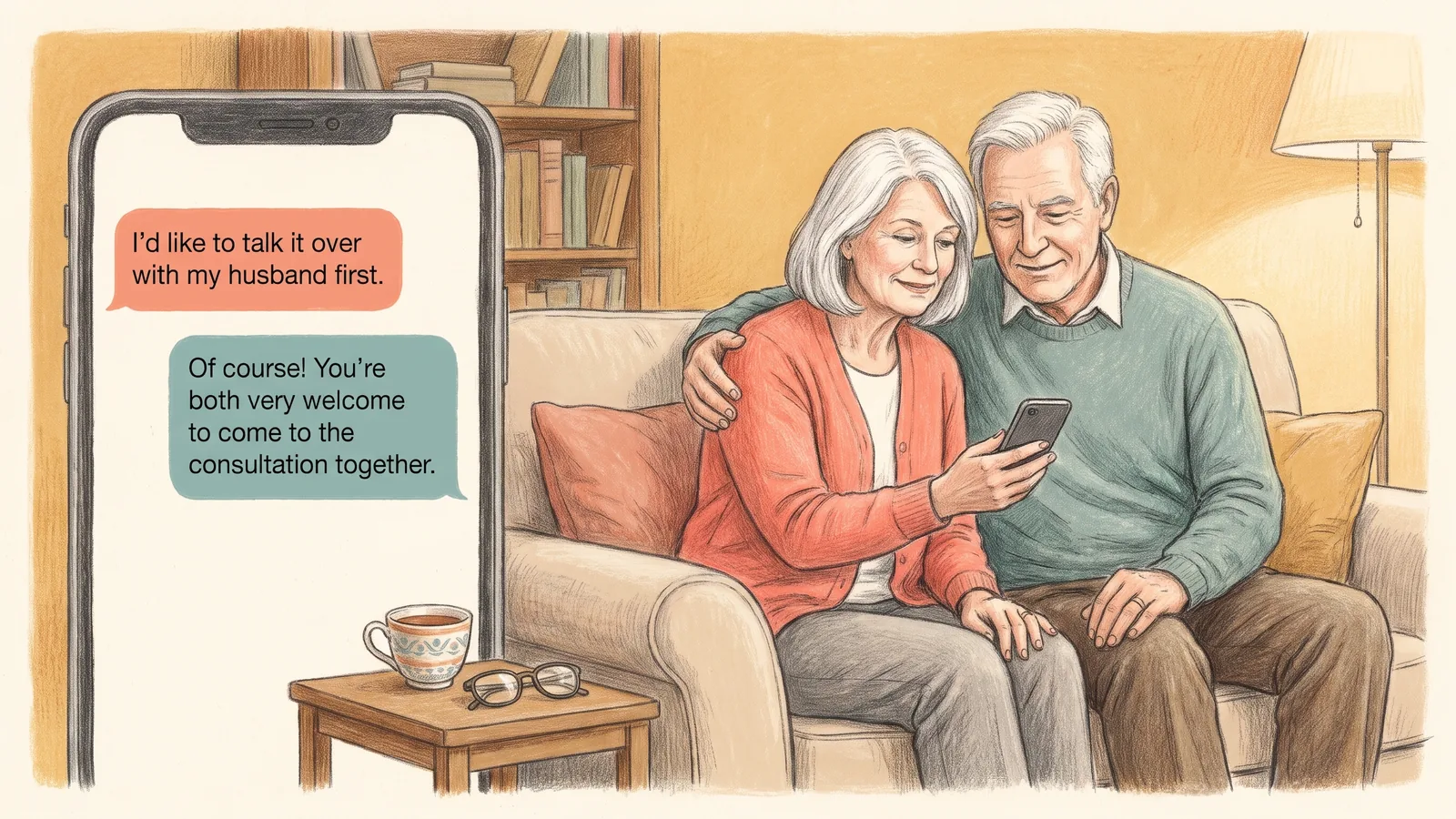
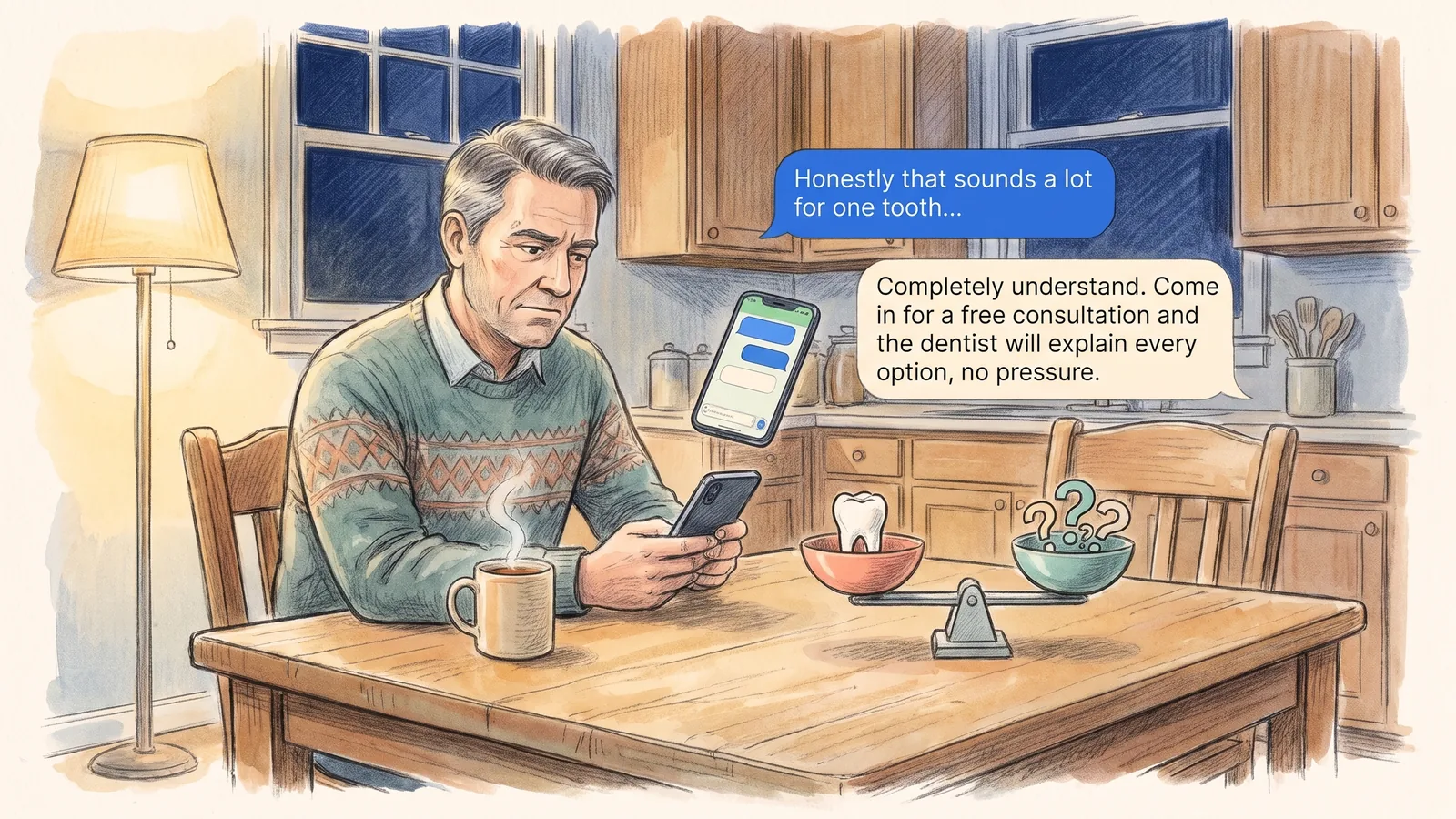
"I'll think about it" is not a rejection; it is hesitation. The patient is interested but uncertain, and your next move determines whether they book or disappear. The worst response is to let them go with a passive "no problem, let us know." The best response acknowledges their hesitation, addresses the likely concern, and makes it easy to book when they are ready.
Often, "I'll think about it" means "I'm not sure about the cost" or "I'm nervous about the procedure" or "I need to check my own calendar." A good reply addresses these unspoken concerns: "Of course, take your time. Many of our patients find it helpful to come in for a no-obligation consultation first, so we can answer any questions and you can see the clinic. We have an appointment free on [date] at [time] if that suits." This response removes pressure, provides a low-commitment next step, and keeps the door open.
CareDental's follow up step handles this by summarising every conversation for your treatment coordinator, including the patient's concern and a suggested reply. Each morning, the system provides a daily list of who to follow up and why, with leads scored by intent so the warmest come first. Your team can send a personal follow-up message that feels timely and relevant, not pushy, because the system has already identified what the patient needs to hear.
Some patients genuinely need time, and that is fine. The goal is not to force a booking but to stay present and helpful so that when they do decide, your clinic is the obvious choice. Fast, thoughtful follow-up makes that happen. Delayed or generic follow-up does not.
What About the Enquiry That Went Quiet?
Some enquiries go quiet even after a good conversation. The patient seemed interested, you answered their questions, you offered times, and then—nothing. They did not reply, did not book, and disappeared. These are not lost causes; they are unfinished conversations, and a well-timed follow-up can bring many of them back.
The key is timing and tone. A message sent the same day feels pushy. A message sent two weeks later feels irrelevant. The sweet spot is usually 24 to 48 hours: long enough to respect their space, soon enough that the original enquiry is still top of mind. The message should be short, personal and low-pressure: "Hi [name], just following up on your enquiry about [treatment]. We still have appointments available if you would like to book, or I'm happy to answer any questions."
CareDental's win back step automates this by finding patients who went quiet or missed an appointment and drafting a personal message for each one every morning. Your team approves, edits or dismisses it; nothing is sent without a person approving it. This keeps follow-up consistent and ensures no warm lead is forgotten because your treatment coordinator was busy or forgot to chase.
Many of these quiet enquiries rebook. They got distracted, they were waiting for payday, they needed to arrange childcare, or they simply forgot. A gentle nudge brings them back, and the booking happens. Without that nudge, they remain on your list of "potential patients who never converted," and the revenue walks away.
How Does Real-Time Booking Affect No-Show Rates?
Real-time booking tends to reduce no-shows because the patient books at their moment of highest motivation, and the confirmation is immediate. When someone chooses a time and receives instant confirmation, they have made a mental commitment. The appointment feels real, not tentative, and they are more likely to attend.
Contrast this with delayed booking: the patient enquires Monday, you reply Tuesday, they confirm Wednesday, you send confirmation Thursday. By the time the appointment rolls around, the patient has half-forgotten how or why they booked, and the appointment feels less solid. Immediate booking shortens that gap, so the decision to book and the appointment itself are closer together, reinforcing commitment.
Automated reminders also help. When the booking system sends a confirmation message immediately and a reminder 24 hours before the appointment, the patient is kept engaged and informed. They are less likely to forget, less likely to feel uncertain, and more likely to show up ready for the consultation. CareDental integrates with your existing calendar and sends these confirmations and reminders as part of the booking flow, so your team does not have to manage it manually.
Can You Book Too Quickly?
No. There is no such thing as booking a consultation too quickly, as long as the patient is informed and comfortable. Speed does not mean pressure; it means efficiency. A fast reply that says "we have appointments available tomorrow at 10am or Thursday at 3pm" is helpful, not pushy, because it gives the patient options and respects their time.
Some clinic owners worry that instant booking feels impersonal or robotic, but patients do not share that concern. They want convenience and clarity, and a system that replies in seconds, answers their question and books the consultation is experienced as excellent service, not cold automation. The personal touch comes later, during the consultation itself, when your clinician and treatment coordinator build rapport and trust. The booking stage is logistics, and patients appreciate when logistics are handled quickly.
The only time instant booking becomes a problem is when it is done badly: when the message is generic, when the system does not understand the patient's question, or when it tries to push a booking the patient is not ready for. A well-designed system avoids these pitfalls by answering questions first, easing hesitation, and only suggesting a booking when the patient has indicated readiness. CareDental's answer step does exactly this, ensuring the conversation feels natural and the booking feels like the patient's choice, not a hard sell.
Frequently Asked Questions
What if the patient asks a question the system cannot answer?
The system hands the conversation to your treatment coordinator immediately. CareDental does not try to answer questions it cannot handle safely, such as those about finance, credit or clinical details. It replies with something like "that is a great question—let me connect you with [team member name] who can help with that," and your team picks up the conversation from there.
Does instant booking mean I lose control of my diary?
No. You control which slots are available for online booking, and the system only offers times you have approved. If you want to reserve certain hours for existing patients or specific treatments, you can. The system books only within the parameters you set, so your diary remains under your control.
What if someone books and then does not show up?
No-shows happen, but instant booking actually reduces them because the patient commits at their moment of highest intent. Automated reminders sent 24 hours before the appointment further reduce no-show rates. If a no-show does occur, CareDental's win back step drafts a follow-up message to reschedule, so you have a chance to recover the appointment rather than losing it entirely.
Can I still offer phone bookings for patients who prefer to call?
Of course. Instant messaging booking complements phone bookings; it does not replace