Why coordinators approve every win-back message before it sends
Your treatment coordinator opens the inbox at 9am and finds forty AI-drafted messages waiting: one for every patient who missed an appointment or stopped replying last month. Each message reads like a human wrote it. Each is personal, relevant and kind. And every single one sits in a queue until someone in your team clicks "approve". Nothing leaves the building without a human decision. That is the deliberate design of a lead recovery system built for UK dental clinics where trust and professional judgement matter more than speed.
Win-back message approval in dental practices ensures every AI-drafted patient contact reflects clinic values, clinical context and professional judgement before sending. Human oversight prevents inappropriate timing, tone errors and compliance risk while preserving the personal relationship between coordinator and patient that underpins successful treatment planning and long-term retention in private dentistry.
Key Takeaways
- AI drafts win-back messages for patients who went quiet or missed appointments, but human approval is mandatory before anything sends—protecting trust, compliance and clinic reputation.
- Treatment coordinators review context the AI cannot see: recent clinical notes, payment conversations, personal circumstances—and edit, dismiss or approve each message accordingly.
- Approval workflows prevent automation errors, maintain GDC professional standards and preserve the personal relationship that drives treatment acceptance in high-value dentistry.
- The process turns AI speed into human judgement at scale: forty personalised messages reviewed in fifteen minutes instead of two hours writing them from scratch.
Why does every win-back message need human approval before it sends?
Because context matters more than speed. An AI can draft a warm, well-structured message in seconds, but it cannot read between the lines of a patient file. It does not know that the person who missed their implant consultation yesterday just lost a parent. It does not see the note from last week explaining the patient asked to pause all contact until their house sale completes. It cannot sense that the tone, while polite, feels wrong for this particular relationship. Those judgements belong to people.
Human approval before sending protects three things simultaneously: the patient's trust in your clinic, your team's professional accountability under GDC standards, and your business reputation in a market where word-of-mouth referrals still drive half of all high-value treatment enquiries. When a coordinator reviews and approves a message, they bring clinical context, personal knowledge and professional judgement that no algorithm can replicate. The approval step is not friction in the process—it is the point where efficiency meets responsibility.
This model also keeps your clinic compliant with ICO guidance on automated decision-making. Automated marketing messages that affect individuals require transparency and human oversight. By requiring approval, you demonstrate that a qualified professional reviewed the communication, considered the patient's circumstances and made an active decision to proceed. That matters if a complaint ever lands on your desk or a regulator asks questions about your patient communication practices.
What happens when AI drafts a message without understanding the full picture
The AI sees data: appointment dates, message history, treatment type. It does not see the whispered conversation at reception two weeks ago when the patient said their marriage was ending and money was tight. It does not read the clinical note explaining the patient needs specialist referral before proceeding, so follow-up is premature. It cannot interpret the fact that this person has rescheduled three times because of work commitments, not lack of interest, and they specifically asked to be contacted by email, not WhatsApp.
Without approval, an automated message might arrive at exactly the wrong moment: the day after a bereavement, during a financial crisis, in the middle of a move to Scotland. It might suggest rebooking when the patient is waiting for test results. It might push for a decision when the relationship needs patience. These are not hypothetical risks—they are daily realities in treatment coordination. The difference between a message that re-engages someone and one that damages trust often comes down to a single sentence that only a human would know to edit or remove.
Approval also catches technical errors the AI cannot self-correct: a message referencing the wrong treatment because two enquiries came from the same household; a tone that feels too casual for an older patient or too formal for a younger one; a call-to-action that makes sense generically but misses the specific next step this patient needs. The CareDental win-back step drafts the message, but the coordinator provides the final quality control that turns a good draft into the right communication.
How does the approval process work in practice each morning
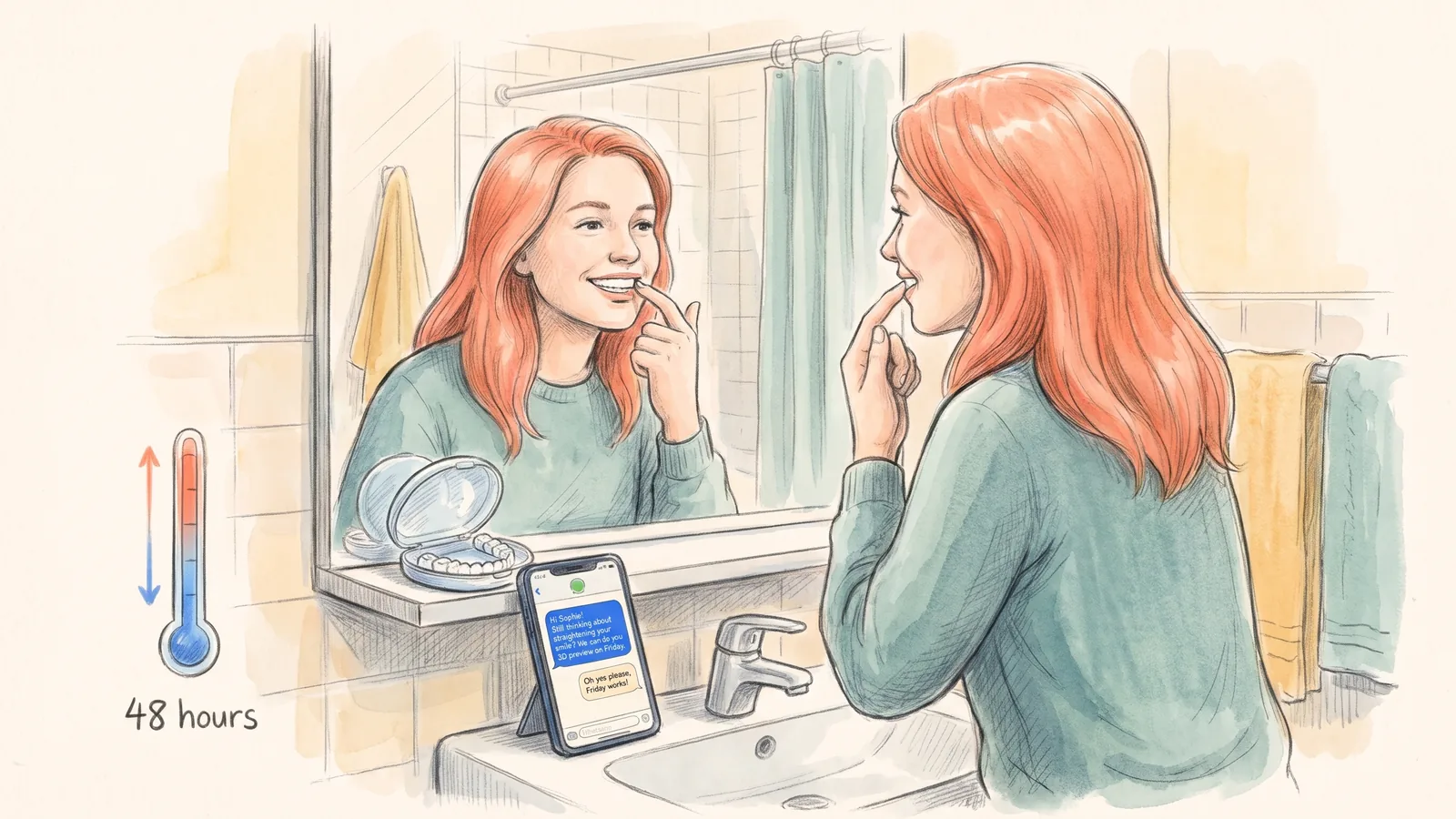
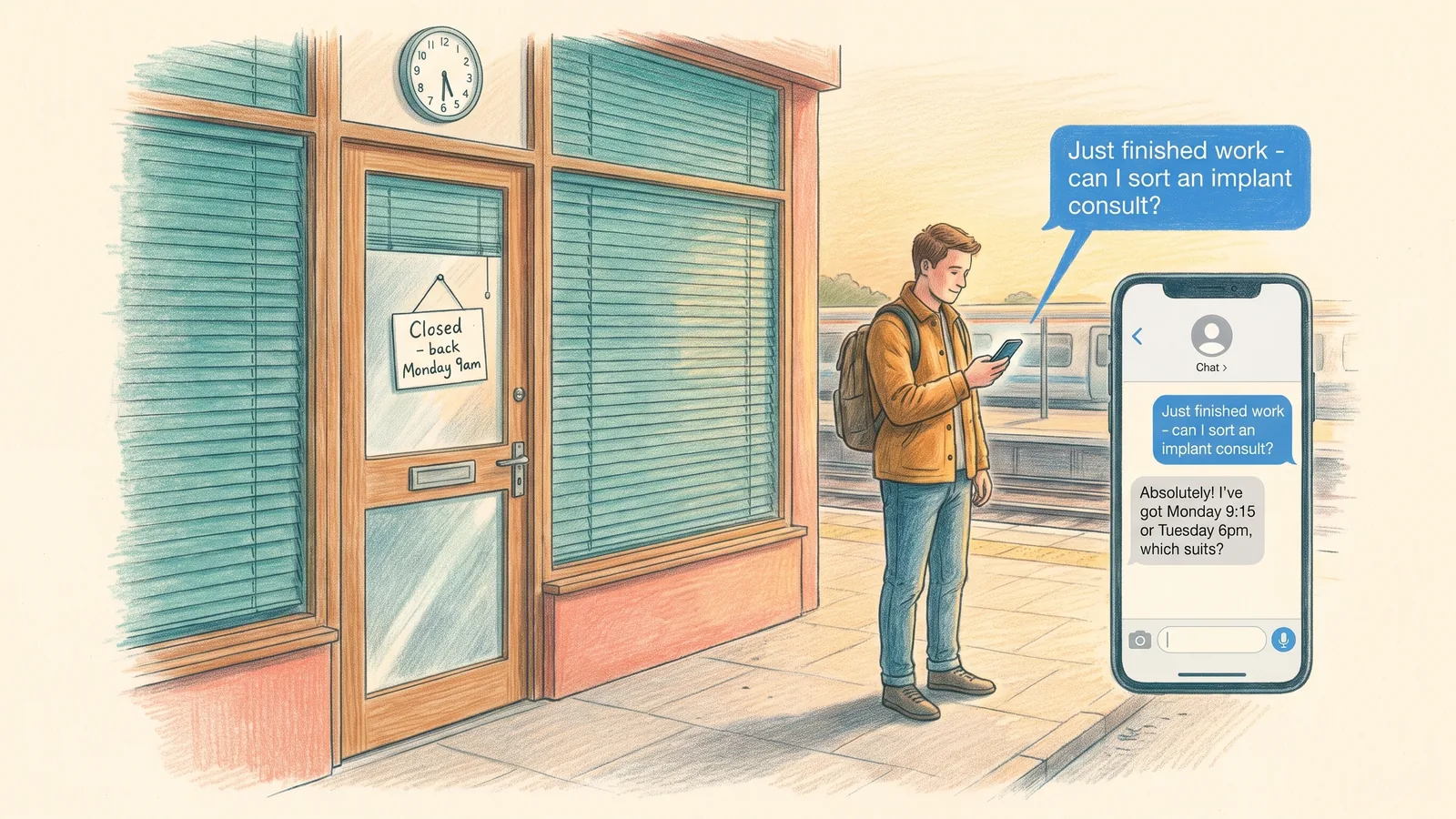
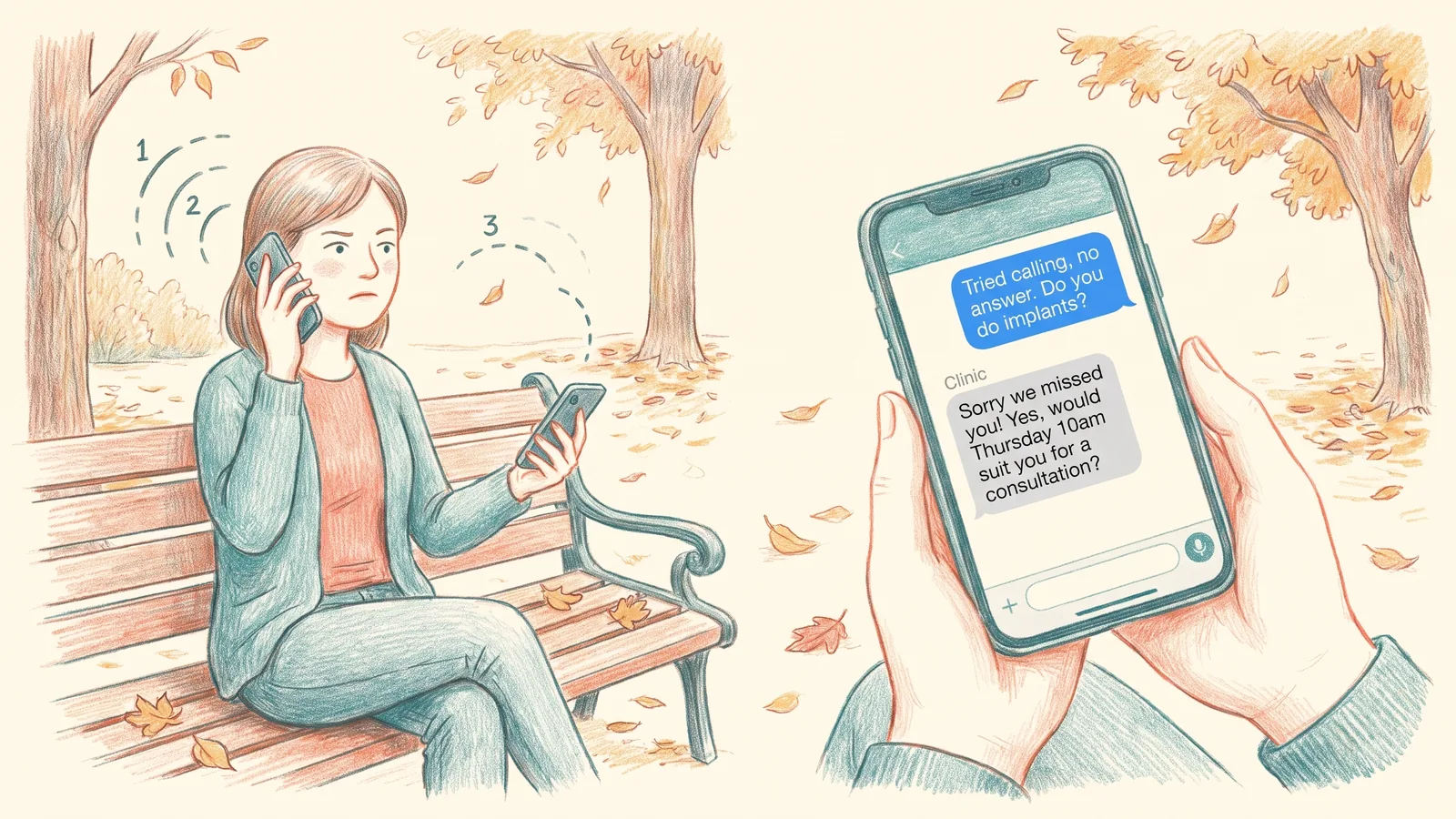
Each morning, the system identifies patients who have gone quiet or missed appointments. For each one, it drafts a message based on conversation history, treatment type and time elapsed. The messages appear in the coordinator's dashboard as a list: patient name, treatment of interest, reason for contact and the full draft message. The coordinator clicks through one by one. Some get approved in seconds. Others need a quick edit—changing a phrase, softening a tone, adding a sentence that acknowledges something the AI did not know. Some get dismissed entirely because the timing is wrong or the patient explicitly asked not to be contacted this way.
The workflow is fast but never rushed. A coordinator can review and approve twenty messages in ten minutes, far quicker than writing those same messages from scratch. The difference is that the AI has done the heavy work—pulling the right details, structuring the message, finding the appropriate tone—and the human does what only humans can do: apply judgement. That combination produces better results than either could achieve alone. The messages are personal, timely and contextually appropriate, without demanding two hours of the coordinator's morning.
Nothing sends until someone clicks approve. No timer runs out. No default action triggers. If a coordinator is unsure about a message, it stays in the queue until they check the patient file, speak to the dentist or decide it is not the right time. That control sits entirely with the team. The system is a tool, not a decision-maker. It makes suggestions; the clinic makes choices.
What risks disappear when approval is mandatory before any message goes out
Reputational damage disappears. The risk of a poorly timed or tone-deaf message reaching a patient at a vulnerable moment drops to near zero because a professional reviews every word before it leaves. Compliance risk falls because the clinic can demonstrate human oversight in all automated communications. Relationship damage from generic, impersonal contact vanishes because the coordinator can inject warmth, specificity and empathy before the message sends. These are not minor protections—they are foundational to maintaining patient trust in a sector where personal relationships drive treatment acceptance and long-term loyalty.
Operational risk also reduces. Without approval, a system error—wrong name, wrong treatment, wrong clinic location in a multi-site group—could reach a patient before anyone notices. With approval, the coordinator catches the error in the queue. That matters especially in multi-clinic operations where messages are drafted across locations and mistakes can compound quickly if no one is checking.
Legal risk drops too. If a patient complains about a message, the clinic can show that a named, qualified team member reviewed and approved it. That is a stronger defence than "the system sent it automatically". It places accountability where it belongs: with the professional who understands patient care, not the algorithm that processes data. Under GDC standards for professional conduct, that distinction matters.
Can a treatment coordinator edit the AI-drafted message before approving it
Yes, and they should whenever the draft needs it. The AI provides a starting point—solid structure, relevant content, appropriate length—but it is not a finished product until the coordinator reviews it. Editing is fast: change a word, add a sentence acknowledging the patient's specific concern, adjust the call-to-action to match the next step in the treatment journey. Most messages need only small edits or none at all, but the option to revise is always there.
Common edits include softening language when the AI draft feels too direct, adding a personal touch that reflects the relationship between coordinator and patient, or clarifying the next step when the AI suggested something too vague. For example, the draft might say "Let us know if you would like to rebook"—the coordinator edits it to "I have a 2pm slot on Thursday if that works for you, or I can check other times". That specificity turns a polite message into an actionable one.
Editing also allows the coordinator to adjust for recent developments the AI does not yet know about: a dentist leaving the practice, a treatment plan that changed after the last conversation, a new promotion that might interest the patient. The system drafts the message based on what it knows; the coordinator brings it up to date. That combination—AI efficiency plus human currency—produces better engagement than either could achieve alone. The result feels personal because it is personal: the AI drafted it, but a human who knows the patient finished it.
How does approval protect the relationship between coordinator and patient
Trust in private dentistry is personal. Patients do not build relationships with software—they build them with the people who answer their questions, ease their hesitation and guide them through treatment decisions. When a message goes out without human review, it breaks that personal thread. When every message carries the coordinator's approval, it reinforces the relationship: someone who knows me reviewed this before it reached me. That perception matters more than most clinics realise.
Approval also allows the coordinator to be consistent in tone and approach across all patient touchpoints. The AI draft might vary slightly in style from one message to the next. The coordinator's review ensures that every message sounds like it came from the same person, maintaining the voice and manner the patient expects. That consistency builds familiarity and trust over time, which directly affects treatment acceptance rates in high-value dentistry where patients need reassurance as much as clinical skill.
The approval step also protects the coordinator's professional standing. When something goes wrong—a patient receives a message they found inappropriate or mistimed—the coordinator can explain what happened, why it was sent and take responsibility. They were not bypassed by automation; they made a decision that, in hindsight, could have been better. That is a human interaction the patient can understand and forgive. Automation errors feel impersonal and corporate. Human errors, owned and corrected, strengthen relationships.
What does good win-back message approval workflow look like in a busy clinic
It happens first thing, before the phones start ringing. The coordinator logs in at 8:45am, opens the win-back queue and spends fifteen minutes reviewing messages while drinking coffee. The list is prioritised: highest-value treatments first, then by time elapsed since last contact. Each message takes thirty seconds to review. Most get approved with one click. A few need a quick edit. One or two get dismissed because the timing is wrong or the patient asked not to be contacted. By 9am, the approved messages send and the coordinator moves on to live enquiries.
The workflow does not interrupt other tasks. It is a discrete morning routine, like checking emails or reviewing the day's schedule. It does not require jumping between systems or hunting for context—the message draft includes everything the coordinator needs: patient name, treatment, conversation summary, suggested next step. If more context is needed, one click opens the full conversation history. The approval decision is informed, fast and final.
In multi-site practices, each clinic's coordinator approves their own messages. A central dashboard shows activity across locations, but approval stays local. That ensures the person who knows the patient makes the decision. It also distributes workload sensibly: each location handles its own volume rather than funnelling everything through a single bottleneck. For clinics using the multi-clinic dashboard, role-based access ensures coordinators see only their own queue while managers see aggregated activity without needing to approve individual messages.
Does mandatory approval slow down the win-back process too much to be effective
No, because speed is not the constraint—capacity is. The bottleneck in lead recovery has never been how fast you can send messages; it is how many hours your team has to write them. Without AI, writing personalised win-back messages for forty patients takes two hours or more. Most coordinators do not have two hours in a morning, so most patients never get a message at all. With AI drafting and human approval, the same forty messages take fifteen minutes to review and send. The process is not slower—it is monumentally faster than the alternative, which is doing nothing because there is no time.
Approval also improves effectiveness, not just efficiency. Messages that go out after human review are more likely to re-engage the patient because they are contextually appropriate, personally relevant and professionally sound. Sending a hundred automated messages without review might reach more people, but if half of them feel generic or mistimed, response rates fall. Sending forty approved messages that reflect genuine human judgement produces better outcomes because the quality matches the intent. Speed without judgement is noise. Judgement at speed is strategy.
The goal is not to automate the relationship away—it is to give coordinators the time to maintain relationships at scale. Approval makes that possible. The AI handles repetitive drafting; the coordinator applies professional skill where it matters. That division of labour is what makes modern lead recovery workflows effective in clinics that want growth without sacrificing standards.
How does approval fit into broader lead management and follow-up systems
Win-back message approval is one piece of a larger lead management system designed to ensure no patient enquiry is lost and every opportunity is followed up appropriately. The system handles initial enquiries automatically, scoring leads by intent and summarising each conversation for the coordinator to follow up. It drafts win-back messages for patients who go quiet or miss appointments. It provides managers with forecasts and insights on lead sources and conversion. But at every stage where a message leaves the clinic, a human reviews it first.
That principle applies consistently: the AI answers enquiries instantly, day and night, but the moment a person is needed, the conversation hands over to the team. The AI drafts follow-up messages, but the coordinator decides when and how to send them. The AI identifies patients to win back, but it does not send anything without approval. This balance—automation for speed, human judgement for trust—runs through the entire platform. It is not a chatbot that replaces people; it is a tool that makes people more effective.
Approval workflows also integrate with broader clinic operations. When a coordinator approves a win-back message, the system logs it in the conversation history, updates the patient's status and schedules any follow-up reminders. If the patient responds, the conversation resumes with full context. If they book an appointment, that syncs with Google Calendar and the clinic's existing management system. The approval step is not isolated—it is part of a connected workflow that tracks every patient interaction from first enquiry to booked treatment, with human oversight at every critical point.
Frequently Asked Questions
Can I set some messages to send automatically without approval if they are low-risk
No. The CareDental win-back process requires approval for every message by design. This protects compliance, maintains professional standards and ensures no patient receives automated contact without human judgement. The approval step is fast—most messages take seconds to review—so the trade-off between speed and control heavily favours control in a clinical setting where trust and reputation are paramount.
What happens if a coordinator is on holiday and no one approves the messages
The messages wait in the queue until someone with approval permissions reviews them. Nothing sends by default. For clinics with multiple coordinators, any team member with access can approve messages. For single-coordinator clinics, it is worth designating a backup during holiday periods. The system does not penalise delay—if a message sits for three days, it still sends when approved. The patient relationship is more important than same-day response in win-back scenarios.
Does the AI learn from my edits so it drafts better messages over time
The AI improves its drafts based on general patterns in patient conversations and treatment types, but it does not adapt its tone or style based on individual coordinator edits. Each message is drafted fresh using current conversation context. That consistency is deliberate: it ensures quality does not drift over time and every draft meets the same professional standard. The coordinator's edits refine the specific message, but the AI continues drafting at the same level for future messages.
Can I see which messages were approved and which were dismissed for reporting purposes
Yes. The system logs every approval, edit and dismissal. Managers can review which messages were sent, which were dismissed and why, and how many edits were needed on average. That data helps identify patterns: if many messages for a certain treatment type need heavy editing, it might indicate the AI draft needs refinement or the treatment plan communication needs adjusting. The approval workflow generates useful operational insight as well as maintaining quality control.
Win-back message approval is not a compromise between speed and safety—it is the point where automation becomes genuinely useful to dental practices that care about patient relationships and professional standards. If you want to recover more lost leads without losing control over what your clinic says and when it says it, book a free demo to see how approval workflows fit into your existing treatment coordination process.