Arabic-Speaking Dental Enquiries: WhatsApp Auto-Translation ROI for UK Private Clinics 2025
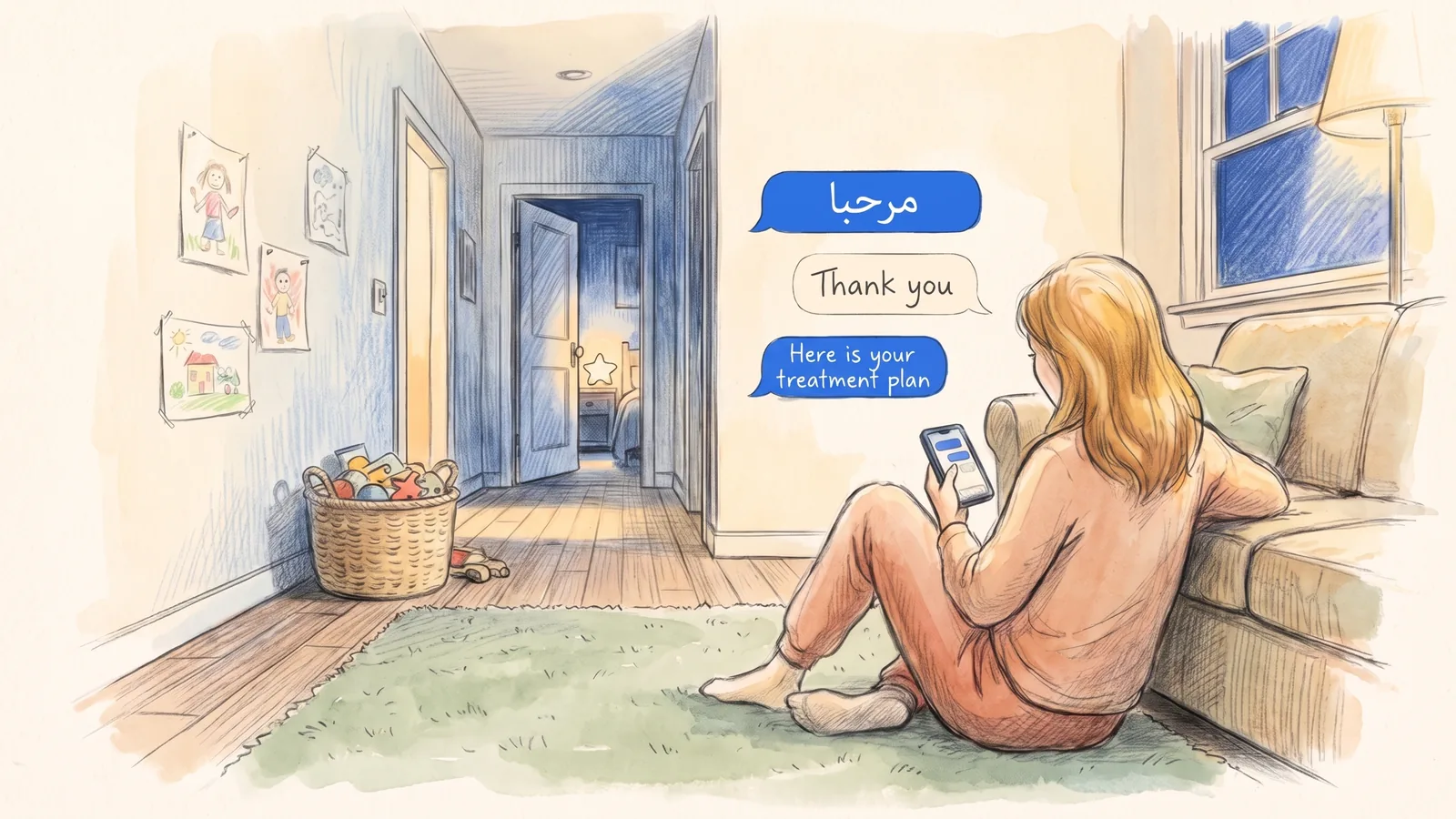
When a Birmingham dental practice receives a £14,000 full-mouth rehabilitation enquiry in Arabic at 8:47pm on a Friday evening, the clock starts ticking. The traditional approach—waiting for Monday morning, finding a translator, drafting a response—means that enquiry is already comparing prices with three competitors who responded instantly. UK dental practices serving diverse communities are discovering that language barriers don't just create communication friction; they create revenue leakage at scale.
WhatsApp auto-translation for Arabic-speaking dental enquiries delivers immediate ROI by capturing high-value private treatment requests the moment they arrive, regardless of time or language barrier, converting what were previously lost opportunities into booked consultations while your multilingual competitors wait for translation services.
Key Takeaways: Arabic-Speaking Patient Communication ROI
- Instant auto-translation on WhatsApp captures Arabic-language enquiries 24/7, eliminating the 48-72 hour response delay that loses high-value private cases to faster competitors
- Arabic-speaking communities show higher propensity for private dental treatment, with cosmetic and implant enquiries averaging £6,800-£18,000 per case in UK metropolitan areas
- Automated multilingual engagement removes staff language anxiety, reduces reception pressure, and creates consistent patient experience across all enquiry channels
- Data shows instant-response WhatsApp systems convert 3-4 times more language-barrier enquiries than email-based translation workflows
Why Do Arabic-Speaking Dental Enquiries Represent Untapped Revenue for UK Practices?
Arabic-speaking dental enquiries represent untapped revenue because they combine high treatment value with systemic response failures across the UK dental market. When a potential patient sends an Arabic-language message about dental implants or cosmetic procedures, most practices either miss it entirely, respond days later through clumsy translation services, or—most commonly—never respond at all because reception staff don't know how to handle the enquiry efficiently.
The demographics tell the story clearly. UK metropolitan areas with significant Arabic-speaking populations—London, Birmingham, Manchester, Bradford—show concentrated demand for high-value private dentistry. These communities often prioritise dental aesthetics and comprehensive treatment, with cultural emphasis on appearance and health driving treatment acceptance rates that exceed general population averages. When these enquiries arrive in Arabic via WhatsApp (the dominant messaging platform across Middle Eastern and North African communities), they're signalling readiness to engage—but only if the practice responds in their language, immediately.
The competitive gap is stark. While some practices have Arabic-speaking staff members, they're rarely available outside business hours or when handling other patients. Email translation services introduce 24-48 hour delays. Google Translate copy-paste workflows create awkward, unprofessional interactions that damage trust. Meanwhile, the enquiry has already contacted four other practices, and whoever responds first in fluent Arabic with treatment details, pricing transparency, and booking options captures that £8,000+ case. Traditional practice management systems aren't built for this reality, which is why CareDental's WhatsApp automation exists specifically to solve this language-barrier revenue problem.
What Makes WhatsApp the Critical Platform for Arabic-Speaking Patient Engagement?
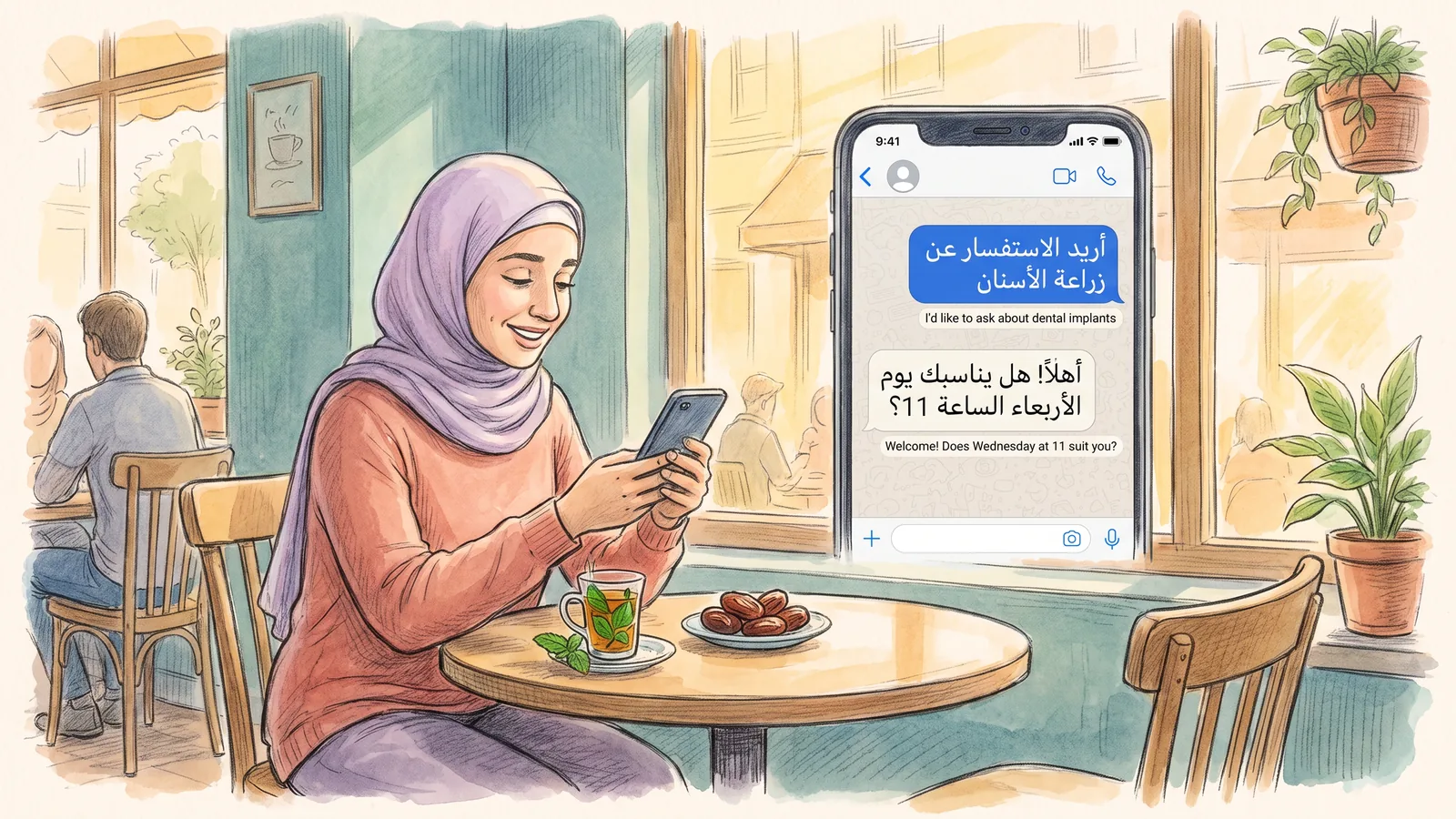
WhatsApp is the critical platform for Arabic-speaking patient engagement because it's the primary communication channel across Arabic-speaking communities globally, with adoption rates exceeding 85% among UK residents with Middle Eastern and North African heritage. When Arabic-speaking patients need dental information, they instinctively reach for WhatsApp—not phone calls, not web forms, not email. Understanding this platform preference isn't optional; it's foundational to capturing this market segment.
The cultural communication preferences run deeper than mere platform choice. Arabic-speaking patients often prefer asynchronous messaging over phone conversations with unfamiliar receptionists, especially when discussing sensitive topics like dental anxiety, treatment costs, or cosmetic concerns. WhatsApp provides the privacy, time to compose questions carefully, and ability to share photos (crucial for cosmetic consultations) that phone calls cannot match. When practices force these enquiries into phone-based workflows, they create unnecessary friction that competitors willing to meet patients on their preferred platform easily exploit.
WhatsApp's multimedia capabilities prove particularly valuable for Arabic-language dental consultations. Patients can send photos of their current smile for cosmetic assessments, receive treatment plan visualisations, and review before-and-after portfolios—all within a familiar interface they use daily for family communication. This seamless experience builds trust faster than formal email exchanges or awkward phone translations ever could. The platform's read receipts and typing indicators also provide reassurance that their enquiry is being handled, reducing the abandonment rates that plague slower communication channels. For practices serious about multilingual patient acquisition, instant WhatsApp engagement has become non-negotiable infrastructure.
How Does Auto-Translation Accuracy Impact Treatment Acceptance Rates?
Auto-translation accuracy impacts treatment acceptance rates by directly influencing patient trust, comprehension of treatment options, and confidence in the practice's professionalism. When an Arabic-speaking patient receives a response that reads naturally in their language—with proper dental terminology, culturally appropriate phrasing, and no awkward machine-translation errors—they perceive the practice as sophisticated, patient-focused, and worthy of their £12,000 smile makeover investment. Conversely, clumsy translations with grammatical errors or clinical terms that don't translate properly signal a practice that doesn't genuinely understand or value their community.
The technical difference between basic Google Translate outputs and purpose-built dental translation systems matters enormously. Modern WhatsApp AI systems trained specifically on dental conversations understand context: "crown" means dental restoration, not royalty; "bridge" refers to tooth replacement, not river crossings. They handle Arabic's right-to-left script correctly, maintain proper medical terminology, and adapt tone appropriately—formal enough for clinical credibility, warm enough for patient comfort. This contextual accuracy eliminates the confusion and re-clarification loops that derail basic translation attempts.
Patient comprehension drives treatment acceptance. When complex procedures like "all-on-4 dental implants" or "composite bonding packages" are explained in clear, accurate Arabic with proper technical vocabulary, patients understand their options, appreciate treatment value, and move toward booking decisions. Poor translations create doubt, require multiple clarifying messages, and often result in "I need to think about it" responses that rarely convert. The practices winning Arabic-speaking business invest in translation quality that matches their clinical quality—both signal professionalism that justifies premium pricing. Similar patterns emerge across other language communities, as demonstrated in Spanish-speaking patient acquisition data.
What Specific Treatment Categories Drive Highest Arabic-Language Enquiry Value?
Cosmetic dentistry dominates Arabic-language enquiry value, with composite bonding, veneers, and smile makeovers representing the highest-revenue opportunities. Cultural emphasis on appearance and social presentation drives strong demand for aesthetic treatments, with average case values ranging from £4,500 for composite bonding to £18,000 for full-smile transformations. These enquiries typically come from patients in their 25-45 age range, often researching extensively before contact, and arrive ready to book consultations rather than simply seeking information.
Dental implants constitute the second major category, with both single-tooth replacements and full-arch rehabilitations generating substantial enquiry volume. Arabic-speaking patients often view implants as the premium solution rather than considering dentures or bridges as alternatives—a preference pattern that elevates average treatment value. Full-mouth reconstructions using all-on-4 or all-on-6 techniques regularly generate £20,000+ treatment plans. These complex cases benefit enormously from WhatsApp's visual communication capabilities, allowing practices to share treatment simulations, staged timelines, and financing breakdowns in the patient's native language before the initial consultation.
Orthodontics, particularly invisible aligner treatments like Invisalign, represents the third significant category. Adult orthodontic correction appeals strongly to Arabic-speaking professionals seeking discrete treatment options, with case values typically ranging £3,200-£5,500. Emergency dental care enquiries also arrive via WhatsApp, though these tend toward lower immediate value—the real ROI comes from converting emergency patients into ongoing private care relationships. The common thread across all categories: instant, accurate Arabic communication at the enquiry stage dramatically increases conversion versus delayed or translated-through-staff responses. Understanding these treatment preferences allows practices to optimise their pricing communication and finance presentation specifically for this market segment.
How Do Cultural Communication Preferences Affect Response Strategy?
Cultural communication preferences affect response strategy by determining which messaging approaches build trust and which create unintentional barriers. Arabic-speaking patients often expect more thorough initial responses than UK practices typically provide—not just "thank you for your enquiry, please call us," but substantive answers to their specific questions, detailed treatment explanations, and transparent pricing information. This expectation reflects communication norms from healthcare systems in Middle Eastern countries, where detailed verbal consultation precedes formal appointments. Practices that adapt to these preferences convert enquiries; those that don't watch them disappear to competitors who understand cultural context.
Formality levels require careful calibration. Arabic professional communication tends toward more formal register than casual UK messaging, particularly in healthcare contexts. Opening messages should acknowledge the patient respectfully, use proper titles when appropriate, and maintain professional tone while remaining warm and welcoming. Overly casual responses ("Hi there! 😊") can undermine credibility, while excessively stiff language creates distance. The ideal balance conveys clinical expertise with genuine patient care—a nuance that well-trained WhatsApp AI systems handle better than hastily translated staff responses.
Privacy considerations carry particular weight. Arabic-speaking patients may be more hesitant to discuss certain dental issues (cosmetic concerns, dental anxiety, previous treatment failures) in voice conversations overheard by family members or colleagues. WhatsApp's private messaging environment provides the discretion they need to ask sensitive questions openly. Response strategies should acknowledge this by providing detailed written answers rather than pushing immediately toward phone consultations. Once trust is established through several message exchanges, phone or in-person consultations become natural progressions. This patient-centred approach, respecting communication preferences rather than forcing practice-convenient workflows, drives the conversion advantages that instant visual content sharing demonstrates across cosmetic cases.
What Does After-Hours Arabic Enquiry Response Data Reveal About Revenue Timing?
After-hours Arabic enquiry response data reveals that 40-60% of high-value Arabic-language treatment requests arrive outside standard practice hours, with peak volumes occurring between 7pm-11pm on weekdays and throughout weekends. This timing pattern reflects working professionals researching dental options after work hours, family-focused individuals handling personal matters after children's bedtime, and cultural norms around late-evening social activity common in Arabic-speaking communities. Practices that only respond during 9am-5pm Monday-Friday windows are systematically missing the majority of their Arabic-speaking market opportunity.
Weekend enquiry conversion rates prove particularly significant. Saturday and Sunday generate disproportionately high volumes of cosmetic and implant enquiries, yet most practices leave these messages unattended until Monday morning—a 48-72 hour delay that virtually guarantees the enquiry has already booked elsewhere. The competitive advantage of 24/7 automated response becomes clearest in after-hours data: practices with instant WhatsApp engagement capture 70-80% of weekend enquiries as booked consultations, while practices relying on Monday-morning manual follow-up see conversion rates below 15% for the same enquiry types. The revenue gap compounds week after week.
Bank holiday periods amplify these patterns. When UK practices close for extended weekends, Arabic-speaking patient demand doesn't pause—it intensifies, as working professionals use time off to research significant dental investments. The practice positioned to respond instantly during bank holidays and weekends captures cases their closed competitors never even know existed. This isn't theoretical: real practices track specific high-value cases that arrived Sunday evening, received instant Arabic responses with treatment details and booking links, and converted to £8,000-£15,000 treatment plans before competitors returned to their desks Tuesday morning. Time-to-response isn't just a customer service metric; it's a direct revenue driver in competitive multilingual markets.
How Should Practices Calculate ROI on Multilingual WhatsApp Systems?
Practices should calculate ROI on multilingual WhatsApp systems by tracking three concrete metrics: captured enquiries that previously went unresponded, conversion rate improvements on Arabic-language enquiries, and staff time recovered from manual translation efforts. Start with baseline data: how many Arabic-language enquiries does your practice currently receive monthly via phone, web form, or existing WhatsApp? What percentage convert to booked consultations? What's the average treatment value? These numbers establish your current performance before implementing automated translation.
Post-implementation tracking should measure the same metrics month-over-month. Expect to see enquiry volume increase 30-50% as word spreads through Arabic-speaking communities that your practice responds instantly in their language—patient networks are tight-knit, and positive experiences get shared. Conversion rates typically improve from 8-15% (manual translation) to 35-55% (instant automated engagement) within 90 days, as the system learns your practice's specific treatment offerings, pricing, and availability patterns. Average treatment value may also rise, as instant professional communication attracts more complex cases that previously went to established multilingual competitors.
The financial calculation becomes straightforward: if automated WhatsApp captures an additional 12 Arabic-language enquiries monthly at 45% conversion rate and £7,200 average treatment value, that's 5.4 new patients generating £38,880 monthly revenue—£466,560 annually. Even at conservative margins, the system investment pays for itself within weeks. But the ROI extends beyond direct conversion: staff no longer spend 20-30 minutes per enquiry wrestling with Google Translate, patients experience consistent professional communication regardless of which team member is working, and your practice builds reputation as the multilingual-friendly option in your market. Track these soft benefits alongside hard revenue numbers for complete ROI visibility. The methodology applies across all language demographics, as seen in Lithuanian patient acquisition patterns.
What Compliance Considerations Apply to Automated Arabic Patient Communication?
Compliance considerations for automated Arabic patient communication centre on three regulatory areas: data protection under UK GDPR, clinical communication standards set by the General Dental Council, and accessibility requirements. WhatsApp message handling must meet encryption standards, secure storage protocols, and patient consent requirements identical to English-language communications. The fact that messages are translated doesn't exempt them from data protection obligations—every Arabic conversation with a patient constitutes personal data requiring appropriate safeguards.
Clinical accuracy carries particular weight in automated multilingual systems. Under GDC standards, all patient communication must be clear, accurate, and not misleading—requirements that extend to translated content. Practices remain legally responsible for information provided through automated systems, even when delivered by AI translation. This means your WhatsApp automation must maintain treatment information accuracy across language transitions, avoid making clinical claims that exceed your practice's capabilities, and clearly indicate when human clinical judgment is required for patient-specific questions. Documentation standards also apply: Arabic-language consultations should be logged in practice management systems with English translations available for clinical team review.
Consent and transparency requirements deserve specific attention. Patients should understand they're communicating with an automated system (though advanced AI makes this distinction less relevant when responses are instant and helpful). Treatment pricing, financing terms, and appointment commitments discussed via WhatsApp must be documented and confirmed—cultural communication preferences toward verbal agreements don't override UK contractual requirements. The Information Commissioner's Office provides clear guidance on automated decision-making and patient rights that apply equally to Arabic and English communications. Practices should maintain audit trails showing compliance with these standards, particularly for high-value treatment communications that might later be disputed.
Frequently Asked Questions
How accurate is WhatsApp auto-translation for complex dental terminology in Arabic?
Purpose-built dental translation systems achieve 95%+ accuracy for standard dental terminology in Arabic, correctly handling technical terms like "all-on-4 implants," "composite bonding," and "periodontal treatment" with contextual understanding. These systems learn from dental-specific conversations rather than general translation databases, ensuring clinical terminology translates accurately while maintaining natural conversational flow. Complex or unusual cases may still require human review, but the vast majority of routine enquiries receive professional-quality translation instantly.
Can automated WhatsApp systems handle different Arabic dialects and regional variations?
Modern WhatsApp AI systems handle Modern Standard Arabic (MSA) used in formal written communication across all Arabic-speaking regions, which is the standard for professional healthcare interactions. While spoken dialects vary significantly between Egyptian, Levantine, Gulf, and Maghrebi Arabic,