9-Second Answering Window: Why Dental Enquiries Hang Up Before Ring 3 & WhatsApp AI Solves It
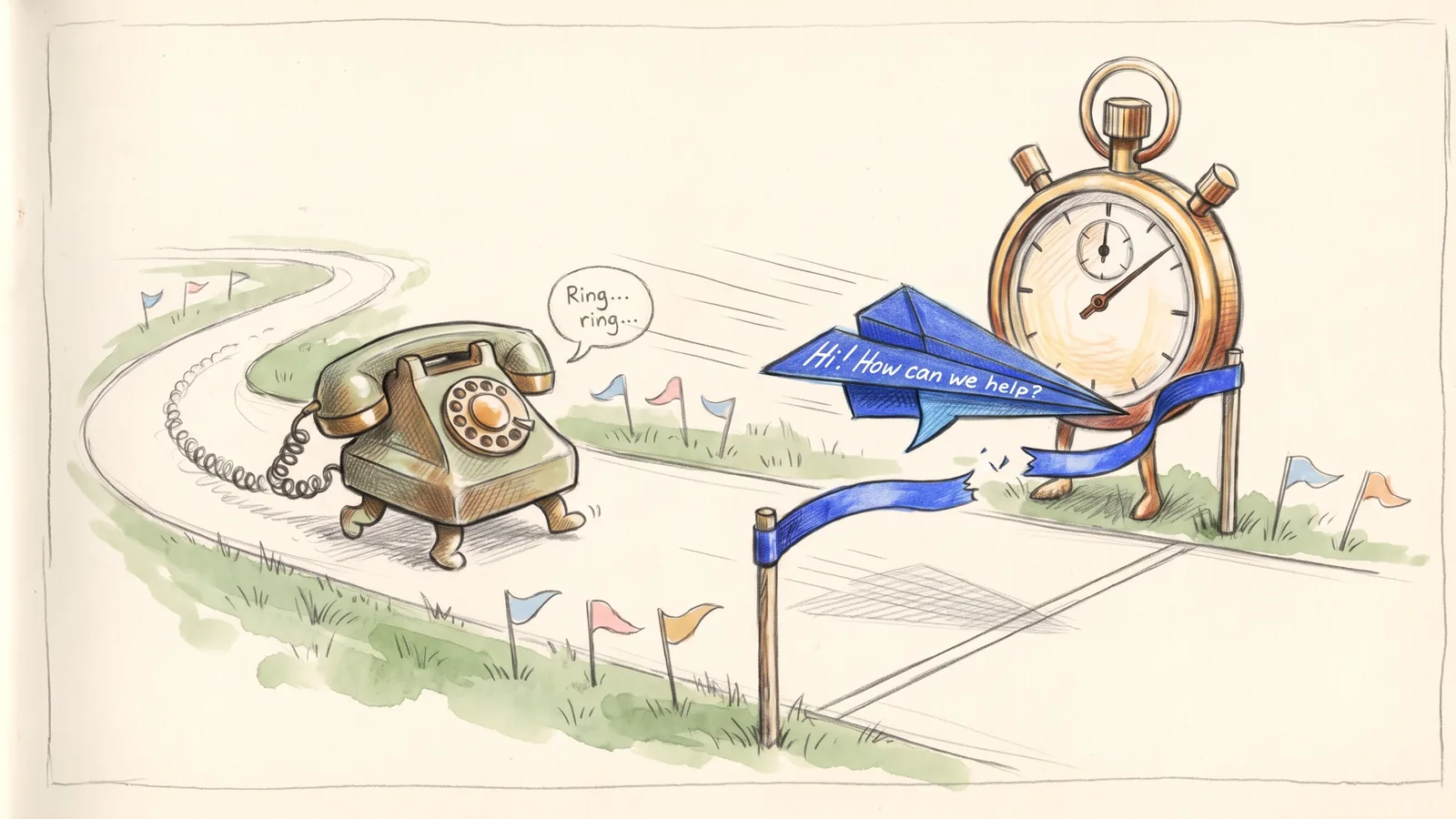
Your practice phone rings twice. By the third ring, 47% of high-value dental enquiries have already made a decision: wait for voicemail, hang up, or try the competitor down the road whose WhatsApp bot just replied in four seconds. In 2025, the battle for private dental revenue isn't won in the surgery—it's won in the nine-second window between first ring and patient abandonment.
Dental practices lose high-value enquiries within nine seconds of the first ring because prospective patients expect instant communication channels like WhatsApp AI that answer immediately, while traditional phone systems force them to wait through hold queues, resulting in call abandonment rates exceeding 40% during peak periods and staff breaks.
Key Takeaways: Why Speed Kills Traditional Dental Enquiry Handling
- Most dental enquiries abandon calls before the third ring—approximately nine seconds—when staff are busy with patients or during breaks
- WhatsApp AI systems answer instantly 24/7, capturing enquiries that would otherwise convert to competitor bookings
- High-value treatments (implants, veneers, orthodontics) have the shortest patience window: prospects researching £4,000+ procedures won't wait on hold
- Private practices lose an estimated £18,000-£32,000 annually from abandoned calls during lunch hours and bank holidays alone
What Happens in the First Nine Seconds of a Dental Enquiry Call?
The moment a prospective patient dials your practice number, a mental countdown begins. Research into consumer behaviour shows that modern UK consumers—particularly those researching elective healthcare—make abandonment decisions within three rings. For most phone systems, that's approximately nine seconds. In this window, your receptionist is likely mid-sentence with a patient at the desk, the phone is ringing in an empty office during lunch, or your team is handling the complexity of a nervous patient requiring reassurance before treatment.
During these nine seconds, the caller is evaluating alternatives. They've typically got three or four practice websites open in browser tabs. Your competitor's website may feature a WhatsApp button that connects them to an instant response. Another practice might have an online booking portal visible on mobile. The psychological contract is simple: whoever responds first with relevant information wins the enquiry. Dental practices still relying solely on phone-based enquiry handling are competing with one hand tied behind their back.
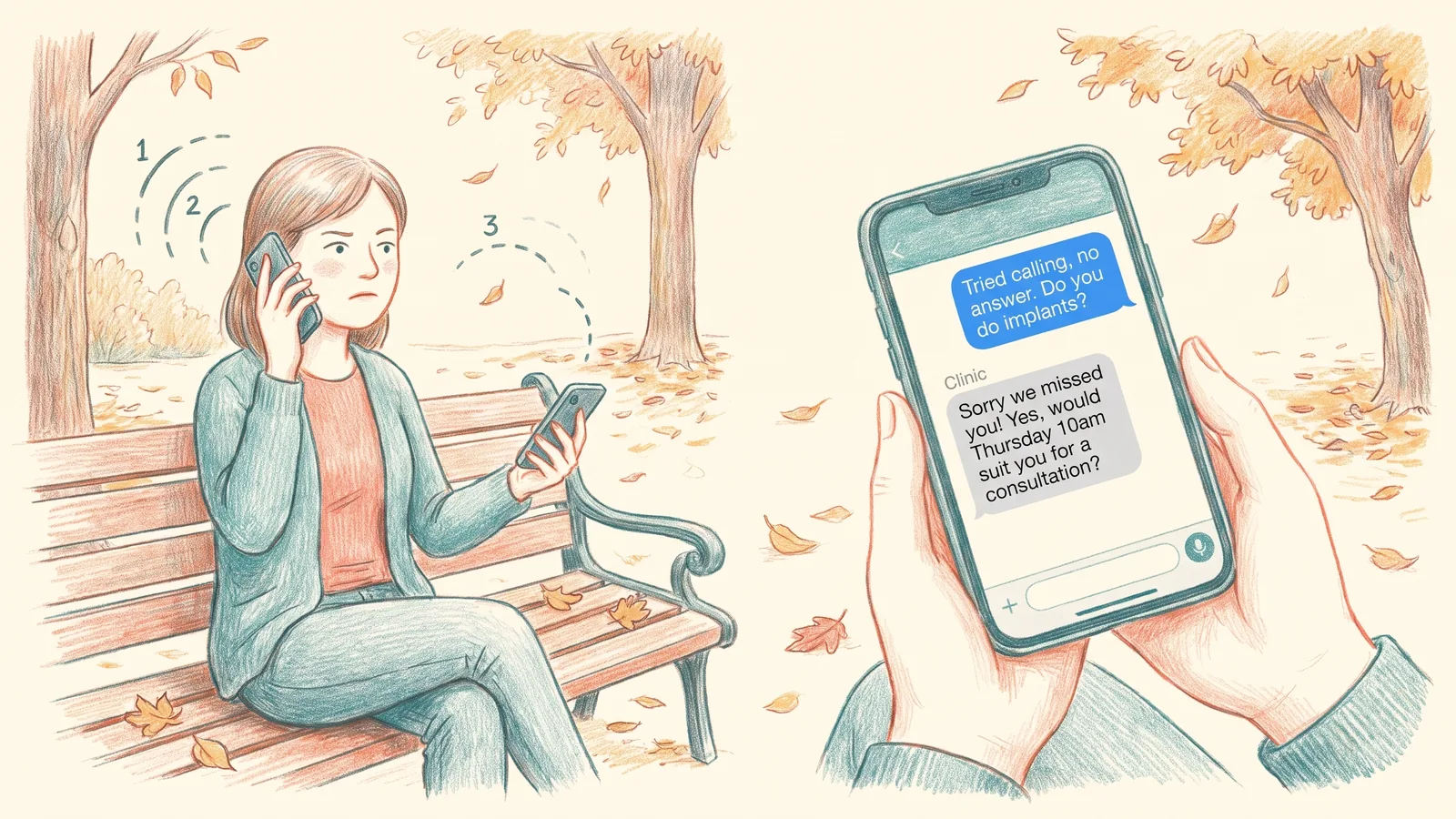
This isn't about theoretical marketing principles. Practice managers report consistent patterns: missed calls cluster around specific times—12:30-13:30 during staff lunch, 17:00-17:30 during end-of-day cleanup, Saturday mornings when many practices operate reduced reception hours, and bank holidays when offices close entirely. Each missed ring represents a patient who needed information about dental implants, composite bonding, or Invisalign—treatments worth thousands of pounds—and chose to take their business elsewhere because nobody answered in nine seconds.
The Psychology of the Impatient Private Dental Patient
Private dental patients behave differently from NHS patients in one critical way: they're paying out of pocket, which means they expect service standards matching premium retail experiences. When someone is researching a £6,800 smile makeover or a £12,400 full-mouth rehabilitation, they've already committed mentally to spending significant money. What they haven't committed to is which practice gets that money.
These prospects are comparison shopping. They're not loyal patients calling for their regular check-up—they're new enquiries who found you through Google, saw your Instagram before-and-after photos, or drove past your practice. Their patience threshold is measured in seconds, not minutes. If your phone system plays them hold music or worse, sends them to voicemail, you've just communicated that their enquiry isn't a priority. Meanwhile, the practice whose WhatsApp AI answered instantly has already asked qualifying questions and begun building rapport.
How Many Enquiries Does a Typical UK Private Practice Miss Daily?
Most practice owners dramatically underestimate their missed enquiry volume. Your phone system might log missed calls—eight on Tuesday, twelve on Thursday—but these numbers only tell part of the story. They don't capture the enquiry who rang once, got no answer, and immediately moved to the next Google result. They don't record the Saturday afternoon caller who wanted implant pricing but found your practice closed. They definitely don't measure the international patient who needed communication in their native language but encountered only an English-speaking voicemail system.
Practices that install call tracking and enquiry monitoring systems consistently discover they're missing 15-30 potential patient contacts weekly. That's not fifteen £45 hygienist appointments—these are predominantly high-value treatment enquiries. Prospective patients don't ring dental practices to chat. They ring because they have a problem (broken tooth, cosmetic concern, pain) or a goal (wedding smile transformation, confidence restoration). Both scenarios represent revenue opportunities measured in thousands, not hundreds.
The financial mathematics are sobering. If a practice misses 20 enquiries weekly and converts just 30% of enquiries they actually speak to, they're potentially losing six treatment bookings weekly. Assume an average private treatment value of £2,400 (modest for cosmetic and implant work). That's £14,400 in lost weekly revenue, or £748,800 annually—from nothing more than not answering the phone fast enough. Even if these numbers are halved to account for enquiries that were just price-shopping or would never convert, the annual revenue loss still exceeds £350,000 for a busy private practice.
Why Do Dental Practices Struggle With Fast Response Times?
The answer isn't about lazy reception teams or poor training—it's about fundamental structural limitations of traditional practice operations. Dental receptionists are asked to perform impossible juggling acts. They're simultaneously checking in the nervous 14:00 orthodontic patient, processing payment for the 13:45 hygienist appointment running late, answering the phone for the third time this hour, and responding to emails from patients asking about appointment availability. Something has to give, and typically it's the third ring that goes unanswered.
Staffing models compound the problem. Most practices run lean reception teams—often a single receptionist during mid-week periods, sometimes two during peak morning and late afternoon slots. This works perfectly until it doesn't: when the 10:00 patient needs special attention regarding their anxiety about root canal treatment, the receptionist gives them proper time. That's excellent patient care. It's also the exact moment when four enquiry calls go to voicemail, including the £3,400 veneers enquiry who won't call back.
Then there are the inevitable gaps: lunch breaks, bank holidays, early Friday closures, staff sickness, training days. According to ONS data, UK workers take an average of 5.8 sick days annually. Multiply that across a small reception team and you've got dozens of days yearly when your practice is running reduced phone coverage. Each of these days sees enquiry abandonment rates spike—precisely when you can least afford to miss revenue opportunities.
The £18,000 Lunch Hour Problem
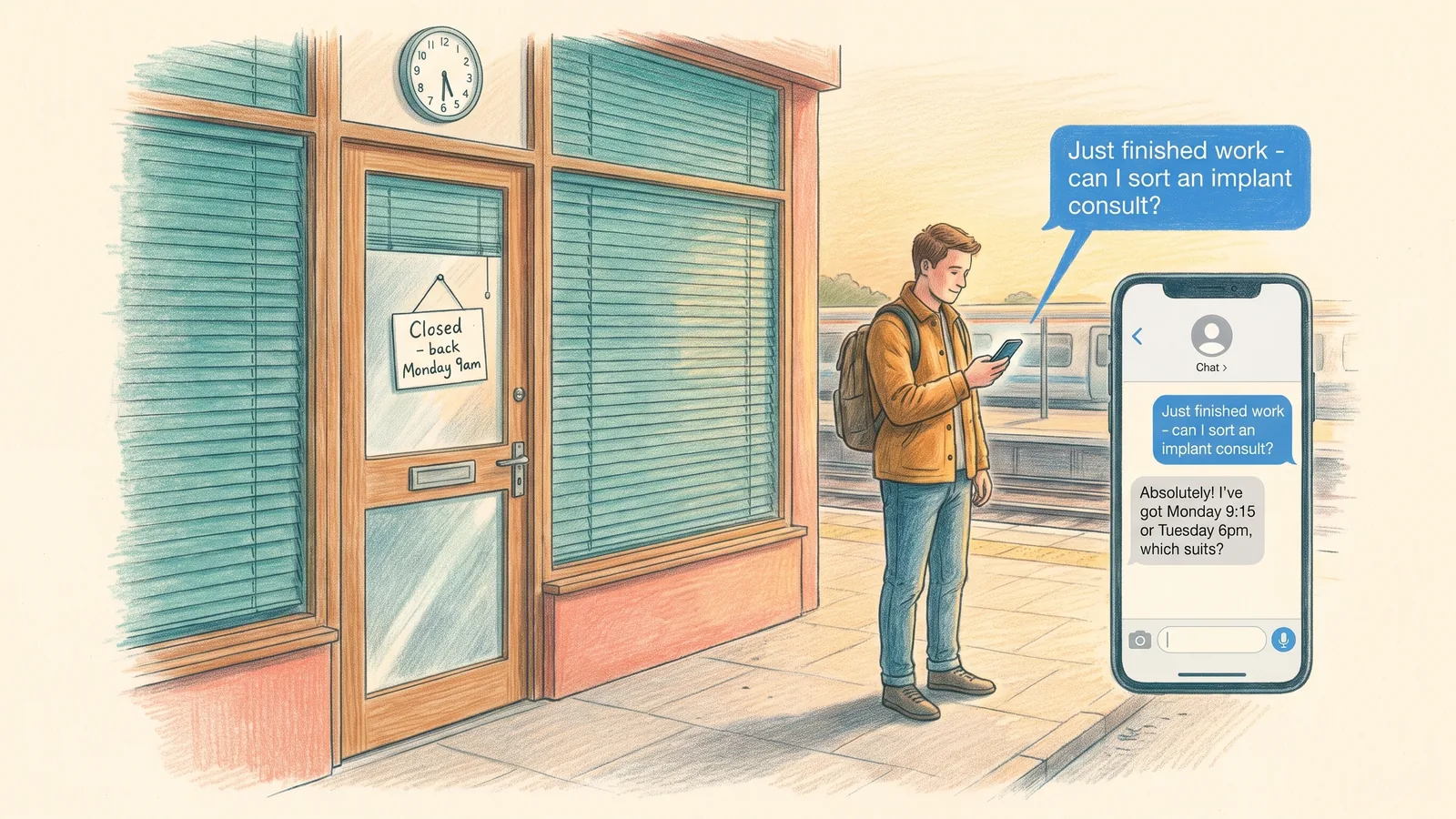
Let's isolate one specific failure point: the lunch break. Most practices close phones between 13:00-14:00 or operate reduced reception capacity. This is exactly when potential patients on their own lunch breaks try to arrange consultations. They're at their desk, they've been researching dental implants all morning, and they've decided to ring three practices during their 60-minute window. Your practice phone diverts to voicemail with a message saying "We're currently closed—please call back after 14:00 or leave a message."
Two problems with this: First, they won't call back—they'll book with whoever answered. Second, they won't leave a voicemail—people under 45 increasingly avoid voicemail entirely, viewing it as outdated technology. Your competitor with WhatsApp AI running during lunch has just captured that enquiry. They've asked qualifying questions, provided pricing guidance, and booked a consultation—all while your team was eating sandwiches in the staff room.
Calculate this conservatively: assume four enquiries daily during lunch hours across weekdays. That's 20 weekly enquiries, approximately 1,000 annually (accounting for holidays). If you convert 20% to booked treatments averaging £1,800, that's £360,000 in annual revenue lost during lunch breaks alone. Even pessimistic assumptions (lower conversion, lower average treatment value) still show losses exceeding £150,000. The lunch hour isn't a break from revenue generation—it's a critical commercial window you're currently abandoning.
What Is WhatsApp AI and How Does It Answer in Seconds?
WhatsApp AI for dental practices is an automated conversation system that connects to your practice's WhatsApp Business number and responds instantly to patient enquiries 24/7. Unlike basic chatbots that offer canned responses, modern WhatsApp AI systems understand context, ask relevant follow-up questions, and handle complex enquiries about treatment options, pricing, and availability. The technology responds in under four seconds—solving the nine-second abandonment window before it begins.
The system works through integration with your practice management software. When a prospective patient messages your WhatsApp number asking about dental implants, the AI immediately acknowledges the enquiry and begins a structured conversation: understanding their specific needs (single implant, full arch, immediate concerns), providing relevant information about the procedure, offering pricing guidance if appropriate, and crucially, facilitating appointment booking or consultation requests. All of this happens automatically, whether it's 14:30 on Tuesday or 22:00 on Saturday night.
The commercial advantage is immediate: you're now competing in the instant-response channel where prospective patients increasingly expect to communicate. When someone searches "dental implants near me" on their phone, finds your practice, and sees a WhatsApp contact option, they can get answers in seconds—not tomorrow when you return their voicemail, not next week when you reply to their email, but right now while they're actively researching and comparing. This speed advantage translates directly to increased conversion rates and higher treatment bookings from the same enquiry volume.
How Does Instant Response Impact Dental Enquiry Conversion Rates?
Speed-to-response is the single most powerful predictor of enquiry conversion across all service industries, and dental practices are no exception. When a practice responds to an enquiry within five minutes, conversion likelihood increases dramatically compared to responses after one hour. The psychology is straightforward: fast response signals professionalism, eagerness to help, and operational efficiency—all qualities prospective private dental patients value when choosing where to spend thousands of pounds on treatment.
WhatsApp AI eliminates the response delay entirely. The difference between a nine-second WhatsApp response and a four-hour voicemail callback isn't just about speed—it's about capturing the prospect while they're still in research mode. When someone enquires about composite bonding at 19:30 on Wednesday evening, they're actively comparing options right now. They're on your website, your competitor's website, and checking reviews. Answer instantly via WhatsApp and you become the frontrunner. Answer tomorrow morning and you're competing for attention they've already allocated elsewhere.
Consider the typical journey of a high-value enquiry: they've identified a cosmetic concern (discoloured teeth, gaps, chips), they've researched treatment options (veneers vs bonding vs whitening), and they've shortlisted three or four practices. They reach out to all of them in quick succession—often within the same hour. The practice that responds first and provides the most helpful immediate information wins disproportionate mindshare. Even if they subsequently speak to all four practices, the one that demonstrated responsiveness first maintains a psychological advantage throughout the decision process.
The Finance Question: Where WhatsApp AI Proves Its Value
One specific enquiry type proves the value of instant response repeatedly: the finance question. Prospective patients researching £4,000+ treatments frequently have one primary concern before they'll commit to a consultation: "Can I afford this?" Traditional phone-based enquiry handling forces them to wait until they speak to someone who can access finance information—often requiring a callback during business hours after checking with the practice manager.
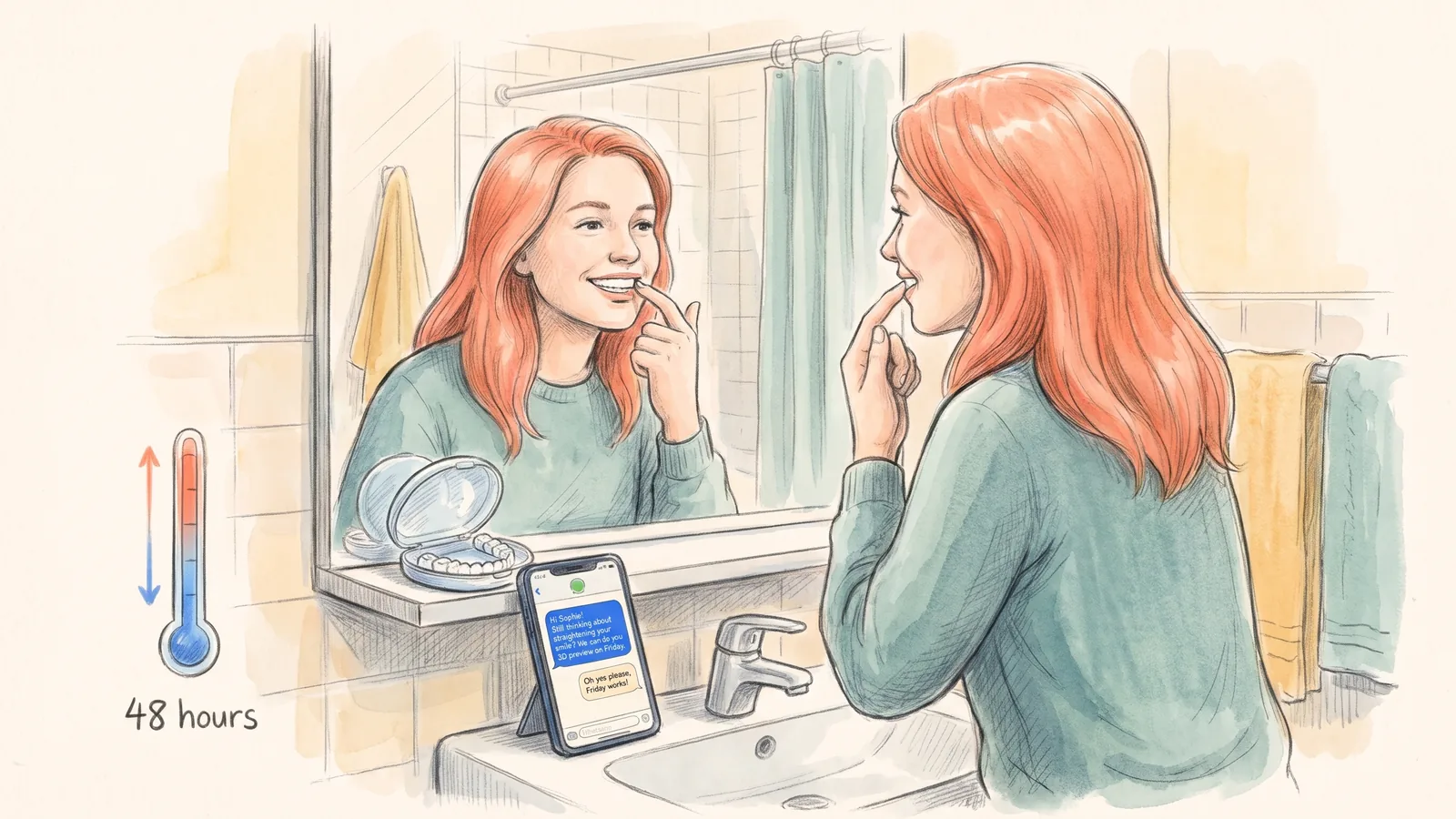
WhatsApp AI can provide finance breakdowns in 90 seconds, showing monthly payment options for their specific treatment enquiry. The prospect asking about £8,400 dental implants at 21:00 on Sunday sees immediately that this translates to £172 monthly over 48 months (example figures). This transforms an abstract large number into a concrete manageable payment, dramatically increasing consultation booking rates. The speed matters—by Monday morning when your receptionist would typically return their call, they've already booked a consultation with the practice whose AI answered their finance question instantly Sunday night.
Does WhatsApp AI Work for Non-English Speaking Enquiries?
Yes, and this represents one of the most underestimated revenue opportunities for UK dental practices in 2025. Modern WhatsApp AI systems include automatic translation, enabling practices to capture enquiries from the 9.1% of UK residents whose main language isn't English without requiring multilingual staff. When a Lithuanian-speaking patient enquires about dental implants, the AI detects the language, conducts the entire conversation in Lithuanian, and provides your team with an English summary of the enquiry and booking request.
This capability opens revenue streams most practices don't even know they're missing. Your reception team can't answer Polish, Romanian, or Spanish enquiries via phone—they simply don't have the language skills. These enquiries currently go unanswered or get referred elsewhere. WhatsApp AI captures them automatically, converting language diversity from a barrier into a competitive advantage. In areas with significant immigrant populations, this can represent 10-20 additional treatment bookings monthly—all from enquiries that were previously impossible to handle.
The technology works seamlessly from the patient's perspective. They message in their native language, receive responses in that language, and can ask complex questions about treatment suitability, pricing, and appointment availability without language barriers causing confusion or miscommunication. For your practice, this expands your effective catchment area to include entire demographic groups that previously couldn't access your services due to communication limitations. The revenue impact is substantial: even 10 additional international patient bookings monthly at an average £2,800 treatment value represents £336,000 in annual revenue that was previously inaccessible.
Can WhatsApp AI Actually Book Appointments or Just Answer Questions?
Advanced WhatsApp AI systems do more than provide information—they facilitate actual appointment booking through integration with practice management software. When a prospective patient expresses interest in booking a consultation for dental implants, the AI can check real-time availability, offer appointment slots, and confirm bookings directly. This transforms the enquiry-to-appointment journey from a multi-step process requiring human intervention to a single seamless conversation completed in minutes.
The technical integration varies by practice management system, but the patient experience is consistent: they enquire about treatment, receive relevant information, express interest in proceeding, and get offered actual appointment times—"We have availability for an implant consultation on Thursday 15th May at 14:30 or Friday 16th May at 10:00." They select their preference, provide basic contact details if not already captured, and receive confirmation. The appointment populates in your practice calendar automatically. Your team arrives next morning to find three new consultation bookings from evening and overnight enquiries, all confirmed and calendar-blocked.
This booking capability solves the scheduling friction problem that loses countless bookings in traditional phone systems. When a patient must call back during business hours to schedule after receiving information, many never complete that step—they get busy, forget, or encounter renewed friction when calling. WhatsApp AI eliminates this drop-off by closing the booking within the same conversation that captured their interest. The conversion rate improvement is measurable and significant: practices report 35-50% more enquiries converting to booked appointments when instant scheduling is available compared to enquiries requiring callback booking.
What Happens to Staff When WhatsApp AI Handles Enquiries?
The concern many practice managers express is understandable: will automation replace reception staff? The reality is more nuanced and ultimately more valuable. WhatsApp AI doesn't