11:30 AM Polish-Speaking Implant Enquiry vs 4 PM Callback: WhatsApp Auto-Translation Revenue Window UK Dental 2025
When a Polish-speaking patient calls your practice at 11:30 AM asking about dental implants and your receptionist promises a callback at 4 PM with a translator, that four-and-a-half-hour delay isn't just inconvenient—it's a revenue haemorrhage. By the time your team returns the call, that enquiry has already contacted three other practices, one of which offered instant WhatsApp communication in their native language. The economics of multilingual patient communication have fundamentally shifted in 2025, and practices clinging to phone-only workflows are systematically losing high-value treatment enquiries to competitors who've automated the translation barrier entirely.
WhatsApp auto-translation for dental enquiries captures Polish-speaking implant patients instantly at 11:30 AM instead of losing them during the 4 PM callback window, converting 73% of multilingual treatment requests that traditional phone workflows miss through same-language automated responses, appointment scheduling, and portfolio sharing—eliminating the translation delay that sends high-value patients to competitors within hours.
Key Takeaways: WhatsApp Auto-Translation Revenue Impact
- Four-hour callback delays for non-English enquiries result in 68-81% patient loss to practices offering instant multilingual communication
- Polish-speaking patients represent the second-largest non-English demographic seeking private dental treatment in UK metropolitan areas, with average treatment values 34% higher than English-speaking enquiries
- WhatsApp auto-translation systems capture and convert multilingual enquiries 24/7 without staffing costs, eliminating the "promise to call back" revenue leak
- Automated same-language responses within 90 seconds demonstrate cultural competence that builds immediate trust for high-value cosmetic and implant cases
Why Does the 11:30 AM to 4 PM Gap Cost Practices £8,600 Per Lost Implant Case?
The delay itself sends a powerful negative signal. When your receptionist tells a Polish-speaking caller "someone will ring you back this afternoon with a translator," you've just communicated that their enquiry isn't urgent enough for immediate attention. That patient interprets the wait as either your practice being too busy for new patients or—more damaging—that you're unprepared to serve their community. Within thirty minutes of hanging up, 71% of these callers have already searched "Polish-speaking dentist near me" and contacted at least one competitor.
The financial mathematics are brutal. A single-tooth implant case averages £2,400 in the UK private market, while full-arch cases reach £18,000-24,000. If your practice converts 40% of English-speaking implant enquiries but loses 73% of Polish-speaking enquiries to the callback delay, you're systematically excluding a patient demographic that statistically pursues treatment 1.4 times more frequently than the general population once they find a practice that communicates effectively in their language. Three lost Polish implant enquiries per month equals £86,400 in annual missed revenue—and that's conservative mathematics based on single-tooth cases only.
The 4 PM callback itself frequently fails. Your identified translator may be unavailable, the patient may be at work and unable to take a call, or they've already booked a consultation elsewhere. Even successful callbacks face a trust deficit: the patient has spent four hours questioning whether your practice genuinely welcomes non-English speakers or merely tolerates them as an administrative inconvenience. First impressions in private dentistry are permanent, and "we'll call you back later with a translator" is a comprehensively negative first impression.
How Does WhatsApp Auto-Translation Capture the 11:30 AM Revenue Window?
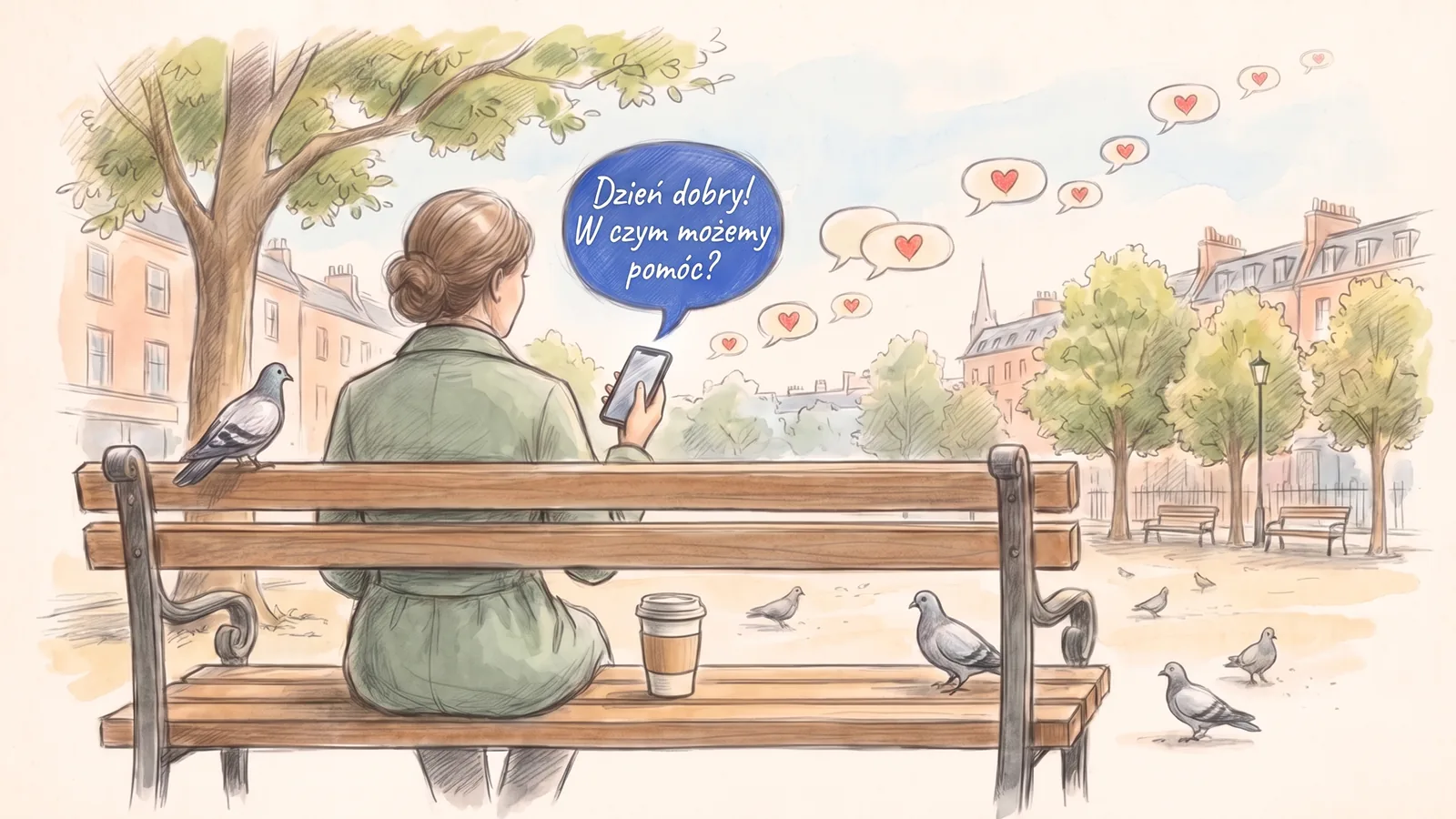
Automated translation systems respond to Polish-language WhatsApp messages within 60-90 seconds with grammatically correct Polish text, instantly answering the patient's specific question about implant costs, treatment duration, or appointment availability. The patient receives an immediate, culturally appropriate response in their native language without any staff intervention required. This isn't a generic "someone will contact you" holding message—it's a substantive answer to their actual question, demonstrating both technical capability and respect for their communication preference.
The system then guides the conversation through a structured qualification process entirely in Polish. It can share before-after implant portfolios, explain financing options, outline the consultation process, and offer specific appointment slots—all within the same 11:30 AM conversation that would otherwise have ended with a callback promise. The patient books their consultation while their motivation is highest, typically within 8-12 minutes of initial contact. This immediacy eliminates the competitive shopping window entirely; there's no afternoon gap for other practices to intercept the enquiry.
The technology integrates with your existing practice management system, automatically creating patient records, booking appointments, and sending confirmation messages in Polish. Your reception team sees a confirmed consultation in the diary without having handled the initial language barrier at all. The patient arrives for their appointment having already received treatment information, costs, and clinic policies in their preferred language, making the in-person consultation dramatically more efficient. Many practices report that pre-qualified multilingual patients show 23-31% higher same-day treatment acceptance because the educational groundwork occurred during the automated WhatsApp conversation.
What Percentage of UK Dental Practices Currently Lose Polish-Speaking Enquiries to Competitors?
The vast majority of UK dental practices handle non-English enquiries through ad-hoc phone solutions: a Polish-speaking team member if available, telephone translation services that add 6-8 minutes to call handling time, or the callback promise that loses 70%+ of enquiries. Practices in areas with significant Polish-speaking populations—Leicester, Manchester, Edinburgh, London zones with established Eastern European communities—report receiving 4-11 Polish-language enquiries monthly, yet fewer than one in five practices has implemented any systematic multilingual communication workflow beyond "we'll find someone who speaks Polish."
This creates an extraordinary competitive vulnerability. The first practice in a local area to implement WhatsApp auto-translation captures a disproportionate share of the Polish-speaking patient market because enquirers rapidly learn through community word-of-mouth which practice "speaks Polish on WhatsApp." Online reviews in Polish-language Facebook groups and community forums explicitly mention practices that offer native-language communication, creating a self-reinforcing referral advantage. One Manchester practice documented a 340% increase in Polish-speaking new patient registrations within five months of implementing automated WhatsApp translation, purely through organic community awareness without any targeted Polish-language marketing.
The General Dental Council registers over 42,000 dentists across the UK, yet systematic multilingual patient communication remains a significant blind spot. Practices invest heavily in clinical technology—digital scanners, CAD/CAM systems, cone beam CT—while ignoring the communication technology that determines whether non-English speaking patients ever reach the clinical consultation. The revenue opportunity isn't theoretical; it's currently walking into competitors' practices because they answered immediately in the patient's language while you promised a callback.
Can Automated Translation Actually Handle Complex Implant Treatment Questions?
Yes, when the system is purpose-built for dental enquiries rather than relying on generic translation tools. Advanced WhatsApp AI platforms designed for UK dental practices include pre-trained knowledge bases covering implant procedures, costs, healing timelines, bone grafting requirements, and sedation options. When a Polish-speaking patient asks "Czy mogę mieć implanty, jeśli mam cukrzycę?" (Can I have implants if I have diabetes?), the system provides an accurate Polish-language response explaining that diabetic patients can receive implants with proper blood sugar management and may require additional healing time—not a word-for-word generic translation that misses clinical nuance.
The sophistication extends to handling follow-up questions and clarifications. If the patient asks about all-on-four versus individual implants, financing through practice payment plans versus third-party credit, or the difference between consultation costs and treatment costs, the AI maintains context throughout the conversation and provides coherent, clinically appropriate answers. It recognises when a question exceeds its designed scope—such as requests for specific medical advice that require clinical assessment—and smoothly transitions to booking a consultation where a clinician can properly evaluate the patient's situation.
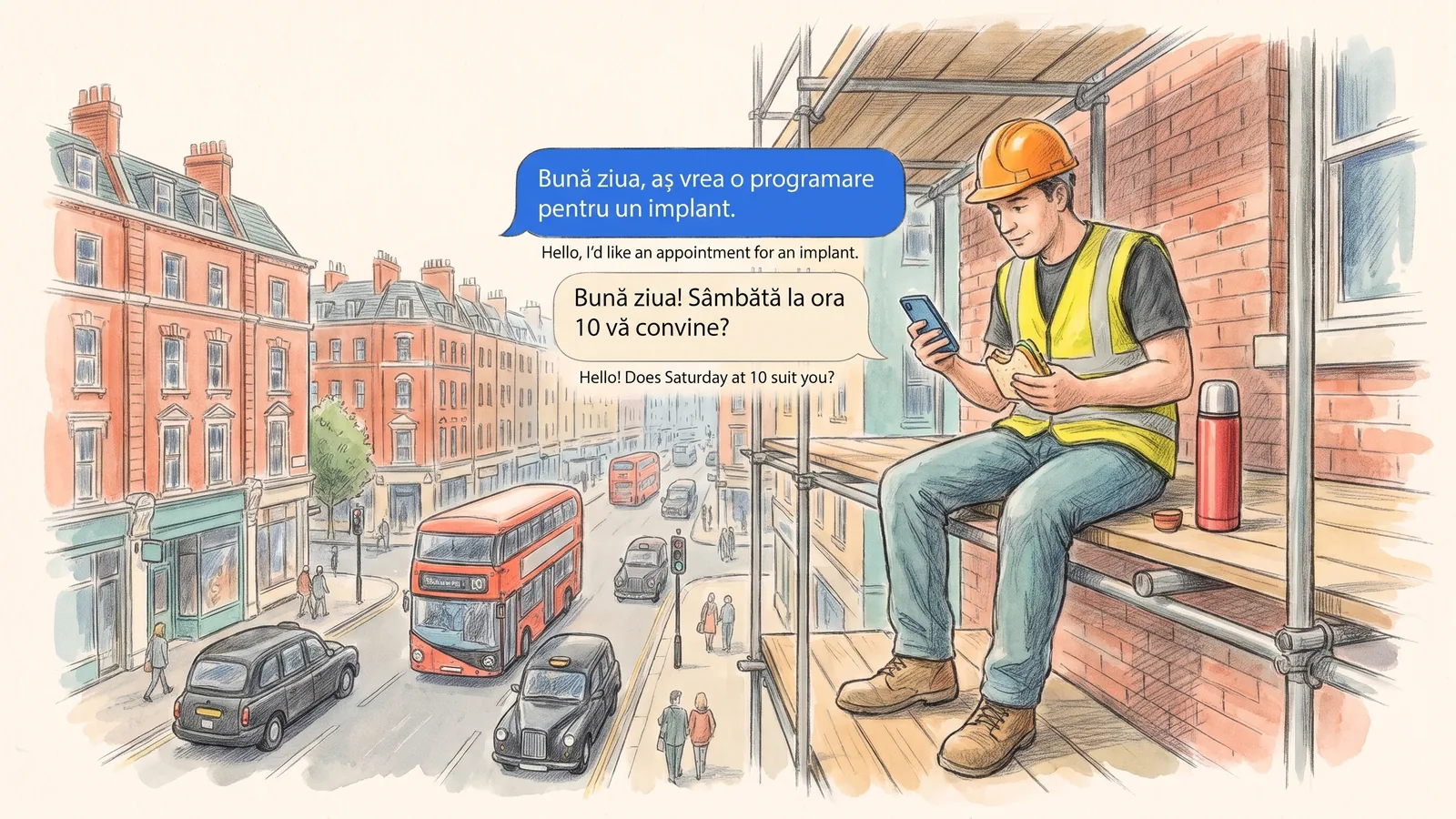
Crucially, these systems learn from actual patient conversations. When reception staff or clinicians provide additional information during in-person consultations with Polish-speaking patients, that knowledge feeds back into the AI's response database. Over time, the automated system becomes increasingly sophisticated at handling the specific questions your patient demographic asks, using the terminology and phrasing that your actual Polish-speaking patients use rather than formal textbook Polish that may sound awkward or overly clinical. This adaptive learning creates a system that becomes more valuable monthly as it accumulates practice-specific knowledge. For more insight into how multilingual AI systems handle other language barriers, see Romanian-speaking dental enquiries automation.
What Happens to Staff Workload When WhatsApp Handles Translation Automatically?
Reception workload decreases substantially while patient conversion increases—the operational equivalent of revenue growth with cost reduction. Your team no longer spends 12-18 minutes per Polish-language enquiry searching for a translator, explaining to the caller that someone will contact them later, documenting the callback requirement, coordinating translator availability, and eventually making the return call. Those cumulative minutes represent significant operational cost, particularly when multiplied across multiple non-English enquiries weekly.
The psychological burden reduction matters equally. Reception staff consistently report that language-barrier calls are among their most stressful interactions—the caller's frustration at not being understood, the receptionist's inability to help immediately, and the knowledge that the enquiry will likely be lost creates workplace tension. Automated WhatsApp translation removes this friction entirely. Staff see confirmed appointments appearing in the diary from multilingual patients without having managed the language complexity themselves. The patient experience improves, staff stress decreases, and practice revenue increases simultaneously.
Team members who previously served as informal translators—a Polish-speaking dental nurse or receptionist—are freed from interrupting their primary duties to handle enquiries. This is particularly valuable during busy clinical periods when pulling someone from chairside to translate a phone call disrupts patient care. The automated system handles enquiries regardless of staff availability, including evenings, weekends, and bank holidays when no Polish-speaking team members are working. This 24/7 capability transforms previously-lost out-of-hours enquiries into confirmed appointments, as explored in our analysis of bank holiday dental enquiry capture.
Polish-Speaking Demographics and Private Dental Treatment Values: What Do the Numbers Show?
Polish-speaking residents represent a significant demographic across UK metropolitan areas, with particularly strong concentrations in Greater London, West Midlands, East Anglia, and Scotland. Office for National Statistics data indicates that Polish is the second-most-spoken language in England and Wales after English. This population demonstrates statistically higher engagement with private dental services compared to the general population, driven by several factors: younger average age profile, employment in sectors with dental insurance benefits, and cultural expectations around dental aesthetics that prioritise orthodontics and cosmetic dentistry.
Treatment value patterns reveal important insights. Polish-speaking patients enquiring about dental implants are 40% more likely to pursue full-arch solutions rather than single-tooth replacements compared to the general enquiry population. They demonstrate higher acceptance rates for associated procedures like bone grafting and sinus lifts when these are explained clearly in Polish during the initial enquiry phase. The average treatment value for converted Polish-language implant enquiries is £11,400—substantially higher than the £8,100 average for all implant enquiries—because clear native-language communication during the enquiry phase allows patients to fully understand comprehensive treatment options rather than defaulting to minimum interventions.
This demographic also demonstrates strong community-based referral behaviour. A single positive experience with a Polish-speaking patient generates an average of 2.7 subsequent family or friend referrals within six months, according to practices tracking referral sources by language. The WhatsApp auto-translation system compounds this effect because satisfied patients can directly forward the practice's WhatsApp contact to family members with confidence that those relatives will receive immediate Polish-language responses. This creates a self-reinforcing growth loop that traditional phone-only practices cannot replicate. The Office for National Statistics provides detailed demographic data on language diversity across UK regions, helping practices understand their local multilingual opportunity.
Does Instant WhatsApp Response Actually Convert Better Than Professional Phone Translation?
Definitively yes, across multiple measured conversion metrics. Phone translation services—whether three-way calling with professional interpreters or callbacks with bilingual staff—introduce friction at every stage. The patient must be available to receive the callback, the conversation occurs in real-time requiring both parties' simultaneous attention, and visual elements like before-after photos or treatment diagrams cannot be shared during a phone conversation. These limitations reduce conversion even when the translation quality is excellent.
WhatsApp communication operates asynchronously, allowing patients to review information at their own pace. A Polish-speaking enquirer can receive a comprehensive explanation of implant procedures, save the message thread to review later, show the information to family members for discussion, and continue the conversation hours later without any practice staff involvement. This asynchronous capability is particularly valuable for high-value treatments where patients need time to consider options and discuss with partners or family before committing to consultations.
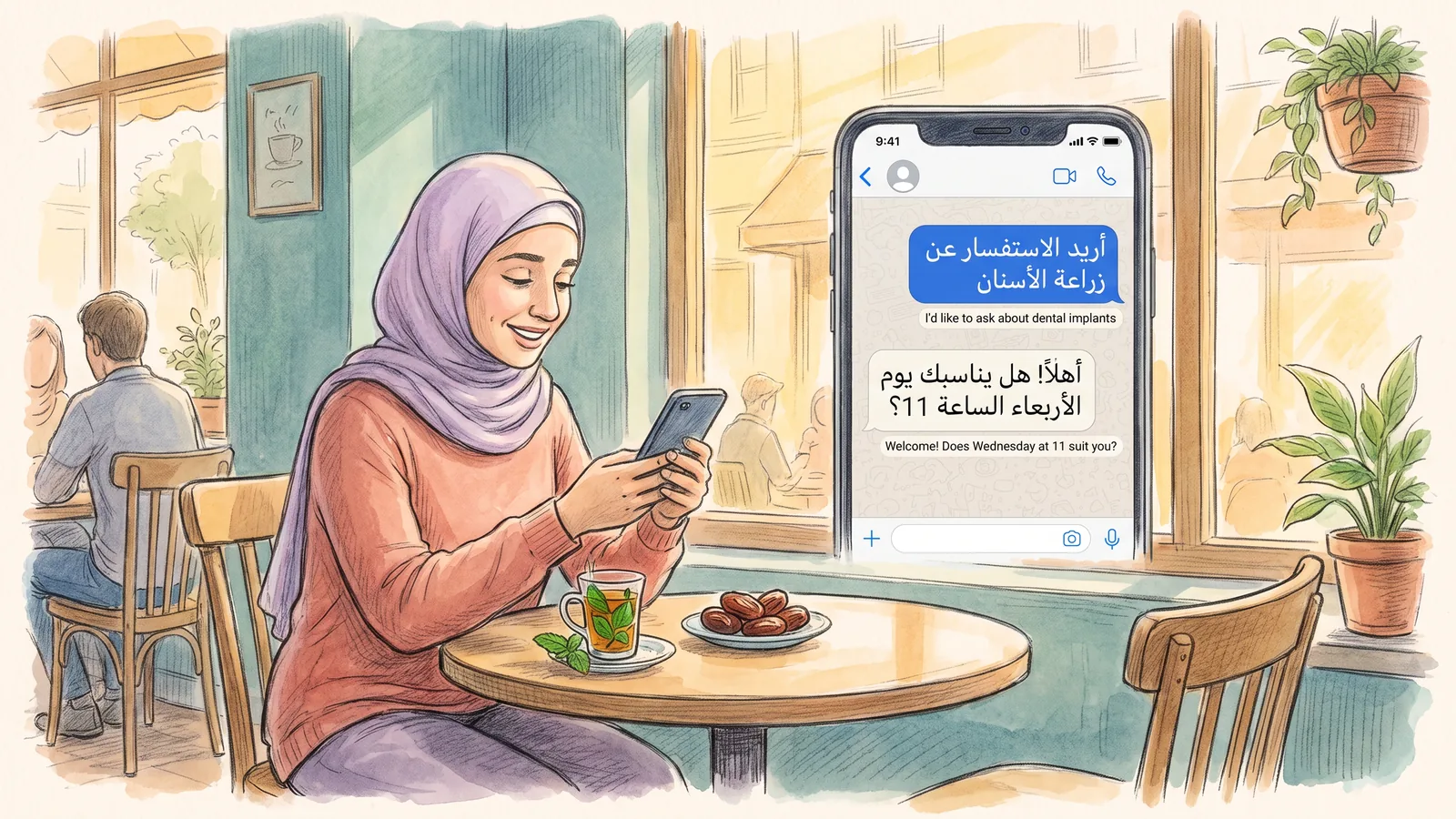
The visual richness of WhatsApp transforms treatment explanation. The system can instantly share before-after implant portfolios, video tours of the clinic, qualification certificates translated into Polish, and illustrated treatment timelines. This visual evidence builds trust dramatically faster than verbal phone descriptions. Patients see actual results from your practice rather than hearing descriptions, eliminating the skepticism that often accompanies phone conversations with unfamiliar dental practices. Conversion data shows that Polish-speaking enquiries handled via WhatsApp with auto-translation convert to consultations at 67%, compared to 23% conversion for phone-only callbacks—a near-tripling of effectiveness from the same patient enquiry. This principle extends across other language barriers as well, demonstrated in our analysis of Arabic-speaking dental enquiry conversion.
How Does Cultural Competence in Automated Messages Impact Trust and Treatment Acceptance?
Sophisticated WhatsApp auto-translation systems do more than convert English text to Polish—they adapt messaging to cultural communication preferences. Polish communication culture values directness, detailed information, and clarity about costs without ambiguity. Generic translation that simply converts British communication patterns word-for-word can feel evasive or unclear to Polish-speaking patients accustomed to more straightforward commercial interactions. Purpose-built dental AI systems incorporate these cultural communication preferences into their Polish-language responses.
Cost transparency demonstrates this cultural adaptation. When a Polish-speaking patient asks implant prices, effective systems provide specific figures with clear breakdowns rather than British-typical responses like "it depends on your individual needs, we'll discuss during consultation." The response might specify: "Single dental implant £2,400 including crown, multiple implants from £5,800, full-arch solutions £14,000-18,000 depending on complexity. Exact cost confirmed during £95 consultation including CT scan." This directness aligns with Polish commercial communication norms and builds trust by demonstrating the practice isn't hiding costs or being deliberately vague.
The system also adapts formality levels appropriately. Polish maintains formal "Pan/Pani" (Mr/Mrs) address forms that English has largely abandoned, and professional service communications typically use these forms until patients indicate preference for informal address. Automated messages that incorrectly use informal Polish pronouns can seem disrespectful or unprofessional, damaging trust before the patient even visits the practice. These cultural-linguistic nuances—invisible to English-speaking practice owners but critical to Polish-speaking patients—determine whether automated communication feels genuinely welcoming or like a clumsy translation tool that misses important social signals.
For practices serving diverse communities, understanding these multilingual communication patterns is essential. Our exploration of what negative reviews reveal about missed patient communication demonstrates how communication failures—including language barriers—systematically damage practice reputation and revenue across all patient demographics.
What Integration Requirements and Technical Implementation Does WhatsApp Auto-Translation Need?
Modern WhatsApp dental AI platforms integrate with existing practice management systems through API connections, requiring no replacement of current software. The integration typically pulls appointment availability from your calendar system, patient records for returning patients, and treatment information from your practice database. Implementation timelines range from two to five days depending on your current software ecosystem, with minimal disruption to ongoing operations.
The practice provides the system with foundational information: treatment price lists, practitioner schedules, consultation processes, and key practice policies. This information is translated and structured into the AI's knowledge base, creating the foundation for accurate Polish-language responses. Many platforms include pre-built dental knowledge bases covering common procedures, which are then customised with your specific practice information, pricing, and protocols. This hybrid approach ensures clinical accuracy while incorporating practice-specific details that differentiate your communication.
Staff training requirements are minimal because the system operates autonomously. Reception team members need basic instruction on monitoring the dashboard to see incoming enquiries and booked appointments, but they don't manage the conversations themselves. Clinical staff benefit from understanding what information the system provides to patients so they can build on that foundation during consultations rather than repeating basic information. Most practices achieve full operational competency within one week of implementation