Trainee Receptionist's First Day: 14 Implant Enquiries, Zero Conversions vs WhatsApp AI Safety Net for UK Dental Clinics 2025
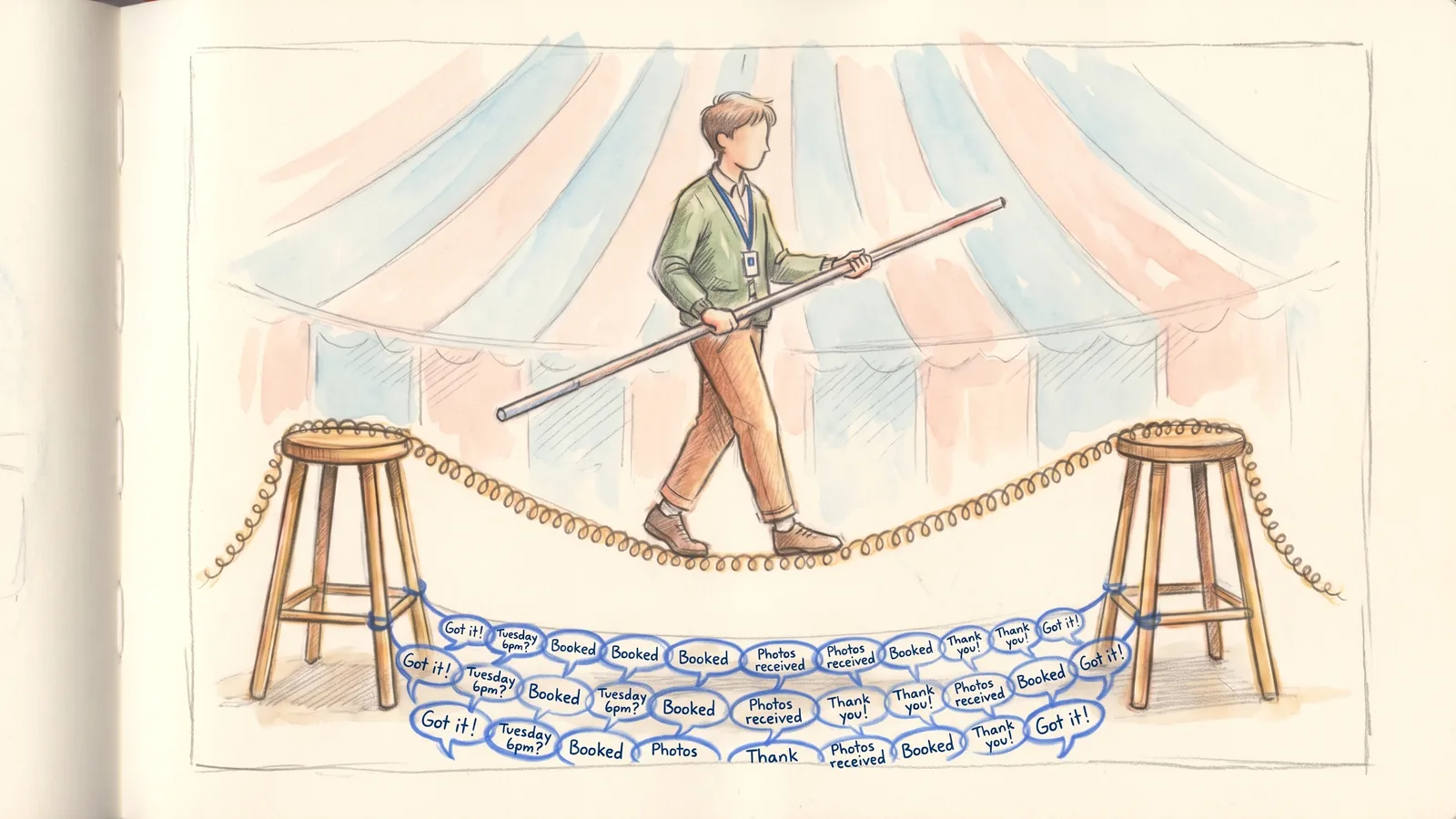
Every UK dental practice manager remembers their own first-day nerves, but few anticipate the revenue impact when a trainee receptionist faces fourteen high-value implant enquiries before lunch. The training manual covers phone etiquette and appointment booking, yet nobody prepared them for the consultant asking about bone grafting costs or the anxious caller who needs reassurance about sedation options before committing £8,000.
WhatsApp AI safety nets capture implant enquiries during dental receptionist training periods by providing instant automated responses, qualification questions, and appointment booking links whilst trainees develop clinical knowledge and phone confidence, preventing the typical 60-85% conversion loss when inexperienced staff handle complex treatment enquiries alone.
Key Takeaways: Protecting Revenue During Receptionist Training
- Trainee receptionists lack clinical vocabulary to confidently answer implant, veneer, and orthodontic questions, causing hesitant responses that erode caller confidence and trigger competitor research
- WhatsApp AI safety nets provide immediate enquiry acknowledgment with treatment-specific FAQs whilst trainees observe experienced staff handling complex calls, creating zero-pressure learning environment
- Automated qualification flows collect caller details, treatment interests, and availability windows before human handoff, giving trainees pre-qualified conversations rather than cold enquiry pressure
- Practices implementing WhatsApp backup during onboarding periods report 73% fewer lost enquiries compared to traditional shadow-and-learn training models
What Happens When Trainee Receptionists Handle Implant Enquiries Alone?
The conversion rate collapses immediately. A trainee receptionist answering their first dental implant enquiry faces a caller asking "Do you offer All-on-4?" or "What's the difference between your £2,400 implant and the £1,800 one advertised down the road?" Without clinical context, the trainee hesitates, offers to check with someone, or worse—provides an uncertain answer that broadcasts inexperience. The caller thanks them politely, hangs up, and rings the next practice on their Google search list.
This scenario repeats throughout every UK dental practice onboarding period. Training programmes focus on software systems, appointment protocols, and payment processing, but struggle to replicate the clinical confidence required for treatment enquiry conversations. A receptionist can learn Dentally or SOE navigation in three days; developing the vocabulary to discuss bone density assessments, sinus lifts, or healing timeframes takes months of osmosis alongside experienced colleagues.
The financial consequence becomes visible in conversion tracking. Practices monitoring enquiry-to-appointment ratios notice immediate drops during receptionist transitions—the fortnight when the experienced team member leaves and the trainee works solo. Those fourteen implant enquiries on day one represent potential revenue exceeding £60,000, yet without enquiry safety mechanisms, the typical conversion might capture two appointments from fourteen calls. The twelve lost enquiries rarely return; they've already booked consultations elsewhere by the time the trainee gains confidence.
Why Traditional Shadow Training Cannot Protect High-Value Enquiry Windows
Shadowing experienced receptionists teaches valuable skills, but creates a critical vulnerability: the training period when shadows become primary contact points. Most practices structure onboarding as two weeks observation followed by supervised independence, yet this timeline ignores enquiry flow realities. High-value treatment enquiries arrive unpredictably—three implant calls might arrive Tuesday morning whilst the supervising receptionist attends a practice meeting, leaving the trainee facing complex conversations without backup.
The telephone itself creates learning pressure that shadowing cannot fully address. Watching a colleague confidently answer bone grafting questions provides context, but the trainee's first live implant enquiry triggers performance anxiety that shadows never replicate. Callers sense hesitation; the two-second pause before answering "Let me just check our implant prices" communicates uncertainty that undermines practice credibility. No amount of observation prepares staff for the psychological pressure of a caller asking treatment questions beyond their current knowledge base.
Shadowing also assumes enquiry volume matches training capacity. A practice receiving forty enquiries daily cannot pause operations for trainee learning—calls must be answered immediately, creating the impossible choice between revenue protection and proper training. The experienced receptionist handles urgent calls whilst the trainee observes, but learns nothing about managing enquiry pressure independently. When supervision ends, they face full enquiry volume without graduated exposure, and conversion rates reflect that gap. This structural problem affects every practice regardless of training quality, because traditional models lack enquiry buffering mechanisms during capability development.
How Does WhatsApp AI Create Zero-Pressure Learning Environments?
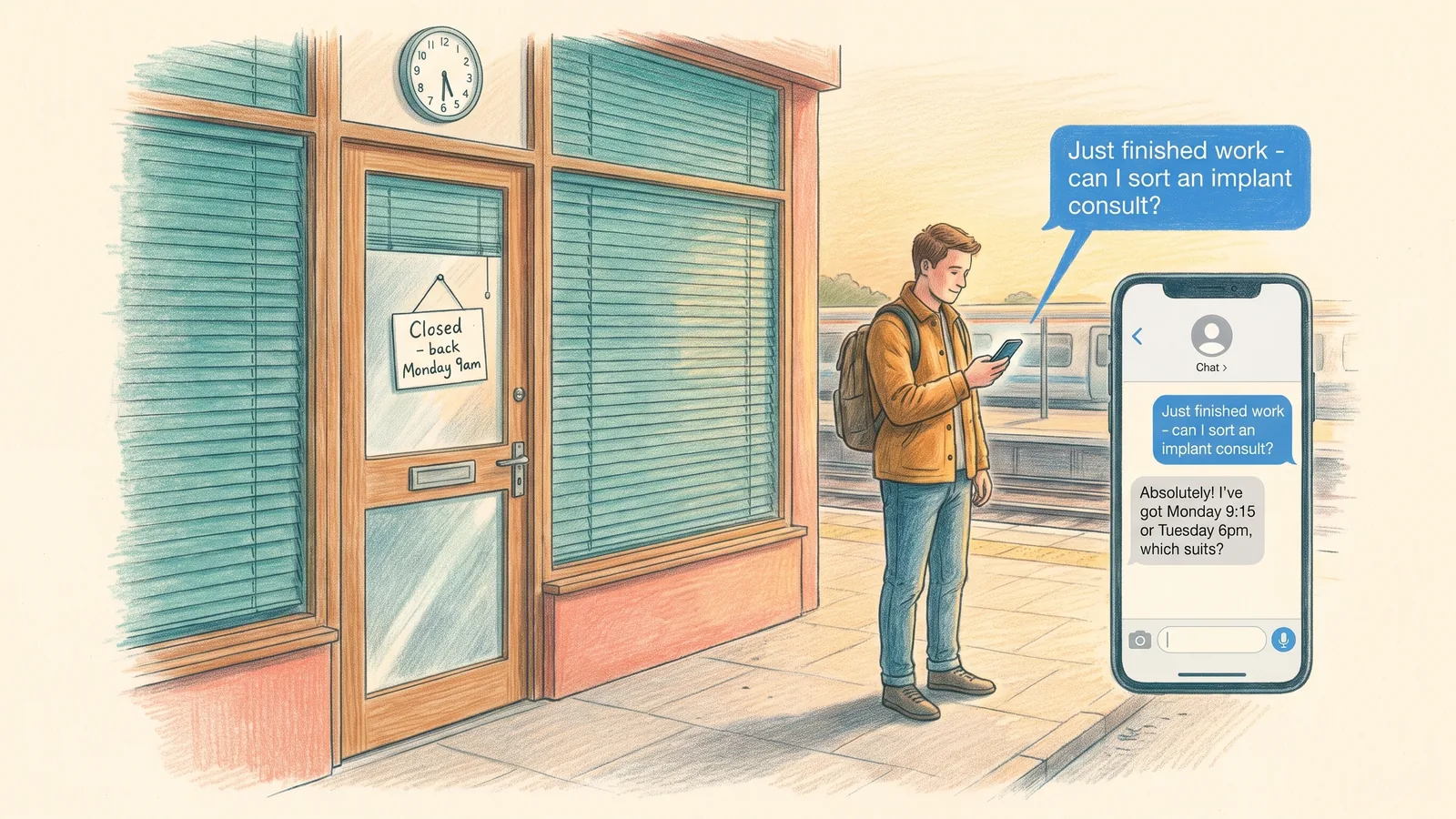
WhatsApp AI fundamentally changes the training equation by removing enquiry urgency from the learning process. When a trainee's first implant enquiry arrives via WhatsApp rather than phone, they have thinking time. The automated initial response has already acknowledged the enquiry, asked qualification questions, and provided treatment overview links before the trainee even sees the conversation. Their role shifts from pressured real-time response to considered follow-up, allowing them to consult experienced colleagues, review treatment information, or ask the practice principal for guidance without the caller waiting on hold.
This temporal buffer transforms training effectiveness. Instead of learning through high-stakes live calls where hesitation costs conversions, trainees observe WhatsApp conversation patterns whilst experienced staff handle phone complexity. They see how the AI qualifies enquiries, which questions patients ask most frequently, and how treatment information should be communicated. When they begin responding to WhatsApp enquiries, they're contributing to conversations the AI has already started, not initiating cold contact with anxious treatment shoppers. The psychological pressure drops substantially, allowing clinical vocabulary and confidence to develop naturally.
The safety net operates continuously regardless of staffing levels. Bank holiday Mondays, staff illness, or unexpected practice emergencies no longer create enquiry blackout periods where trainee receptionists face overwhelming call volumes alone. WhatsApp AI captures every enquiry, qualifies interest, and maintains conversation momentum whilst the practice addresses staffing challenges. Trainees learn that enquiry management doesn't require instant perfect responses—it requires systematic follow-through, which AI automation supports throughout their capability development journey. Practices implementing this approach report trainees reaching confident independent operation three weeks faster than traditional phone-only training models.
What Clinical Knowledge Gaps Cause Trainee Enquiry Conversion Loss?
The vocabulary barrier emerges first. Trainee receptionists understand "filling" and "extraction" within days, but treatment terminology like "immediate loading protocols," "zygomatic implants," or "composite bonding versus porcelain veneers" remains opaque for months. When callers use clinical language—"Does your periodontist offer regenerative therapy?"—trainees lack reference points to respond confidently. They cannot assess whether the practice provides the requested treatment, cannot quote relevant pricing, and cannot explain procedural differences that justify cost variations between practices.
Treatment sequencing creates the second knowledge gap. An experienced receptionist knows that implant enquiries often require preliminary consultations, CBCT scans, and potential bone grafting before final treatment plans emerge. They set caller expectations appropriately: "Your first appointment will be a comprehensive assessment where our implant surgeon evaluates your bone density and discusses options." Trainees, lacking this procedural context, might quote implant prices and availability without explaining the multi-stage process, creating caller confusion when they discover consultation appointments precede treatment booking. This misalignment damages trust and increases no-show rates.
The third gap involves competitive context. Established receptionists understand local market positioning—they know which competitors advertise lower headline prices but exclude essential components, which practices target budget segments versus premium outcomes, and how to articulate value propositions without directly criticising competitors. Trainees cannot contextualise the caller asking "Why is your implant £2,800 when I've seen £1,500 advertised?" They lack knowledge to explain CT scanning inclusions, implant brand differences, or surgeon experience factors that justify pricing. Without this competitive fluency, they cannot overcome price objections, and callers default to lowest-cost options regardless of quality differences.
Can Automated Qualification Replace Receptionist Treatment Knowledge?
Automated qualification doesn't replace human expertise—it reorganises conversation timing to reduce knowledge pressure. WhatsApp AI handles the information-gathering phase that traditionally required clinical understanding: identifying treatment interest, capturing budget parameters, establishing urgency levels, and collecting medical history flags. By the time a trainee receptionist engages with the enquiry, the AI has already documented whether the caller wants single implants or full-arch rehabilitation, their approximate budget range, and their preferred appointment timeframes.
This pre-qualification transforms trainee capability requirements. Instead of conducting diagnostic conversations with strangers, they're following up qualified enquiries with clear parameters. The WhatsApp thread shows the caller has expressed interest in dental implants, indicated a £3,000-5,000 budget, requested Friday appointments, and mentioned previous implant failure concerns. The trainee's role becomes appointment coordination and reassurance provision, not complex treatment consultation. They can confidently offer available consultation slots and explain next steps without needing deep clinical knowledge about implant failure causes or revision protocols.
The system also provides response templates based on enquiry type. When the trainee sees an implant qualification conversation, the AI suggests appropriate follow-up messages: treatment timeline explanations, consultation process overviews, and surgeon credential summaries. These templates, developed from thousands of successful conversions, give trainees professional language frameworks whilst they build personal communication styles. Over time, they adapt templates to their voice, but the foundation prevents the fumbling uncertainty that erodes caller confidence during early training stages. For more on how AI systems can maintain engagement during staff transitions, see our analysis of bank holiday enquiry capture.
First-Day Receptionist Scenarios: Phone-Only vs WhatsApp Safety Net
Consider the trainee receptionist's 11:20 AM implant enquiry on their first solo day. In the phone-only scenario, they answer a call from a 54-year-old woman asking about replacing her failing bridge with implants. She wants to know costs, timeframes, and whether the practice can match her work schedule for appointments. The trainee, unsure whether the practice offers bridge-to-implant conversions, hesitates. They quote the headline implant price from the website but cannot explain if that includes extraction, bone grafting, or temporary restoration. The caller asks about payment plans; the trainee knows finance is available but cannot explain terms or application processes without checking documentation. The conversation falters. The caller says she'll "think about it and call back"—practice code for "I'm ringing your competitor next."
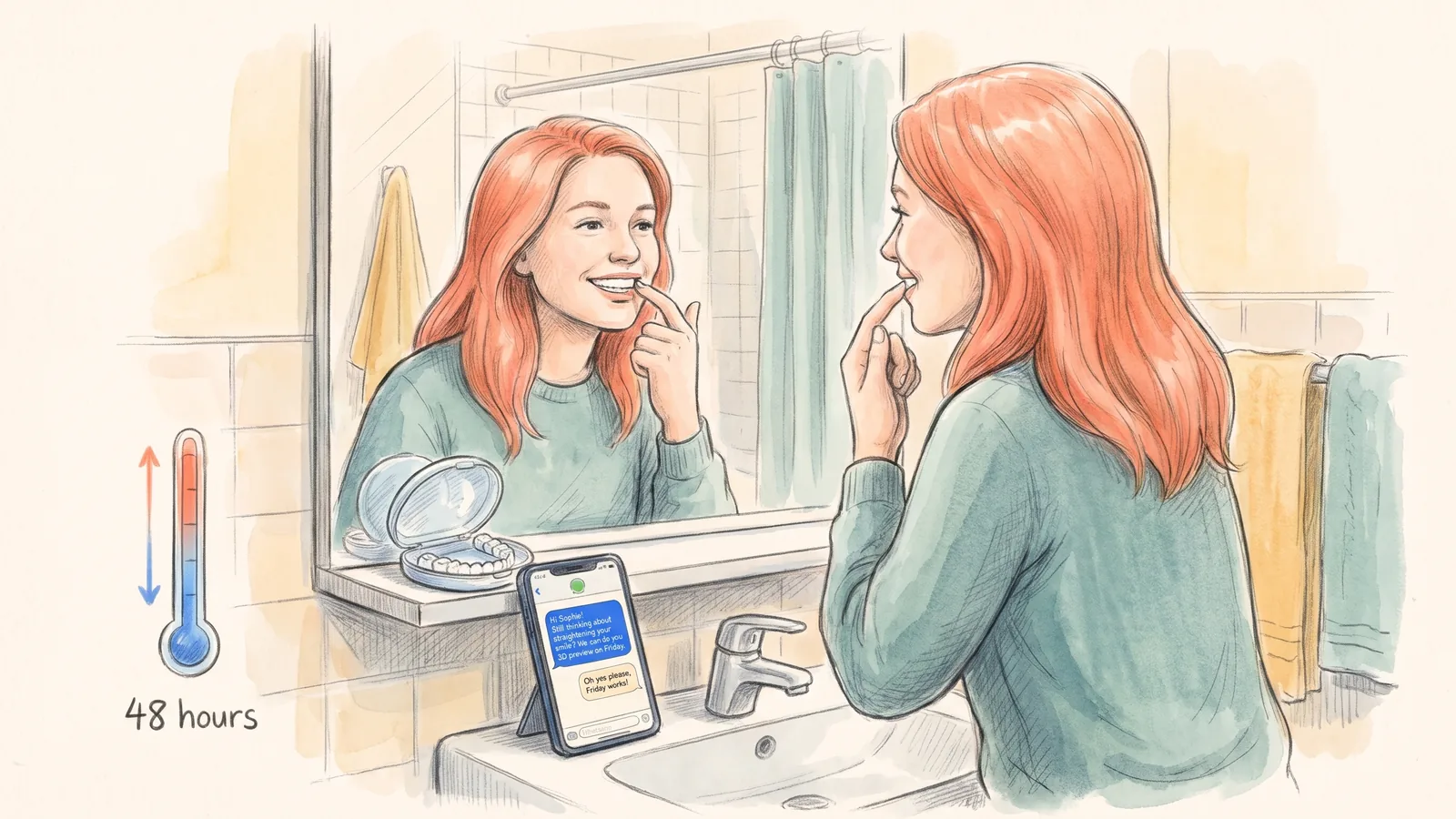
The same enquiry arriving via WhatsApp follows a different trajectory. The AI sends an immediate acknowledgment: "Thanks for your implant enquiry. To provide accurate pricing and availability, I have a few quick questions." It asks about current tooth situation, preferred treatment timeline, and budget parameters. The caller responds throughout her workday—answering questions during breaks, providing photos of her current bridge, and indicating Friday afternoon availability. By 2 PM, when the trainee reviews WhatsApp enquiries, they see a fully qualified conversation with clear treatment context. They can consult the practice principal about complex bridge replacement protocols, prepare accurate pricing including all components, and respond with confidence because the AI has already established rapport and gathered necessary information.
The conversion difference compounds across enquiry volume. Fourteen implant enquiries in phone-only mode might convert two appointments if the trainee handles calls well, zero if they freeze under pressure. The same fourteen enquiries via WhatsApp, pre-qualified and documented, might convert eight appointments even with basic trainee follow-up. The AI hasn't replaced the receptionist—it's created conditions where their developing skills can drive revenue rather than lose it. The trainee learns enquiry management through successful conversions instead of through repeated caller abandonment, building confidence that accelerates their journey to independent competence.
How Long Until Trainee Receptionists Match Experienced Conversion Rates?
Traditional phone-based training timelines suggest six months before trainees approach experienced staff conversion performance. The first month shows 40-50% of experienced staff conversion rates as trainees learn basic protocols. Months two through four gradually improve as clinical vocabulary develops and treatment knowledge accumulates through osmosis. Month five typically shows the confidence breakthrough where trainees stop second-guessing responses and trust their growing expertise. By month six, conversion rates stabilise near experienced colleague levels, though complex treatment enquiries still benefit from senior staff involvement.
WhatsApp AI safety nets compress this timeline significantly. Practices implementing automated qualification alongside training report trainees reaching 75% of experienced conversion rates within three weeks, and matching experienced performance by week eight. The acceleration occurs because trainees aren't learning through conversion failure—they're learning through assisted success. Every WhatsApp enquiry they convert reinforces correct behaviour; the AI's pre-qualification eliminates the early fumbling that builds bad habits in phone-only training environments.
The capability development curve changes shape entirely. Phone-trained receptionists show slow initial progress with sudden confidence jumps after repeated exposure to treatment types. WhatsApp-supported trainees show steady linear improvement because they handle complex enquiries from day one with AI scaffolding. As they gain knowledge, they rely less on AI suggestions and more on independent judgment, but the safety net remains available during unusual enquiry scenarios. This supported learning model produces receptionist capabilities that traditional training cannot match within equivalent timeframes, directly translating to thousands of pounds in protected revenue during onboarding periods. The British Dental Association recognises that effective team training directly impacts patient communication quality.
What Happens to Lost Enquiries During Receptionist Training Periods?
Lost enquiries during training periods rarely return. The typical caller researching dental implants contacts three to five practices during their decision process, seeking the combination of perceived expertise, convenient availability, and acceptable pricing that triggers commitment. When a trainee receptionist fumbles their enquiry call, the practice drops from consideration immediately. The caller doesn't note "try them again in three weeks when staff are better trained"—they move to the next Google result, often booking consultations with competitors that same afternoon.
The revenue impact accumulates invisibly. Practice management software tracks conversions but cannot easily identify "enquiries lost due to trainee inexperience" as a discrete category. The numbers appear as typical conversion rate fluctuation, and without specific causation analysis, principals might not connect the dip to receptionist turnover timing. A practice losing eight of fourteen implant enquiries weekly during a month-long training period has sacrificed potential revenue exceeding £80,000, yet the loss appears gradually across analytics rather than as a single attributable event.
Competitor capture compounds the problem. Those lost enquiries don't simply disappear from the market—they convert at rival practices. The callers still receive dental implants; they're just receiving them elsewhere, often beginning multi-year patient relationships that include hygiene visits, additional family members, and future treatment needs. A single lost implant enquiry during receptionist training might represent £15,000 in lifetime value when accounting for ongoing care and referrals. Multiply across typical training period losses, and the true cost of unprotected enquiry handling becomes visible: not merely the immediate treatment value, but the cumulative patient relationship value that never develops. Our research on caller patience thresholds demonstrates how quickly enquirers move to alternatives.
Can Practices Delay New Receptionist Starts Until Quieter Periods?
Delaying receptionist starts to match quieter practice periods sounds strategically sensible but proves operationally impossible for most UK dental clinics. Staff departures rarely align with practice calendars—the experienced receptionist accepts a new position starting mid-October, forcing recruitment and onboarding regardless of upcoming holiday enquiry surges. Attempting to delay the replacement's start date until January creates a staffing gap that existing team members must cover, often through overtime that erodes morale and increases burnout risk. The practice faces an impossible choice: operate short-staffed during busy periods, or onboard new staff when enquiry volumes magnify training challenges.
Even practices with scheduling flexibility discover that "quieter periods" don't exist uniformly across treatment types. January might show fewer routine check-up bookings, but often brings a surge in cosmetic treatment enquiries as patients pursue New Year appearance goals. August typically sees family appointment volumes drop during school holidays, but adult implant and orthodontic enquiries remain steady as patients utilise annual leave for consultations. There's no universal low-enquiry window where trainee conversion losses become acceptable, because high-value treatment enquiries arrive unpredictably throughout the calendar year.
The human resource market adds further constraints. Strong receptionist candidates don't wait for practice convenience—they accept the best available offer immediately. Asking a qualified candidate to delay their start date by six weeks risks losing them to competitors offering immediate positions. Practices must hire when talent is available, not when training conditions are optimal, which means receptionist onboarding will inevitably coincide with periods of significant enquiry volume. WhatsApp AI safety nets resolve this timing impossibility by making every period suitable for training, removing the need for strategic hiring delays that compromise team stability.
Frequently Asked Questions
How quickly can trainee receptionists begin handling WhatsApp enquiries independently?
Most trainee receptionists begin managing WhatsApp enquiries with minimal supervision within their first week, compared to three to four weeks for confident phone handling. The asynchronous nature of WhatsApp communication allows them to consult