Same-day consultation slots fill before evening enquiries
By 6pm on Tuesday evening, a dental practice receives three WhatsApp messages asking about implant consultations. The receptionist left at 5pm, the treatment coordinator is still catching up on notes from the afternoon, and all three enquiries sit unanswered until Wednesday morning. By then, two have booked elsewhere and the third no longer replies. The clinic lost three consultations—not because the diary was full, but because no one was available to respond when the patient was ready to decide.
When dental consultation booking happens during office hours only, same-day slots fill from morning enquiries while evening and weekend prospects wait—or book with a competitor who replies immediately. A practice that answers every enquiry within seconds, day and night, converts more of the people already reaching out.
Key Takeaways
- Evening and weekend enquiries account for a substantial portion of new patient contact, yet most practices reply only during office hours, creating a conversion gap.
- Patients comparing multiple clinics typically book with the first practice that responds, confirms availability and makes booking straightforward.
- Automated WhatsApp replies can answer common questions, check real-time diary availability and secure consultations outside business hours, with the team taking over when a person is needed.
- Follow-up systems that surface warm leads each morning prevent coordinators from chasing cold enquiries while hotter prospects go unattended.
Why Do Evening Enquiries Miss Same-Day Slots?
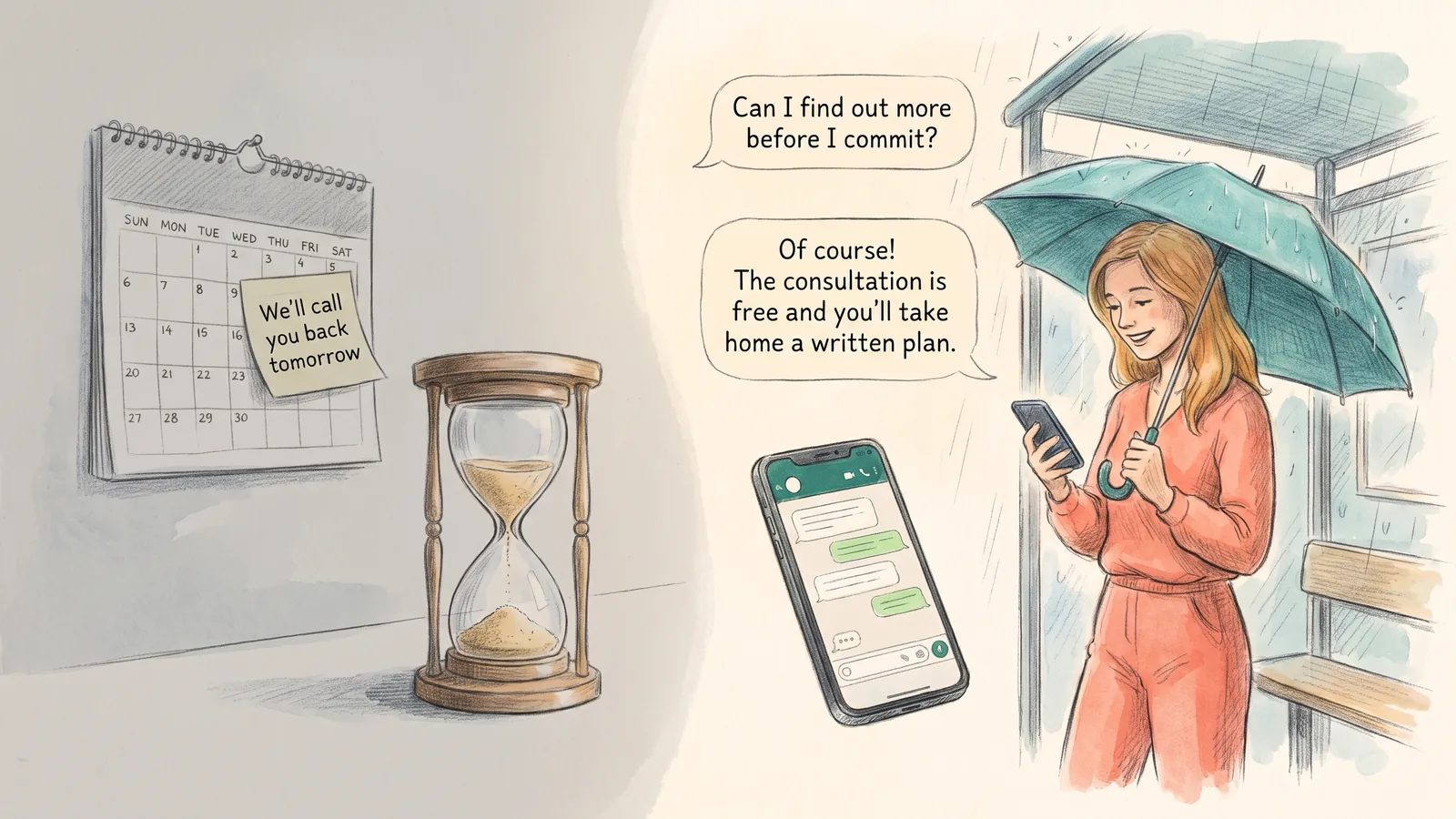
Most dental enquiries arrive outside traditional office hours. Someone finishes work at 5:30pm, picks up their phone on the commute home and messages three practices about teeth whitening. The practice that replies first—with confirmation of an available slot and a simple booking link—usually wins the consultation. Practices that wait until 9am the next day often find the prospect has already booked elsewhere or lost interest overnight.
Same-day consultation slots, particularly late-morning and early-afternoon appointments, fill from enquiries received between 8am and noon. By the time the treatment coordinator reviews evening messages the following morning, those slots are gone and the next available appointment may be a week away. The patient who was ready to book on Tuesday evening is now offered a slot nine days later, and the urgency that prompted the original message has evaporated.
This timing mismatch costs practices not only consultations but also higher-value treatments. Implant, cosmetic and orthodontic enquiries tend to arrive in the evening when people have time to research options and compare clinics. These are precisely the leads a practice cannot afford to leave waiting twelve hours for a reply.
What Percentage of Dental Enquiries Arrive Outside Office Hours?
A significant proportion of new patient contact occurs after 6pm and at weekends, when people have finished work and can focus on personal matters. Practices relying solely on phone calls during office hours miss this entire segment. WhatsApp and online contact forms remain active around the clock, but without a system to respond immediately, the enquiry sits unanswered while the prospect continues their search.
The shift to digital-first communication means patients expect quick replies regardless of the time. A message sent at 7pm on a Saturday is not seen as an out-of-hours request by the sender—it is simply when they had a moment to reach out. If the practice replies instantly, the conversation moves forward. If the reply arrives Monday morning, the opportunity has usually passed.
How Do Patients Choose Between Competing Clinics?
When someone contacts three dental practices on the same evening, they rarely wait for all three to reply before making a decision. The first clinic to respond, answer their specific question and confirm an available consultation slot typically secures the booking. Speed matters more than slight differences in price or location, particularly for discretionary treatments where the patient is comparing multiple providers.
Patients also value clarity and ease. A reply that says "We have a slot tomorrow at 2pm—here is the link to book" converts better than "Please call us in the morning to arrange a consultation." The extra step—requiring the patient to phone during office hours—introduces friction and gives competing practices time to respond. Many prospects will book with whichever clinic makes the process simplest, even if it was their second choice initially.
Trust plays a role, but responsiveness builds trust. A practice that answers questions immediately, in the patient's own language and without making them wait, signals professionalism and attentiveness. The clinic that replies two days later, by contrast, risks appearing disorganised or uninterested, regardless of the quality of care it actually provides.
Can Automated Systems Handle Consultation Booking Without Losing the Personal Touch?
Automated WhatsApp systems can manage the first stage of consultation booking—answering common questions, checking diary availability and securing a provisional appointment—while maintaining the personal, human element patients expect. The key is transparency and appropriate handover. The patient knows they are speaking to an AI assistant (the first message states this clearly), and the system passes the conversation to a team member the moment a person is needed.
CareDental's answer step handles this initial contact. It replies to every WhatsApp enquiry in seconds, day and night, in the patient's own language. It answers questions about treatments, checks the clinic's real diary for available consultation slots and books the appointment. When the conversation requires a person—if the patient asks about finance, needs reassurance about a specific concern or simply prefers to speak to a team member—the AI hands over immediately with a summary of what has been discussed so far. Nothing is hidden, and the patient can opt out at any time by replying STOP.
This approach combines the speed of automation with the warmth of human interaction. The patient receives an instant reply when they message at 8pm on a Sunday, the consultation is booked while they are still engaged, and the treatment coordinator picks up the conversation on Monday morning with full context. The practice converts the enquiry it would otherwise have missed entirely, without asking the team to work evenings and weekends.
What Happens to Enquiries That Do Not Book Immediately?
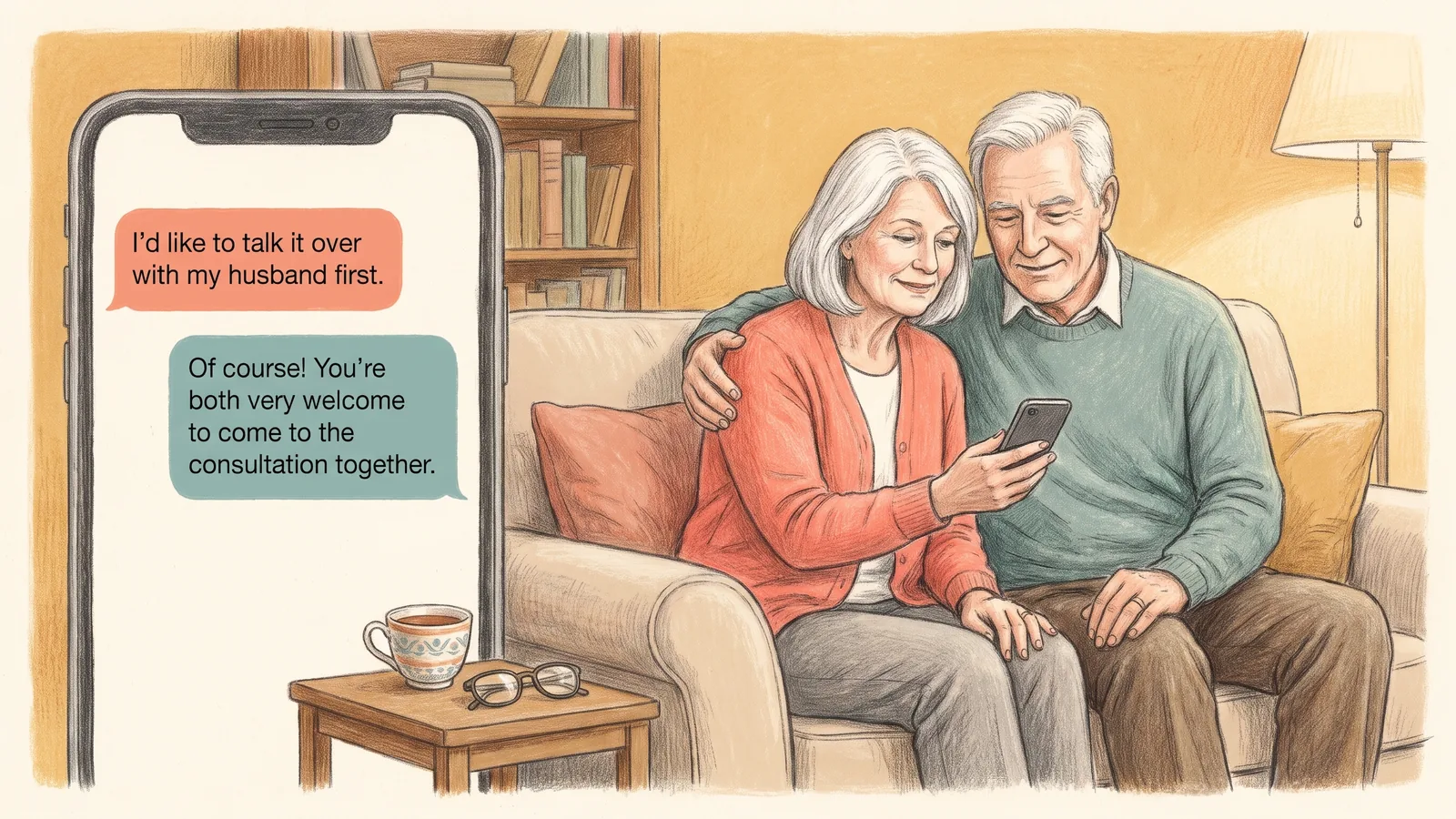
Not every enquiry converts in the first conversation. Some patients need time to think, others want to compare options or discuss the decision with a partner. These warm leads are valuable, but they often go quiet and slip through the cracks while the treatment coordinator focuses on today's new enquiries or chases older, colder leads that are unlikely to convert.
CareDental's follow up step ensures no warm lead is forgotten. Every conversation is summarised for the treatment coordinator: the patient's concern, the next step and a suggested reply. Each morning, the system provides a prioritised list of who to follow up and why, with leads scored by intent so the warmest come first. The coordinator spends their time on prospects most likely to book, rather than working through a long list in the order messages arrived.
This approach prevents the common problem described in this article on coordinator priorities: coordinators spend hours chasing enquiries from two weeks ago while yesterday's implant enquiry, which was genuinely interested but needed a day to think, never receives a follow-up message.
How Do You Win Back Patients Who Went Quiet or Missed an Appointment?
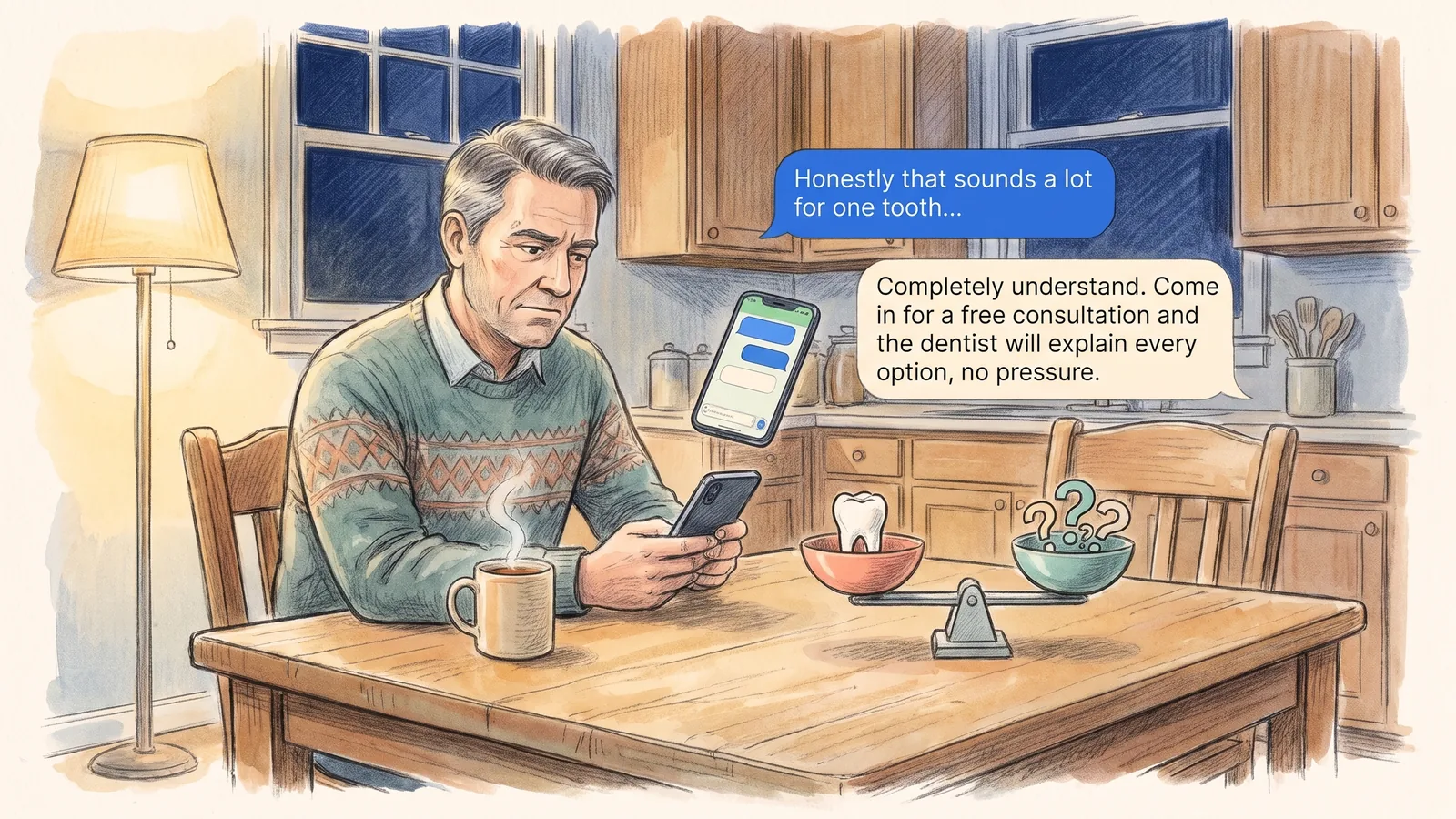
Some patients book a consultation and then fail to attend. Others were interested, the conversation went well, but they stopped replying. These are not lost causes—they are prospects who had intent but encountered an obstacle: a diary clash, anxiety about the procedure, uncertainty about cost. A timely, personalised message often brings them back, but only if someone remembers to send it.
CareDental's win back step identifies patients who went quiet or missed an appointment and drafts a personal message for each. Every morning, the treatment coordinator reviews the suggested messages, approves, edits or dismisses each one, and the AI sends only what the coordinator has explicitly approved. Nothing is sent without a person checking it first. This safeguard is covered in detail in this article on coordinator approval.
The result is a systematic approach to re-engagement that does not rely on the coordinator remembering every person who went quiet. The AI flags them, drafts a message based on the previous conversation and the coordinator decides whether to send it. Many patients respond positively, particularly when the message acknowledges their concern and offers a specific solution: "I know you were worried about the procedure—would you like to speak to the dentist before booking?"
Which Lead Sources Generate the Most Booked Consultations?
Practices invest in multiple lead sources—Google Ads, Facebook, local directories, word of mouth—but rarely know which channels produce consultations that actually convert to treatment. CareDental's know step allows managers to ask questions about their clinic in plain English and receive answers from their own figures. "Which lead source books the most treatment plans?" returns a clear answer, broken down by source, treatment type and value.
This level of insight helps practices allocate marketing budget more effectively. If Google Ads generate twice as many enquiries as Facebook but Facebook enquiries convert at a higher rate and book higher-value treatments, the practice can adjust spending accordingly. The system also provides weekly forecasts of new leads and treatment value, each checked afterwards against what actually happened, so managers can spot trends before they become problems. More detail on lead source tracking is available in this article.
Does Instant Availability Checking Reduce Coordinator Workload?
When a patient asks "Do you have a consultation slot this week?", the traditional process involves the treatment coordinator checking the diary, replying with available times, waiting for the patient to confirm, then booking the appointment. This back-and-forth can take several messages and often spans multiple days if the patient replies outside office hours. By the time the slot is confirmed, the diary may have changed and the process starts again.
Automated systems that sync with the clinic's calendar can check real availability in real time and book the consultation immediately. The patient receives a list of open slots, selects one and the appointment is confirmed—all within a single conversation. The coordinator still oversees the process (they receive a summary of each booking and can adjust or cancel if needed), but the repetitive task of checking and rechecking the diary is handled automatically. This is covered in this article on diary objections.
For multi-site practices, the benefit multiplies. A patient may be flexible about which location they visit but needs a consultation soon. The system can check all sites, present options across locations and book whichever slot the patient prefers. This level of coordination would take a person considerable time; the AI does it in seconds.
How Do Multi-Clinic Practices Track No-Shows and Conversion Across Sites?
Practices with multiple locations face an additional challenge: each site has its own diary, its own team and its own patient flow, but the owner or head office needs a single view of performance. Which clinic converts the most enquiries? Which has the highest no-show rate? Where are evening enquiries being lost?
CareDental provides a multi-clinic dashboard with role-based access. Managers see aggregated figures across all sites and can drill down into individual clinics. Treatment coordinators see only their own site. No-show tracking, lead source performance and conversion rates are visible in one place, making it straightforward to identify issues and replicate what works. This approach is detailed in this article on multi-clinic dashboards.
What About Finance Questions and Payment Plans?
Patients often ask about cost, payment plans and finance options. These questions require careful handling and must be answered by a person, not an automated system. CareDental does not discuss finance, credit or instalment plans with patients. When a patient asks about payment options, the AI immediately hands the conversation to the treatment coordinator with a note: "Patient asked about finance—please follow up."
This safeguard ensures compliance and protects both the practice and the patient. Financial discussions involve regulated information and require a human conversation. The AI's role is to identify these questions quickly and pass them to the team, so the patient receives accurate, compliant information from someone authorised to provide it. The practice can be confident that no automated message ever discusses money.
Frequently Asked Questions
Can WhatsApp AI book consultations directly into the clinic's diary?
Yes. CareDental syncs with the clinic's existing calendar (including Google Calendar) and checks real-time availability. When a patient selects a slot, the system books the consultation immediately and the treatment coordinator receives a summary. The coordinator can adjust or cancel the appointment if needed, but the initial booking happens automatically, day or night.
What happens if a patient prefers to speak to a person?
The AI hands over immediately. The patient can request to speak to a team member at any point, or the system will pass the conversation to the coordinator if the question requires human judgment (finance queries, complex clinical concerns, or when the patient simply prefers it). The handover includes a summary of what has been discussed, so the coordinator picks up the conversation with full context.
Does the system work alongside our existing practice management software?
Yes. CareDental is not a practice management system and does not store clinical records. It works alongside the clinic's existing software (Dentally, Software of Excellence and others) and covers the stage before someone becomes a patient—enquiry, consultation booking and follow-up. It integrates with the clinic's calendar and can link to treatment plans and payment systems (Practice plan includes e-signature and payment links), but it does not replace the PMS.
How do we ensure the AI does not send inappropriate messages?
The win-back system requires coordinator approval before any message is sent. Each morning, the AI drafts suggested messages for patients who went quiet or missed an appointment. The treatment coordinator reviews each one, can edit, dismiss or approve it, and nothing is sent without explicit approval. The first automated message in any conversation states that it is from an AI assistant, and patients can opt out at any time by replying STOP.
Turn Evening Enquiries Into Booked Consultations
Same-day consultation slots should not be reserved only for people who enquire during office hours. Evening and weekend prospects are often the warmest leads—people who have finished work, researched their options and are ready to book. A system that replies instantly, checks real availability and secures the consultation while the patient is engaged turns these missed opportunities into confirmed appointments. The practice converts more of the enquiries already arriving, without asking the team to work outside office hours or leaving leads to go cold overnight.
CareDental handles the first reply, the follow-up, the win-back and the reporting, so the treatment coordinator focuses on speaking to patients who need a person, not chasing enquiries that could have been answered automatically. Book a free demo to see how instant consultation booking works for your clinic.