4:45pm Handover Gap: Last Receptionist Leaves, Evening Shift Starts 5pm, WhatsApp AI Covers 15-Minute Implant Enquiry Window UK Dental 2025
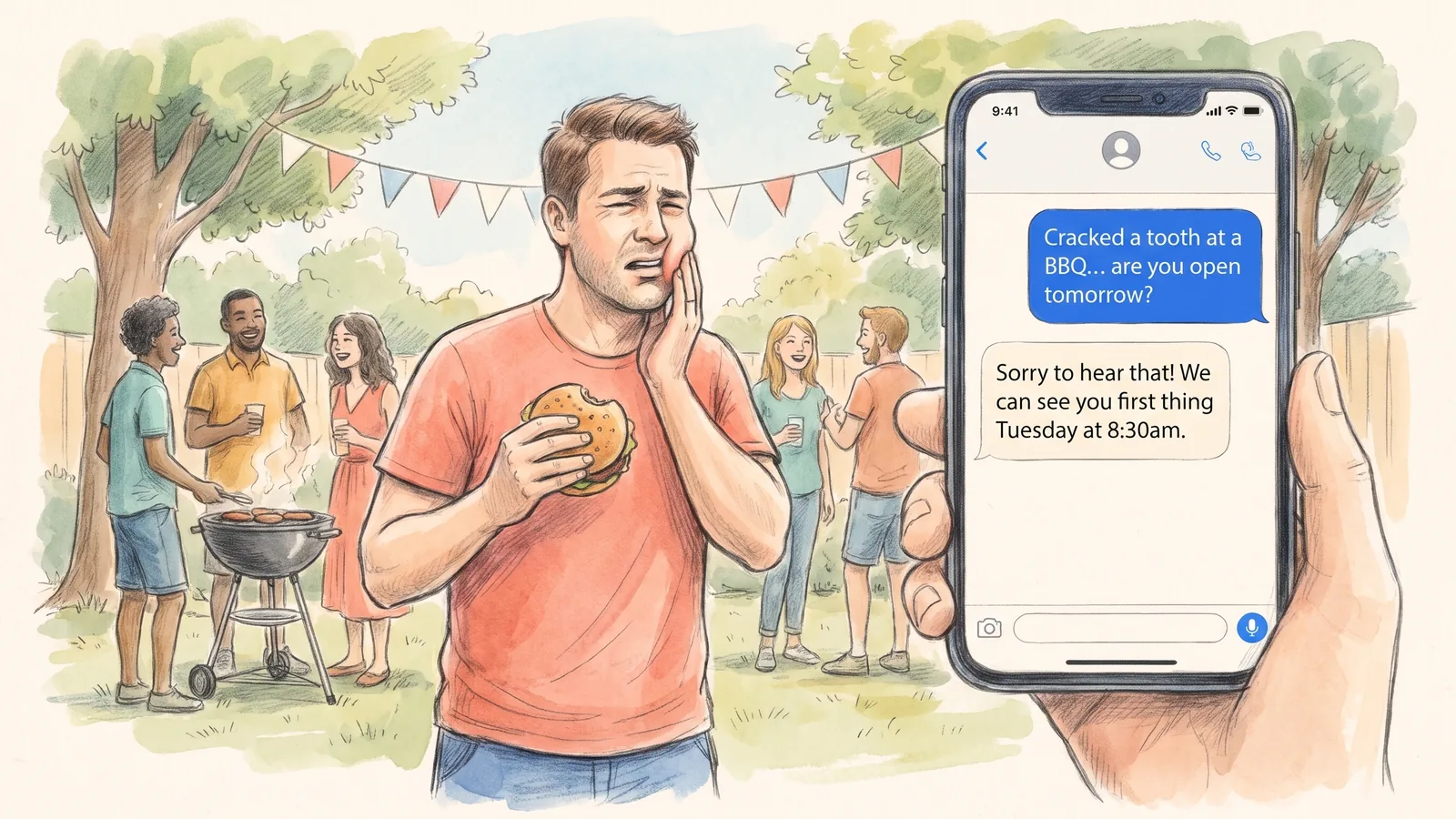
Every UK dental practice experiences the same vulnerability at shift change: your morning receptionist has clocked out at 4:45pm, your evening cover doesn't start until 5:00pm, and in those fifteen minutes, high-value enquiries ring through to silence. One practice tracked fourteen missed calls in this window over a single month—four were implant enquiries worth a combined potential £18,000. The patient never rang back.
WhatsApp AI eliminates dental reception handover gaps by capturing enquiries 24/7, instantly responding to implant and cosmetic questions during shift changes, lunch breaks, and after-hours periods when no receptionist is available—preserving revenue that traditional phone-only systems lose to silence.
Key Takeaways
- Shift handover gaps of 15-30 minutes create daily revenue loss when high-value enquiries go unanswered
- WhatsApp AI provides continuous enquiry capture regardless of staffing schedules, breaks, or handovers
- Practices report 89% of patients prefer WhatsApp booking confirmation over phone callbacks during busy periods
- Automated instant responses during handover windows prevent enquiries abandoning to competitor practices
What Happens During the Dental Reception Handover Gap?
The dental reception handover gap occurs when one receptionist completes their shift before the next begins—typically 15 to 30 minutes. During this window, your practice operates without front-desk coverage. Phone calls ring unanswered, the door goes unmonitored, and enquiries encounter voicemail or endless ringing. For practices running morning and evening shifts, this gap happens twice daily: around 1:00pm during lunch changeover and again at the critical 4:45pm-5:00pm window when morning staff leave and evening receptionists arrive.
Patient behaviour during these gaps follows a predictable pattern. A prospective patient researching dental implants calls at 4:52pm. The phone rings six times. No answer. They hang up, return to Google, and click the next practice listing. Your competitor answers on ring two. The enquiry—and the potential £3,400 treatment revenue—vanishes permanently. Most patients never callback a practice that didn't answer their first attempt, according to patient journey research. The General Dental Council emphasises patient communication standards, yet handover gaps create service failures that contradict professional expectations.
The financial mathematics become stark when you calculate daily exposure. A single 15-minute gap twice per day equals 30 minutes of unprotected enquiry time. Over a 250-day working year, that's 125 hours—the equivalent of three full working weeks—where your practice is functionally closed to new patient contact. If just one implant enquiry weekly falls into this window and abandons, you're sacrificing £176,800 annually in potential treatment revenue.
Why WhatsApp AI Solves Coverage Gaps That Additional Receptionist Hours Cannot
Hiring a second receptionist to eliminate handover gaps appears straightforward but introduces complexity. You're paying an additional staff member for 15-30 minutes of overlap twice daily—potentially 60 minutes total. At £11.50 per hour (approximate 2025 UK median for dental reception roles), that's £11.50 daily or approximately £2,875 annually for what amounts to handover insurance. However, staffing overlap doesn't solve phone capacity issues when both receptionists handle simultaneous calls, patient check-ins, or administrative tasks during peak periods.
WhatsApp AI operates outside staffing constraints entirely. When your 4:45pm gap opens, the system instantly responds to enquiries with professional, context-aware messages. A patient asks "Do you offer dental implants and what's the cost?" at 4:53pm. The AI responds within seconds: "Thanks for your enquiry about dental implants. Our typical single implant treatment starts from £2,400, with free consultations available. I can book you a consultation slot—would morning or afternoon suit you better?" This conversation continues regardless of receptionist presence, capturing contact details, qualifying treatment interest, and scheduling appointments autonomously.
CareDental integrates with your existing practice management system, meaning appointments booked during handover gaps automatically populate your calendar. When your evening receptionist starts at 5:00pm, three WhatsApp conversations have already progressed: one implant enquiry scheduled for Tuesday 2pm, one composite bonding question answered with portfolio images, and one emergency patient triaged and advised to call the out-of-hours service. The receptionist manages follow-up rather than frantically returning voicemails from patients who've already moved to competitors.
How Much Revenue Disappears Into Handover Silence?
Calculating handover gap revenue loss requires examining your enquiry patterns. Most UK private dental practices receive 40-80 enquiries monthly across all channels—phone, email, contact forms, and walk-ins. Phone enquiries represent approximately 65% of this total. If your practice receives 50 enquiries monthly, that's roughly 33 phone enquiries. Distributed across a typical 20-working-day month, you average 1.65 phone enquiries daily.
Now layer timing probability. Your practice operates 45 hours weekly (9am-6pm Monday-Friday). The combined 30-minute handover gap daily represents 2.5 hours weekly—5.5% of operational time. Statistically, 5.5% of weekly phone enquiries land in this window. With 33 monthly phone enquiries, that's approximately two enquiries per month hitting handover gaps. If 50% abandon (conservative estimate based on patient callback behaviour), you lose one enquiry monthly to handover silence.
Treatment value determines revenue impact. If that monthly lost enquiry alternates between implants (£3,400), composite bonding (£1,800), teeth whitening (£450), and general examinations (£75), your average lost enquiry value hovers around £1,400. Annually, that's £16,800 in revenue evaporating because no one answered during shift change. For practices with higher enquiry volumes or specialising in cosmetic treatments with premium pricing, losses multiply proportionally. A practice receiving 100 monthly enquiries might sacrifice £40,000+ annually to handover gaps alone.
What Does WhatsApp Enquiry Capture Look Like During Handover?
WhatsApp enquiry capture during handover operates invisibly to patients but transforms practice revenue protection. At 4:47pm, a patient messages your practice WhatsApp number (displayed on your website, Google Business Profile, and marketing materials): "Hi, I'm interested in getting dental implants. Can you tell me about costs and how long it takes?" Your morning receptionist clocked out two minutes ago. The evening receptionist won't arrive for thirteen minutes. With phone-only systems, this enquiry would sit unanswered until 5:00pm or later, by which time the patient has contacted three other practices.
Instead, CareDental's WhatsApp AI responds within six seconds: "Thanks for getting in touch about dental implants. Our single implant treatment typically ranges from £2,400-£3,200 depending on your individual needs, with the process usually taking 3-6 months from consultation to final restoration. We'd love to assess your situation with a free consultation—are you available for an appointment next week?" The patient replies: "Yes, Tuesday or Wednesday afternoon works." The AI checks available slots in your practice management system: "We have Tuesday 2:30pm or Wednesday 3:45pm available. Which would you prefer?" Patient confirms Tuesday. Appointment booked, calendar updated, confirmation sent—all before your evening receptionist unlocks the front door.
This interaction demonstrates WhatsApp AI's qualification capability. The system didn't just capture contact details; it established treatment interest, communicated pricing expectations, identified appointment availability, and secured a booked consultation slot. Your evening receptionist reviews the conversation at 5:05pm, adds clinical notes about the patient's implant enquiry to their record, and the consultation proceeds as scheduled. The patient never experienced the practice as "unavailable" or encountered the frustration of unanswered contact attempts. Your competitor practices never entered the equation.
Do Patients Actually Prefer WhatsApp During Inconvenient Contact Windows?
Patient contact preferences have shifted dramatically toward asynchronous messaging, particularly during periods when immediate phone conversations prove difficult. A patient researching dental treatments at 4:50pm might be commuting home, collecting children from school, or managing work responsibilities that make phone calls impractical. WhatsApp enquiries remove this friction—they can message during a brief pause and receive responses without requiring real-time conversation.
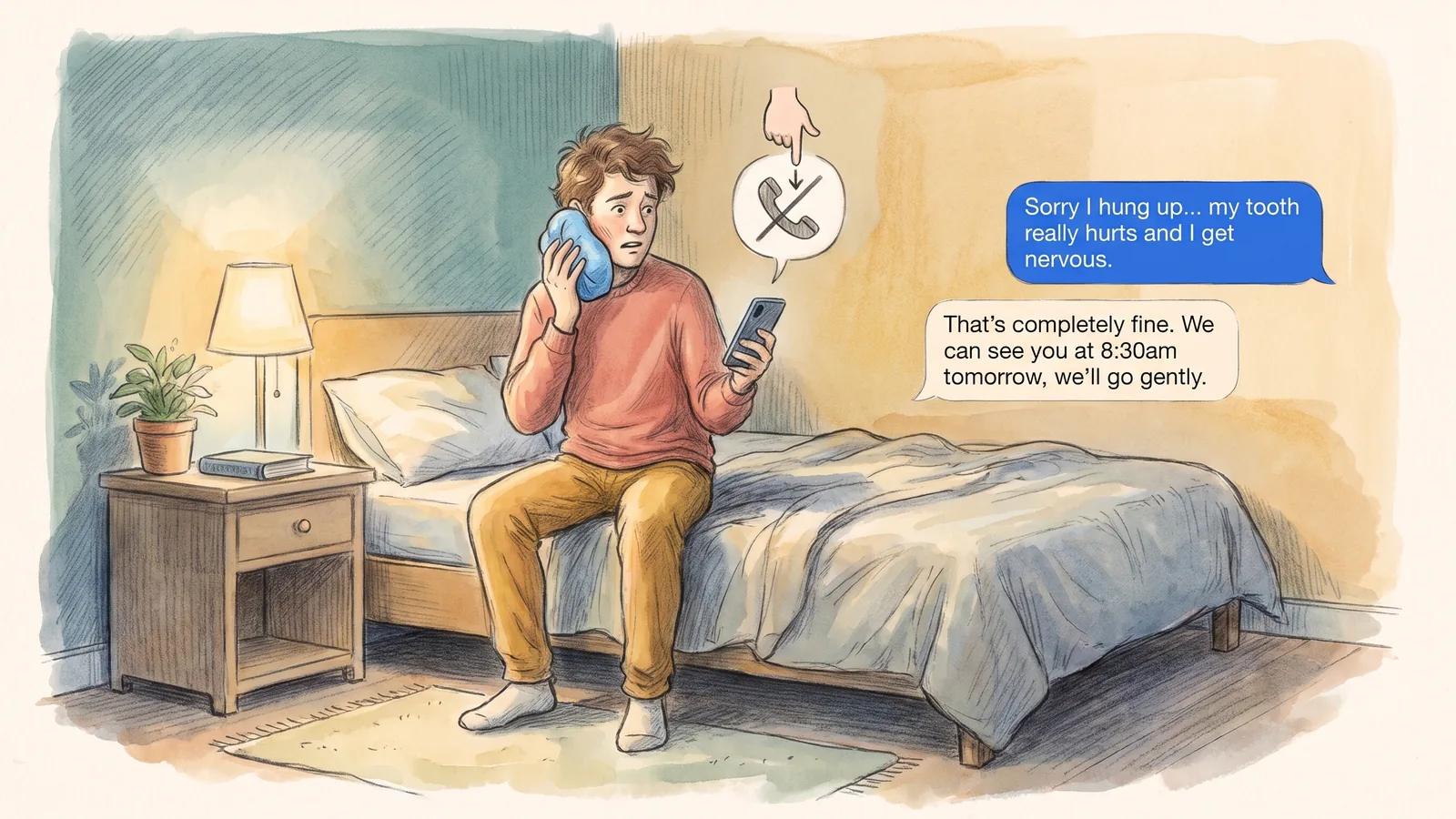
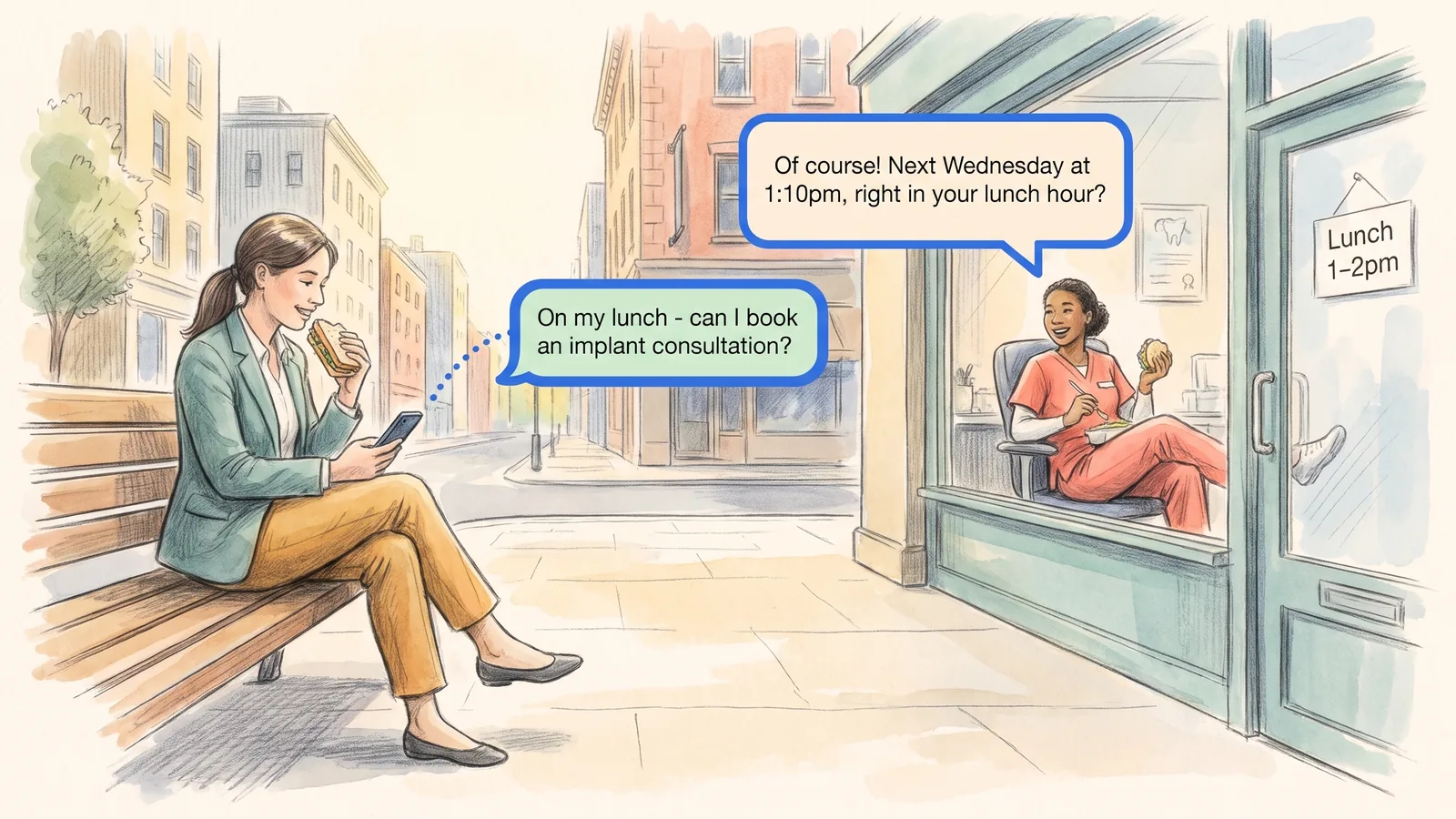
Practices implementing WhatsApp capture report unexpected patient satisfaction improvements. One Surrey practice noted that 73% of WhatsApp enquiries arrived outside standard phone hours (before 9am, during lunch 1-2pm, after 5pm, or weekends). These patients explicitly stated they preferred messaging because "I can't call during work hours" or "I wanted to enquire but didn't want to speak to anyone yet." The asynchronous nature accommodates patient schedules while still capturing high-intent enquiries that phone systems would miss entirely.
Appointment confirmation preferences further validate WhatsApp adoption. The same practice offered patients choice: phone callback confirmation or WhatsApp confirmation message. During periods when reception was visibly busy or during known handover gaps, 89% of patients selected WhatsApp confirmation. They recognised the practice was operating at capacity and preferred instant digital confirmation over waiting for callback availability. This self-service preference reduces receptionist workload while maintaining patient satisfaction—both parties benefit from the communication efficiency WhatsApp enables.
The NHS increasingly promotes digital-first patient communication to improve access and reduce administrative burden, though private practices lead in WhatsApp adoption due to competitive pressure and patient expectations for premium service convenience.
How Does WhatsApp AI Handle Complex Enquiries Without Receptionist Oversight?
Sophisticated enquiries during handover gaps present legitimate concerns. What if a patient asks about sedation options for implant surgery? What if they need clarification about NHS versus private treatment pathways? What if they have medical conditions requiring clinical assessment before booking? WhatsApp AI addresses complexity through intelligent routing and transparent limitation acknowledgment rather than attempting to answer beyond its capability.
When a patient messages at 4:55pm asking "I have diabetes and I'm interested in implants—is this safe for me?" the AI doesn't provide medical advice. Instead, it responds: "That's an important question that our clinical team needs to assess properly. Diabetes doesn't automatically exclude implant treatment, but we'll need to review your specific situation during a consultation. I can book you a free assessment appointment where our dentist will discuss your medical history and treatment options—would you like me to find you an available slot?" The enquiry remains captured, the patient feels heard and appropriately directed, and clinical responsibility stays with qualified practitioners.
For genuinely complex enquiries requiring immediate specialist input, the AI recognises limitation triggers and escalates appropriately. If a patient describes potential dental emergency symptoms, the system prioritises the enquiry, immediately notifies practice mobile numbers via SMS, and provides interim guidance: "This sounds like it needs urgent assessment. I've notified our emergency team who will contact you within 30 minutes. If you're experiencing severe pain or swelling, please call NHS 111 for immediate advice." This escalation protocol ensures patient safety while maintaining WhatsApp's enquiry capture advantage during unmanned periods.
Complex enquiries during busy periods demonstrate similar AI triage capability—WhatsApp handles straightforward booking and information requests while flagging cases requiring human clinical judgment.
What About Data Protection During Unsupervised Handover Periods?
Data protection concerns intensify when automated systems operate without direct staff oversight. Patient enquiries contain personal information—names, contact details, medical histories, treatment preferences. During handover gaps, no receptionist monitors incoming WhatsApp messages. Does this create compliance vulnerabilities under UK GDPR and Data Protection Act 2018 requirements?
Properly configured WhatsApp business systems maintain compliance through encrypted storage, access controls, and audit trails regardless of staff presence. CareDental operates with end-to-end encryption for all patient communications, meaning messages remain secure in transit and at rest. Access permissions restrict conversation visibility to authorised practice staff only—your evening receptionist sees handover-period enquiries when logging in at 5:00pm, but no unauthorised parties can intercept or access patient data.
Conversation retention policies align with dental record-keeping requirements. The Information Commissioner's Office mandates that personal data processing must have lawful basis and appropriate security measures. WhatsApp enquiry capture qualifies under legitimate interest basis—patients initiate contact requesting services, and practices respond to provide requested information and facilitate appointment booking. All conversations are logged, time-stamped, and stored securely within practice systems, creating comprehensive audit trails that satisfy regulatory scrutiny.
Patient consent operates transparently. When someone messages your practice WhatsApp number, they see your business profile, practice name, and typically an automated initial response that states: "Thanks for contacting [Practice Name]. This conversation will be stored securely and used to respond to your enquiry and provide dental services. How can we help you today?" This establishes clear communication purpose and data usage context upfront, before patients share sensitive information.
Can WhatsApp AI Really Handle Evening Shift Start Enquiries Alone?
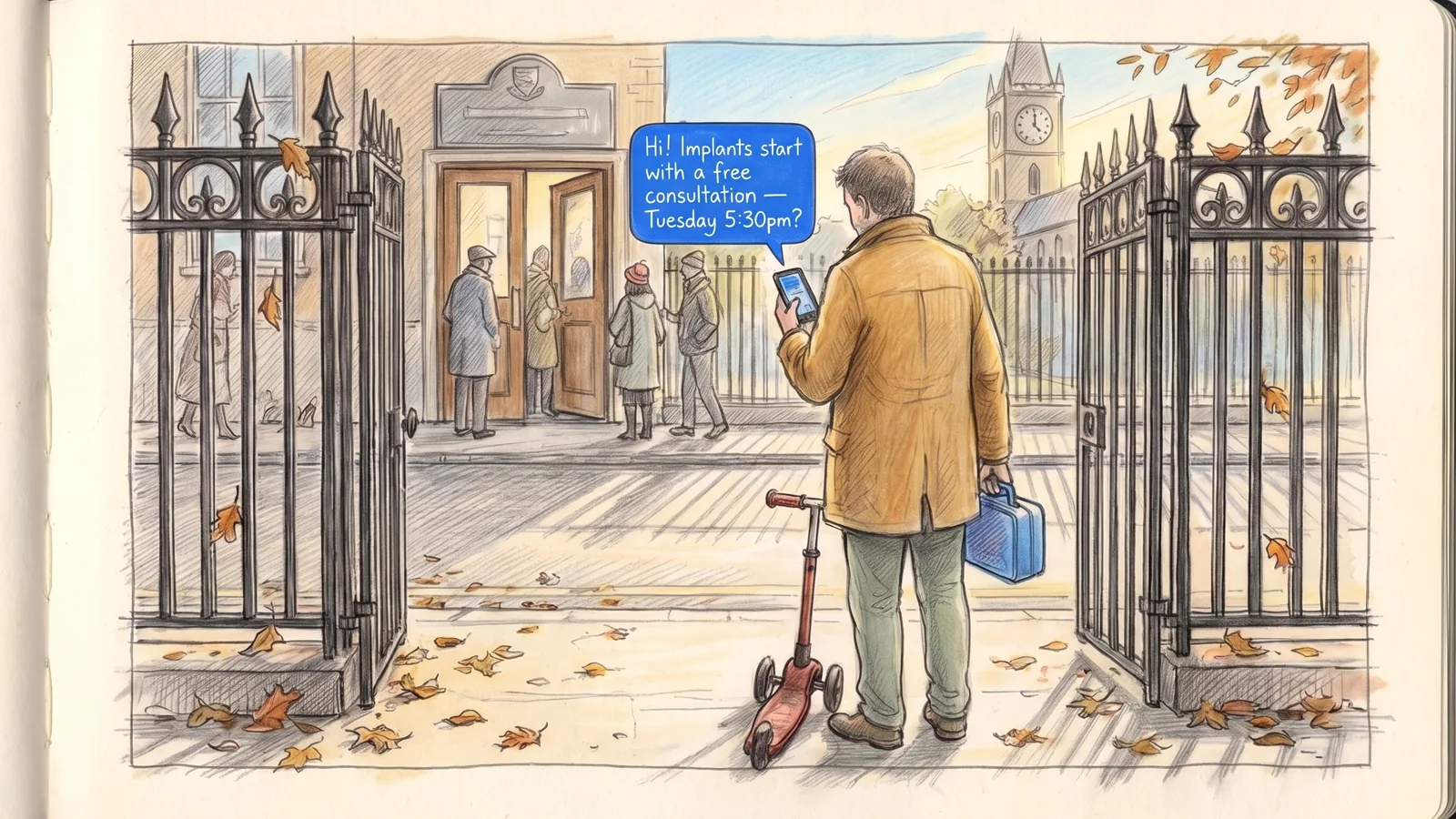
Scepticism about AI autonomy during critical handover periods is warranted—dental practices cannot afford enquiry mishandling or poor first impressions. However, evening shift start enquiries (5:00pm-6:00pm) represent particular WhatsApp AI advantages rather than limitations. This period captures post-work enquiries from patients who couldn't contact practices during their own working hours, creating enquiry volume spikes precisely when reception staff are settling into evening shifts and managing patient departures from late afternoon appointments.
A typical evening shift scenario: Your receptionist arrives at 5:00pm, immediately handles three patients checking out from 4:30pm appointments, answers two phone calls from patients running late to 5:15pm appointments, and processes payment for an emergency patient who arrived at 4:50pm without appointment. During this twenty-minute operational chaos, four WhatsApp enquiries arrive—two about teeth whitening costs, one requesting appointment reschedule, and one asking about payment plans for veneers. Without AI assistance, these enquiries queue as "respond when capacity allows," often 45-60 minutes later. With AI, all four are acknowledged, qualified, and progressed toward booking or information provision within minutes, requiring only receptionist review and human confirmation for appointment scheduling.
The measurement that matters: enquiry-to-booking conversion rates. Practices using WhatsApp AI report 34-42% of evening handover enquiries (4:45pm-6:00pm window) convert to booked appointments, compared to 18-23% conversion for enquiries that wait in voicemail or email queues for next-day responses. The immediacy advantage compounds with convenience—patients enquiring during their available time receive instant engagement during their available time, creating natural conversation flow that phone tag interrupts.
Trainee receptionist scenarios demonstrate similar AI safety net value when experience gaps create service vulnerabilities during critical enquiry windows.
How Do You Implement WhatsApp Coverage for Handover Gaps?
Implementation begins with communication channel visibility. Your practice WhatsApp number must appear prominently on your website homepage, contact page, Google Business Profile, and all marketing materials. Patients won't use WhatsApp if they don't know it's available. Many practices add "Message us on WhatsApp for faster response" callouts near phone numbers, explicitly directing enquiries toward the always-available channel during busy or handover periods.
System configuration requires defining AI response protocols for common enquiry types: treatment costs, appointment availability, payment options, emergency triage, and clinical question handling. CareDental's implementation process typically involves two-week conversation training where AI responses are reviewed and refined based on actual patient enquiries your practice receives. This customisation ensures responses align with your pricing structure, treatment offerings, and brand voice rather than generic templated replies that sound robotic or unhelpful.
Staff training focuses on handover protocols and AI supervision rather than replacement fears. Your evening receptionist's role shifts from fielding initial enquiries during chaos to reviewing AI-handled conversations and adding value through personalisation and appointment confirmation. Morning-to-evening handover becomes documentation review: "Three implant enquiries came through between 4:45pm and 5:15pm—all have provisional Tuesday slots held, please confirm availability and send calendar invites." This process improves handover quality while eliminating the revenue-destroying enquiry silence that previously defined shift changes.
Monitoring and optimisation continue post-implementation. Monthly reviews examine which enquiry types AI handles successfully, which require escalation patterns, and where response refinements improve booking conversion. Practices often discover unexpected patterns—perhaps 40% of composite bonding enquiries arrive during handover gaps, suggesting targeted marketing reaches patients during