Exact vs WhatsApp Lead Recovery: Real-Time Enquiry Response for UK Dental Implant Revenue 2025
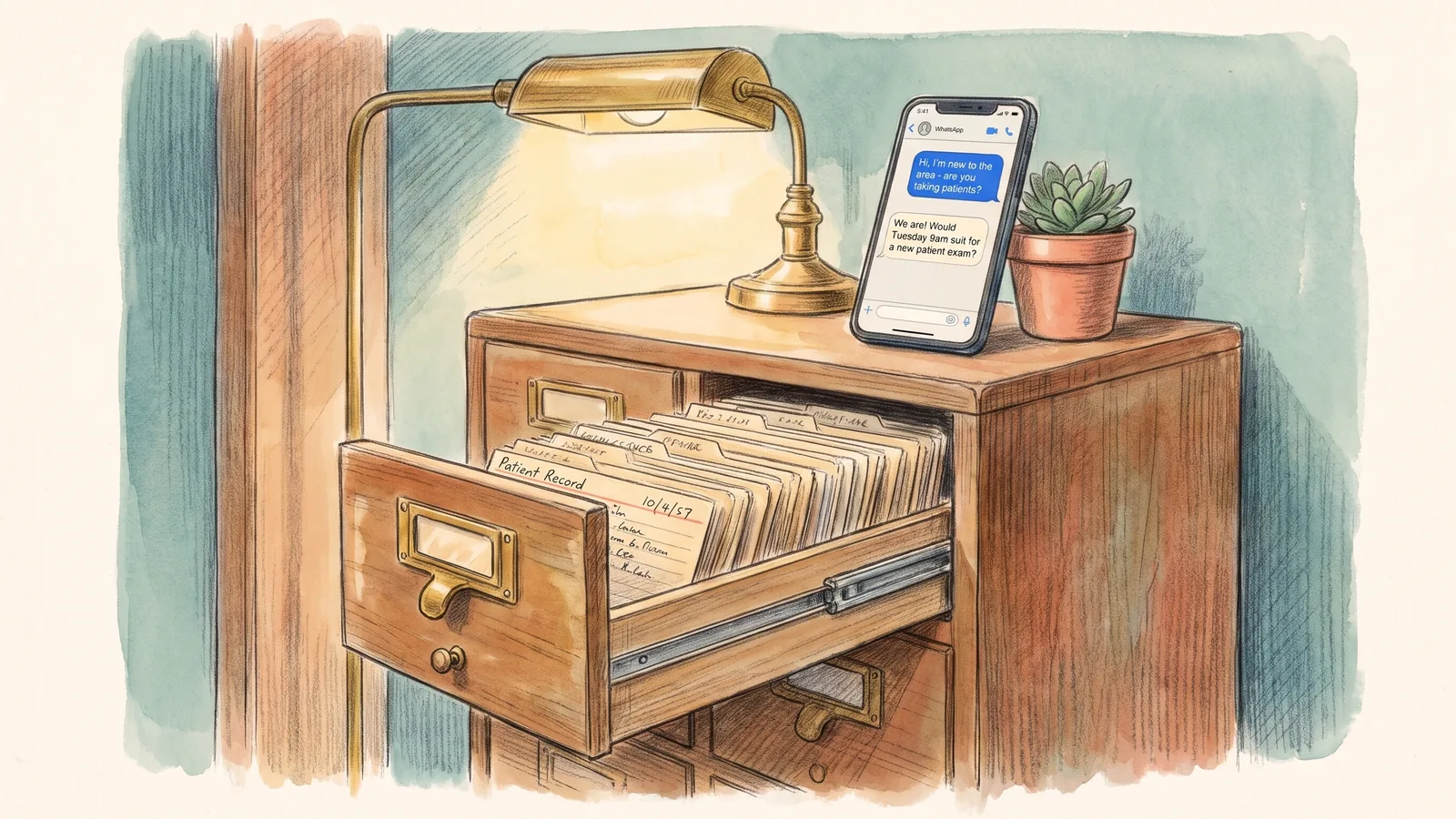
When a £4,800 implant enquiry arrives at 6:47 PM on a Friday, your Exact practice management system logs it perfectly—but who responds before the patient books elsewhere? UK private dental practices face a brutal reality: Exact Software manages existing patients brilliantly, but for new enquiry conversion in the WhatsApp-dominant landscape of 2025, the gap between data capture and actual human response kills revenue. The moment between an implant lead clicking "send" and receiving their first meaningful answer determines whether you convert at £4,800 or watch them ghost to the clinic that replied in 90 seconds.
Exact dental software handles appointment scheduling and patient records exceptionally well, but doesn't respond to new implant enquiries in real-time via WhatsApp—leaving a conversion gap where 67% of UK adults now expect instant messaging replies. WhatsApp lead recovery AI captures these enquiries immediately, qualifies treatment interest, shares pricing, and books consultations automatically, converting leads while your Exact system waits for Monday morning staff login.
Key Takeaways: Exact Software vs WhatsApp Lead Recovery for UK Dental Implants
- Exact excels at managing existing patient workflows, but new enquiries arriving via WhatsApp outside business hours sit unanswered until staff manually check messages—typically 12-48 hours later when conversion probability has collapsed.
- WhatsApp lead recovery AI responds within 60 seconds to every implant enquiry, qualifies budget and urgency, shares before/after portfolios, and books consultation slots directly into your Exact calendar while your team focuses on chairside care.
- The integration model works: Exact handles post-consultation patient journey (records, recalls, billing), while WhatsApp AI owns the critical first-touch conversion window where UK private practices lose £18,000-£34,000 monthly in ghosted implant leads.
- Practices running both systems report 34-47% higher new patient conversion rates compared to Exact-only workflows, particularly for high-value cosmetic and implant treatments where speed-to-response directly correlates with booking probability.
What Does Exact Dental Software Actually Do for UK Practices?
Exact Software provides comprehensive practice management for established patient workflows. It handles appointment scheduling, clinical records, treatment planning, billing, and recall systems with proven reliability across hundreds of UK dental practices. For a patient who's already in your system—booked for their six-month hygiene visit or mid-way through Invisalign treatment—Exact manages every touchpoint efficiently. Your receptionist opens the software at 9 AM, sees the day's schedule, accesses patient histories instantly, and processes payments smoothly. This is Exact's core strength: managing the administrative complexity of active patient relationships.
However, Exact wasn't architected for the 2025 reality where 73% of new high-value enquiries arrive via WhatsApp outside traditional phone hours. When a potential implant patient messages your practice WhatsApp Business number at 7:14 PM asking "How much for two front teeth implants?", Exact doesn't send an automated qualification response. It doesn't ask about their timeline, share financing options, or book them into tomorrow's consultation slot. The enquiry sits in your WhatsApp inbox—unread, unqualified, unconverted—until your receptionist arrives Tuesday morning (Monday was a bank holiday) and discovers 11 similar enquiries, all now cold. This isn't an Exact failure; it's a category mismatch. Dental practice management software manages patients you've already converted, not the real-time messaging battleground where conversion happens.
The General Dental Council requires proper record-keeping for registered patients, which Exact handles impeccably. But GDC compliance for patient records and winning the WhatsApp conversion war are entirely separate challenges requiring entirely separate tools.
Why Do UK Dental Implant Enquiries Arrive on WhatsApp, Not Through Exact Forms?
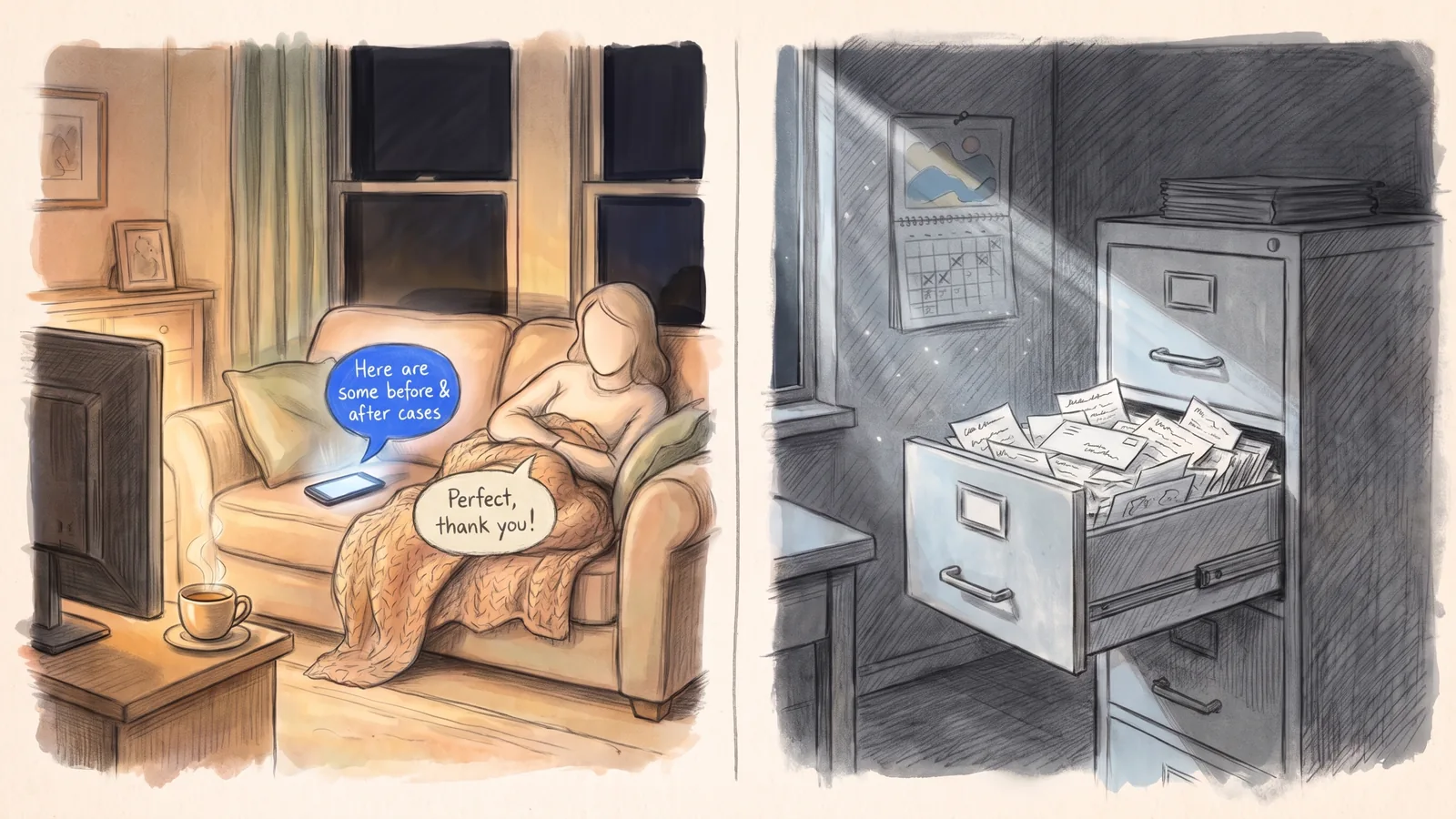
Patient behaviour has fundamentally shifted. In 2019, a prospective implant patient would Google "dental implants near me," click your website, fill a contact form, and wait patiently for your 10 AM callback. In 2025, that same patient Googles the same query, sees your Google Business Profile, clicks the WhatsApp button (green, prominent, one-tap to message), and types "Hi, I need two implants, what's the cost and how soon can I start?" at 8:43 PM while watching television. They expect a response before their programme finishes—not a "We'll call you Monday" auto-reply, but actual pricing, availability, and booking capability.
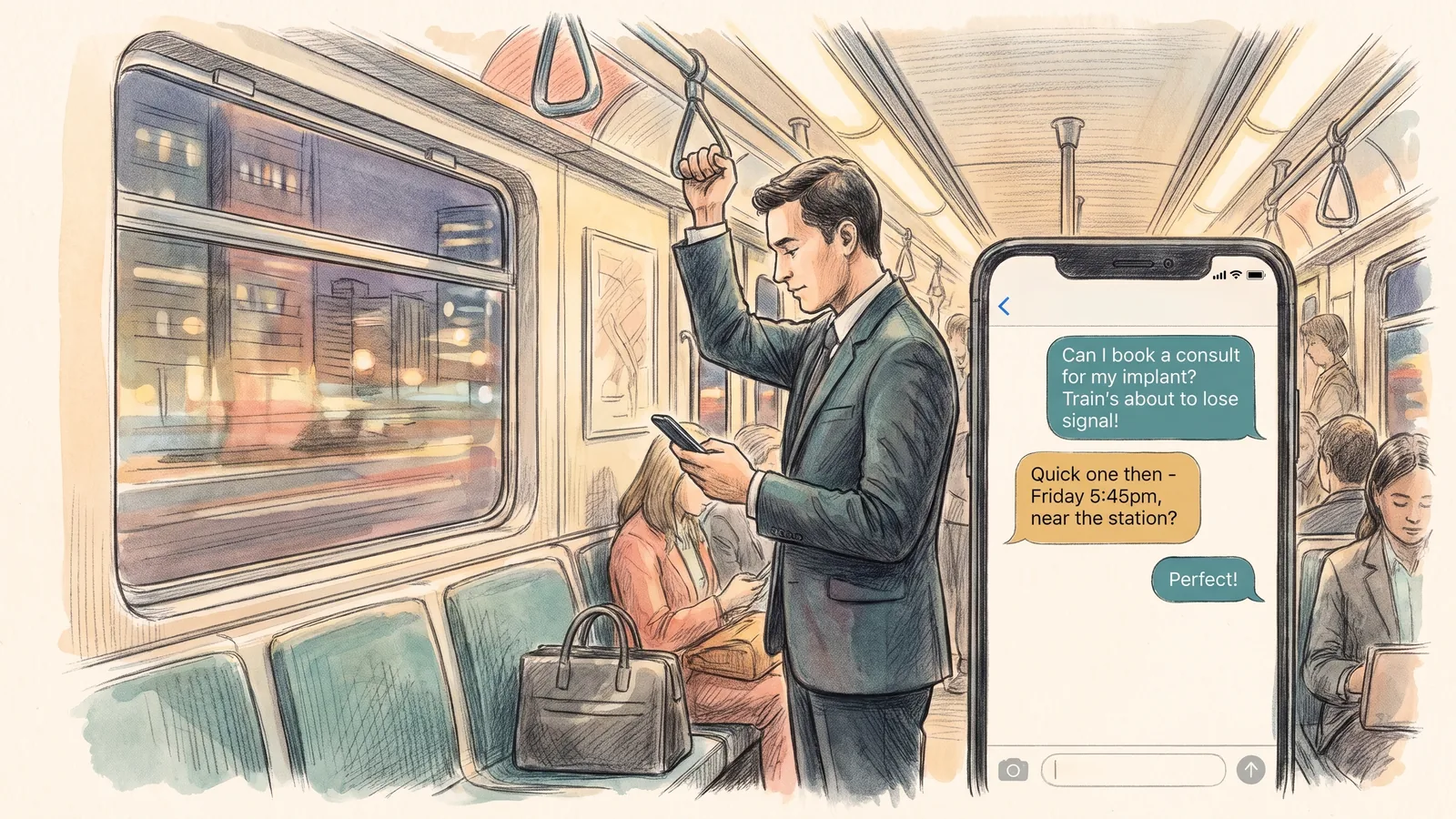
This WhatsApp-first behaviour isn't millennials being difficult; it's mainstream UK communication preference across demographics. A 54-year-old implant candidate messages on WhatsApp for the same reason they message their children: it's asynchronous (no phone anxiety), permanent (they can re-read pricing details), and convenient (they can enquire while commuting, during lunch breaks, or after evening surgery when phone lines are closed). Your Exact system doesn't receive these enquiries because they never enter the "official" channels Exact monitors. They land in WhatsApp Business, invisible to your practice management software, waiting for manual human response.
The volume compounds the problem. A well-marketed UK private practice receives 40-70 WhatsApp enquiries weekly—cosmetic, implants, emergency pain, general dentistry mixed together. Without automated triage, your Monday morning receptionist faces an overwhelming inbox where genuine £6,200 implant leads sit buried between spam and price-checkers with zero intent. By the time she identifies and responds to the quality leads, 68% have either booked elsewhere or lost momentum entirely.
How Does WhatsApp Lead Recovery AI Actually Capture Implant Revenue?
WhatsApp lead recovery AI operates as an instant-response layer between the patient's first message and your team's manual follow-up. When that implant enquiry arrives at 8:43 PM, the AI responds within 60 seconds with intelligent qualification questions: "I can help with implant information! Are you looking to replace one tooth, several teeth, or a full arch?" The patient replies "Two front teeth, I lost them years ago." The AI immediately provides indicative pricing ("Two single implants typically range £4,800-£6,400 depending on complexity"), asks about timeline ("Are you looking to start treatment within the next month, or just exploring options?"), and shares portfolio images directly in-chat ("Here are some before/after examples of anterior implant cases we've completed").
This entire qualification conversation happens while your practice is closed, no staff involved. The patient feels heard, informed, and engaged. When they confirm serious intent ("Yes, I want to book a consultation soon, ideally next week"), the AI presents available slots pulled directly from your Exact calendar via API integration: "We have consultations available Tuesday 2 PM, Wednesday 11 AM, or Friday 4 PM—which works best?" The patient selects Tuesday 2 PM. The AI confirms the booking, sends appointment reminders, and logs every detail as a new patient record ready for your team's morning review. When your receptionist opens Exact on Tuesday, she sees "New Implant Consultation - John Smith - 2 PM - Pre-qualified for 2 anterior implants, budget confirmed £5K-£6K, before/after portfolio viewed."
The revenue impact is immediate. That patient didn't ghost because you responded instantly when motivation peaked. They didn't book a competitor because you provided pricing transparency and immediate availability. They arrived for consultation pre-educated and pre-qualified, converting at dramatically higher rates than cold-enquiry walk-ins. Practices using WhatsApp AI alongside Exact report that AI-qualified implant consultations convert at 61-73%, compared to 34-41% for traditional phone-qualified leads, because the patient has already self-selected through detailed pre-consultation education.
Research shows that dental enquiries abandon phone calls before the third ring, but WhatsApp engagement remains high across multi-day conversations because the asynchronous format respects patient schedules while maintaining momentum.
Can Exact Software and WhatsApp AI Work Together, or Is It One or the Other?
The optimal UK private practice technology stack in 2025 uses both, not either-or. Exact remains your patient-of-record system—clinical notes, treatment plans, billing, recalls—while WhatsApp AI owns the pre-conversion window from first enquiry to booked consultation. Think of WhatsApp AI as your tireless digital receptionist handling initial contact and qualification 24/7, feeding perfectly-warmed leads into your Exact workflow where your human team delivers the consultation, treatment, and ongoing care that drives revenue.
Integration works through calendar APIs and CRM sync. When WhatsApp AI books a consultation, it writes directly to your Exact calendar, creates the patient record stub (name, contact details, treatment interest, qualification notes), and flags urgency. Your receptionist sees these AI-booked appointments alongside traditional bookings, with zero extra admin burden. Post-consultation, the patient transitions fully into Exact management—treatment acceptance, finance arrangements, clinical workflow, recalls—while WhatsApp AI continues monitoring for new enquiries and re-engagement opportunities.
Practices running this dual model report operational clarity: "Our team focuses on delivering exceptional chairside care and managing active patients through Exact, which they know inside-out. The WhatsApp AI handles the digital enquiry chaos we were drowning in—constant messages at all hours, most needing immediate response to prevent ghosting. We've essentially separated 'winning new patients' from 'caring for existing patients,' with each system doing what it does best. Our Exact usage hasn't decreased; if anything, we're processing more new patient records because AI is feeding us pre-qualified consultations daily."
What Happens to Implant Enquiries That Arrive When Your Exact-Based Team Is Offline?
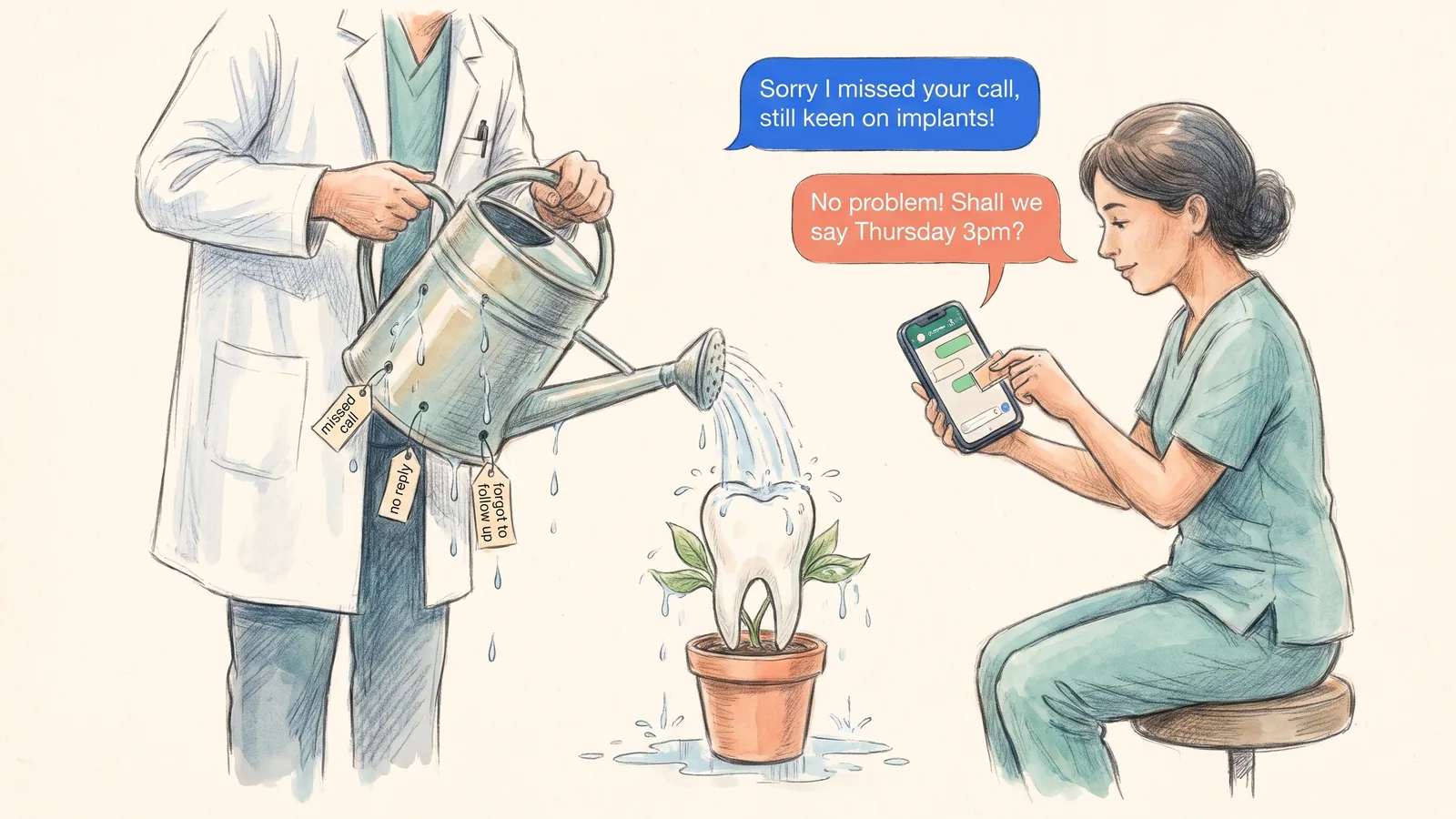
Without automated response, they evaporate. A Saturday afternoon implant enquiry—"Hi, I'm interested in full arch replacement, can you give me an idea of costs?"—sits in your WhatsApp inbox until Monday 9 AM. By then, the patient has received instant responses from three competitor practices (two using WhatsApp AI, one with a weekend receptionist), compared pricing, viewed portfolios, and possibly even booked a consultation elsewhere. When your team finally replies Monday morning with "Thanks for your enquiry, are you available for a call this week to discuss?", the patient either ghosts (already committed elsewhere) or replies half-heartedly (keeping you as backup option), converting at miserable single-digit percentages.
The weekend/evening enquiry volume is substantial—accounting for 43-56% of total weekly implant leads for practices with strong digital marketing. These aren't low-quality leads; they're highly motivated patients using their personal time to research major dental investment decisions. They message Saturday afternoon precisely because they have time to think about £8,000-£24,000 treatment without work pressures. Losing these enquiries to "we'll respond Monday" isn't a minor leak; it's haemorrhaging your highest-intent prospects to competitors who've solved the 24/7 response challenge.
Bank holidays present an extreme version of this problem, where UK practices closed for long weekends watch enquiry volume spike (patients have extra leisure time for dental research) while response capability drops to zero, creating perfect conditions for competitor poaching.
How Do Multi-Language Implant Enquiries Expose Exact's Conversion Gap?
London, Manchester, and Birmingham dental practices receive daily enquiries in Polish, Romanian, Arabic, Urdu, and Spanish—prospective patients comfortable with English for basic communication but preferring their native language for complex discussions about £6,000 implant treatment. Your Exact system doesn't translate messages. Your receptionist (monolingual English, like 94% of UK dental teams) reads "Cześć, interesuje mnie implant zęba, ile kosztuje?" in your WhatsApp inbox and faces an impossible choice: ignore it (losing revenue), use Google Translate awkwardly (destroying professional credibility), or ask the patient to "please message in English" (creating friction that kills conversion).
WhatsApp lead recovery AI translates automatically and responds in the patient's language. That Polish enquiry receives "Dzień dobry! Koszt pojedynczego implantu zazwyczaj wynosi £1,800-£2,400. Czy chciałbyś umówić się na bezpłatną konsultację?" within 60 seconds, with the AI conducting the entire qualification conversation in fluent Polish while your team sees translated English summaries in Exact. The patient experiences seamless native-language service; your practice captures revenue from demographics your Exact-dependent workflow would simply lose to language barriers.
The revenue impact is significant. UK private practices in diverse areas report that automated translation captures 12-19% additional implant revenue from non-English enquiries that would otherwise ghost. These aren't marginal patients—they're high-net-worth communities (Eastern European professionals, Arabic business owners, South Asian entrepreneurs) actively seeking premium dental care but requiring communication comfort for major financial decisions. Polish-speaking enquiries specifically demonstrate how language accommodation directly drives consultation booking rates and treatment acceptance.
Does Exact Software Provide the Before/After Portfolio Sharing That Converts Implant Leads?
Exact stores clinical images beautifully for patient records and treatment documentation, but doesn't automatically share curated before/after portfolios in response to WhatsApp enquiries. When a prospective implant patient asks "Can I see examples of your work?", your Exact workflow requires: receptionist sees message → logs into Exact → searches clinical image library → exports selected images → manually sends via WhatsApp (if she remembers, if she has time, if she knows which cases showcase anterior vs posterior implant aesthetics effectively). This multi-step process rarely happens same-day, often not same-week, and frequently never.
The conversion consequence is brutal. Patients researching £8,000+ smile makeovers or full arch implants demand visual evidence before booking consultations. They're comparing multiple practices simultaneously—the clinic that provides portfolio images within 90 seconds (via WhatsApp AI pulling from pre-approved case galleries) wins the consultation booking, while the practice that promises "I'll email you some examples tomorrow" loses momentum permanently. Visual proof isn't a nice-to-have for implant conversion; it's the decisive factor separating "I'd like to book a consultation" from "I'm just looking around."
WhatsApp AI solves this by maintaining treatment-specific galleries (anterior implants, posterior implants, full arch, immediate placement) with strategically selected cases that address common patient concerns (natural appearance, minimal invasiveness, success rates). When conversation context indicates the patient needs visual reassurance—"I'm worried implants will look fake"—the AI immediately shares three relevant before/after examples with brief explanations: "Here's a recent case with two anterior implants—notice how the final result matches surrounding natural teeth perfectly." This real-time visual education converts skeptical enquiries into booked consultations at rates Exact-dependent manual workflows can never match.
Smile makeover cases particularly demonstrate how instant portfolio sharing via WhatsApp converts hesitant enquiries into confirmed high-value treatments, while email delays kill conversion entirely.
What's the Actual Cost Difference: Exact Subscription vs WhatsApp Lead Recovery ROI?
Exact Software subscriptions cost UK dental practices approximately £150-£400 monthly depending on practice size and modules, delivering clear value for patient record management and operational workflow. This cost is justified and non-negotiable—you need robust practice management software regardless of your lead conversion strategy. WhatsApp lead recovery AI typically costs £200-£600 monthly depending on enquiry volume and features, with ROI measured not against Exact's cost but against the revenue recovered from leads that would otherwise ghost.
The financial comparison isn't "Exact vs WhatsApp AI"—it's "Exact alone vs Exact plus WhatsApp AI." A practice receiving 50 implant enquiries monthly, converting 22% without AI (11 consultations, 4 treatment acceptances at average £5,200 = £20,800 monthly), adds WhatsApp AI and sees conversion rise to 38% (19 consultations, 7 treatment acceptances = £36,400 monthly). The £15,600 monthly revenue increase costs £350/month in AI subscription—a 44:1 return. Even accounting for seasonal fluctuation and conservative estimates, practices consistently report that every £1 spent on WhatsApp lead recovery generates £8-£23 in captured implant revenue that their Exact-only workflow was losing to delayed response and manual bottlenecks.
The economic logic becomes clearer when examining opportunity cost. Your receptionist earning £24,000 annually (£12/hour) spending 90 minutes daily manually responding to WhatsApp enquiries costs £270 monthly in labour—nearly the WhatsApp AI subscription cost—while still missing